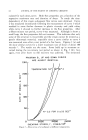
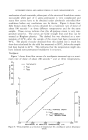
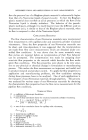
ULTRASONIC EMULSIFICATION: THEORY, APPLICATIONS, LIMITATIONS 565 terial are brought within the measuring range of the probe. Time averag- ing of such discontinuous data is performed by the electronic computer and a steady indication is provided. Usually, the reading takes a rapid change when a stirrer is started, but above a certain stirring rate, depend- ing on the material, no further changes occur. The interpretation of the data obtained with the ultrasonic viscometer in complex materials can frequently present difficulties unless an adequate understanding of the theory of the instrument is acquired. If sufficient attention is given to the way in which the ultrasonic viscometer is em- ployed, it is quite likely that, where a completely automatic and con- tinuous flow measuring instrument is desired, many practical applications in the cosmetics industry will be found. REFERENCES (1) Lord Rayleigh, "Theory of Sound," Volume II, New York, Dover Publications, Inc., (1945), p. 317. (2) Both, W., and Rich, S. R., ]. dppL Phys., 24, 940 (1953). (3) Mason, W. P., "Piezoelectric Crystals and Ultrasonics," New York, D. Van Nostrand Company (1950), p. 339. ULTRASONIC EMULSIFICATION: THEORY, APPLICATIONS AND LIMITATIONS* By WII. FREI) RoTH Roth Laboratory for Physical Research, Hartford $, Conn. SINCE THE EARLY work of Richards and Loomis (1) and Sollner (2) it has been clear that ultrasonic radiation can be employed to produce stable emulsions if energy levels sufficient to produce cavitation are achieved. Indeed, it is common experience that with systems that can be emulsified by the addition of surface active agents and other conven- tional means, ultrasound can frequently produce superior emulsions more rapidly and with the addition of less emulsifying agents. H•wever, it is also true that systems that do not emulsify by ordinary means cannot be greatly improved by the use of ultrasonic radiation. Many excellent papers have been presented over the years in which specific applications of ultrasonics to produce emulsions have been dis- cussed (3). Although the ability to produce emulsions by means of ultra- sonic energy has been known for three decades, few applications of in- dustrial importance can be cited. The transition from small scale lab- * Presented at the October 5, 1956, Seminar, New York City.

ULTRASONIC EMULSIFICATION: THEORY, APPLICATIONS, LIMITATIONS 565 terial are brought within the measuring range of the probe. Time averag- ing of such discontinuous data is performed by the electronic computer and a steady indication is provided. Usually, the reading takes a rapid change when a stirrer is started, but above a certain stirring rate, depend- ing on the material, no further changes occur. The interpretation of the data obtained with the ultrasonic viscometer in complex materials can frequently present difficulties unless an adequate understanding of the theory of the instrument is acquired. If sufficient attention is given to the way in which the ultrasonic viscometer is em- ployed, it is quite likely that, where a completely automatic and con- tinuous flow measuring instrument is desired, many practical applications in the cosmetics industry will be found. REFERENCES (1) Lord Rayleigh, "Theory of Sound," Volume II, New York, Dover Publications, Inc., (1945), p. 317. (2) Both, W., and Rich, S. R., ]. dppL Phys., 24, 940 (1953). (3) Mason, W. P., "Piezoelectric Crystals and Ultrasonics," New York, D. Van Nostrand Company (1950), p. 339. ULTRASONIC EMULSIFICATION: THEORY, APPLICATIONS AND LIMITATIONS* By WII. FREI) RoTH Roth Laboratory for Physical Research, Hartford $, Conn. SINCE THE EARLY work of Richards and Loomis (1) and Sollner (2) it has been clear that ultrasonic radiation can be employed to produce stable emulsions if energy levels sufficient to produce cavitation are achieved. Indeed, it is common experience that with systems that can be emulsified by the addition of surface active agents and other conven- tional means, ultrasound can frequently produce superior emulsions more rapidly and with the addition of less emulsifying agents. H•wever, it is also true that systems that do not emulsify by ordinary means cannot be greatly improved by the use of ultrasonic radiation. Many excellent papers have been presented over the years in which specific applications of ultrasonics to produce emulsions have been dis- cussed (3). Although the ability to produce emulsions by means of ultra- sonic energy has been known for three decades, few applications of in- dustrial importance can be cited. The transition from small scale lab- * Presented at the October 5, 1956, Seminar, New York City.
Purchased for the exclusive use of nofirst nolast (unknown)
From: SCC Media Library & Resource Center (library.scconline.org)