THE ROLE OF COLOR IN COSMETICS 549 phenols are frequent irritants, consequently these "para" or oxidation developed colors should always be patch tested before they are used. With regular and careful patch testing it is surprising how rare are the in- cidences of irritation or inflammation following the use of the para dyes. It should also be remembered that hair is much harder to dye than wool. It is common practice to dye wool in a dyebath "at the boil" and that several hours are needed for thorough fiber penetration. Clearly it would not be practical to dye human hair "at the boil" even for a few minutes while it is still attached to the head. Since hair is so difficult to dye-- these "paras" or amino phenols which quickly penetrate and swell the hair shaft are the only types of colors which can be used to dye human hair at body temperature in a short time of minutes. There are a number of hair rinses, hair color shampoos and hair tints on the market but these have surprisingly little tinctorial power. They may color the hair slightly--give some "high lights," and the slight tint is readily washed off. The acid dyes in an acid solution impart a very small amount of surface color under the limiting conditions of application. The field of hair coloring is still open for development and research. The usual colors for fibers and fabrics leave hair unaffected under the possible conditions of application. There is still a real need for less toxic, less irritating colors which penetrate the hair shaft and leave a shampoo-fast and light-fast shade. With the tremendous development in the synthetic dyestuff field since the discovery of Perkin one hundred years ago, it should be possible to find or develop suitable hair colorings. NONCOAL T^}t CoLoRs While the majority of cosmetic colors are certified coal tar colors, a number of naturally occurring coloring matters and inorganic pigments which do not require certification are used. For eyebrow and eyelash colors the "para" hair dyes are expressly prohibited and even the certified colors may not be used as they may cause eye irritation. Consequently, in this area the inorganic pigments are frequently used. While the noncoal tar coloring agents do not have to be certified the user is still responsible for their safe application, uniform purity and free- dom from possible injurious effects on application. More than traces of arsenic and lead cannot be tolerated and 'the maximum concentrations allowed for D&C colors should be kept as a standard for the natural colors. While Tyrian purple was justly famous in the days of the Roman Empire, it was later identified as 6,6'-dibromoindigo. Cheaper and better dyes have been synthesized. However, a few natural coloring agents are still used in limited amounts to color foods, drugs and cosmetics. The more important ones are alkanet, annatto, carotene, chlorophyll, cochineal, saffron and henna or lawsone.

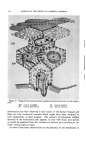
550 JOURNAL OF THE SOCIETY OF COSMETIC CHEMISTS Alkanet (Color index No. 1240) is obtained from the root of the Alkanna tinctoria which is usually found in Asia Minor or Southeastern Europe. Its active ingredient, alkannin C•6H•605, is a reddish brown powder with a coppery luster. Many of its salts are blue-soluble in alcohol and fixed oils. It is sometimes used to color beverages, hair lotions and tonics. Annatto (Color index No. 1241) is obtained from the red wax sur- rounding the seeds of the Bixaorellana, a shrub found in Mexico, Brazil, Guiana and India. The active ingredient in bixin--C25H3oO4--is a di- carboxylic acid with at least eight double bonds in the chain. It is a red- brown powder which is soluble in alkali and usually procured as a dilute solution of the sodium salt. It has little use in cosmetics and is chiefly used to color ice cream, cheese and other food products a yellow or cream color. Carotene is a hydrocarbon which was first isolated from the common carrot as ruby red crystals. It has a formula of C40H•6 and has been separated into three isomers or a, B and 7 forms. Ordinary carotene con- tains 85 per cent of beta form and 14.9 per cent of the alpha form. It con- tains two rings at the end of an extended system of conjugated double bonds. The beta carotene contains two •/-ionone residues while the alpha form contains one alpha and one beta ionone ring. It is chiefly used in the coloring of foods and drugs. Chlorophyll need have little attention here as its recent promotion for use in cosmetics as an antiseptic and deodorant has clearly established its limited value as a coloring agent. The great importance of chlorophyll in the adsorption of solar energy h. as led to its exhaustive study and the establishment of its structure as containing four heterocyclic pyrrole rings with a magnesium linked to the four nitrogens. Cochineal (Color index No. 1239) is a red coloring matter obtained from the dried bodies of the female insect Coccus cacti. These insects live on a cactus napolea cocinellifera found in Central America and Mexico. They are also cultivated in Java. Carminic acid, C22H20013, is the principal coloring matter in cochineal and amounts to about 5 per cent of the prod- uct. Carminic acid is a tetrahydroxylated methyl anthraquinone-car- boxylic acid with a sugar (C6HnO•) side chain. A related color, Kermesic acid, is obtained from the insect Coccus ilices and was known as Venetian scarlet. It differs from carminic acid only in that it does not contain the sugar side chain but an acetyl group instead. Another related color is obtained from the lac insect Coccus lacca and believed to be laccaic acid. These colors find very limited cosmetic use and application for coloring candy and rouge. Saffron is the dried stigma of Crocus sativus Linne. This plant is cul- tivated in Spain, Greece, France and Iran. The active coloring agent in Saffron is crocin, a water-soluble yellow powder which is slightly soluble in
Purchased for the exclusive use of nofirst nolast (unknown)
From: SCC Media Library & Resource Center (library.scconline.org)