THE ROLE OF COLOR IN COSMETICS 54.3 Fore) DRUZ AN• COSnETIC ACT In 1938 a new Food, Drug and Cosmetic Act was drawn up and it has become the guiding regulation for all cosmetic colors since that date. In setting up the new act more than 125 colors were tested extensively for toxicity, purity, stability, possible irritation. All certified colors must be purified, their structure known and adequate methods of analysis avail- able. As a result of more than two years' study three classes of certifi- cation were set up. The original 15 colors were listed as FD&C colors which meant that they were colors for food, drugs and cosmetics. D&C colors were to be for drugs and cosmetics and Ext. D&C colors were for drug and cosmetic colors for external use only. The Ext. D&C colors cannot be used on the lips or on the mucous membrane. The Federal Food, Drug and Cosmetic Act of 1938 states in Section 604: "The Secretary shall promulgate regulations providing for the listing of coal tar colors which are harmless and suitable for use in cosmetics and for the certification of batches of such colors with or without harmless dil'- uents." It should be pointed out that in the Act in Section 601 (e) it states that: "A cosmetic shall be deemed to be adulterated if it is not a hair dye and it bears or contains a coal tar color other than one from a batch that has been certified in accordance with regulations as provided by Section 604." Since any cosmetic which is "deemed to be adulterated" may be seized or withdrawn from the market it is clear that this Act has adequate force to insure the use of properly certified colors in all cosmetic products. Clearly in coloring cosmetics, other than hair dyes, cosmetic manufac- turers always use certified coal tar colors or colors not of coal tar origin which do not require certification. In the area of hair dyes cosmetic manufacturers may or may not use certified coal tar colors. Where coal tar colors are used in hair dyes the conspicuously displayed label should read: "Caution--This product contains ingredients which may cause skin irritation on certain individuals and a preliminary test according to ac- companying directions should first be made. This product must not be used for the dyeing of eyelashes or eyebrows, to do so may cause blind- ness." CERTIFICATION This careful control of colors and the rules for their certification have greatly limited the number of dyes used but it has also been the means of avoiding the possibility of many serious cases of skin irritation or even poisoning from the indiscriminate use of untested or unpurified colors. In this country the certification of colors is carefully and rigidly controlled by the government. A sample must be submitted from every batch to

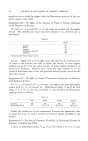
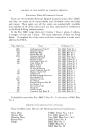
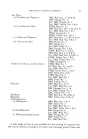
544 JOURNAL OF THE SOCIETY OF COSMETIC CHEMISTS the government. This sample is analyzed for purity before certification and this test number must accompany the batch through all packagings. Producers or sellers cannot open a package of certified color without losing the right to certify it. If a package of certified color is opened or mixed with other certified colors in any concentration it looses its certi- fication and must be reanalyzed for purity by the government before cer- tification. If repackaged in smaller packages the small units must be reanalyzed. In no other country in the world are the colors in cosmetics so carefully guarded. The colors which are used for cosmetics are a far cry from the textile dyestuffs which are diluted, dispersed and standard- ized. These cosmetic colors are highly purified and usually contain no diluents, extenders or even dispersing agents. It follows of course that they are far more expensive. In the FD&C colors not over 10 parts per million of lead is permissible and not over 1.4 p.p.m. of arsenic. In the D&C and Ext. D&C colors not more than 20 p.p.m. of lead and 2 p.p.m. of arsenic are allowed. FOOD DRUG & COSMETIC COLORS In addition to the 15 FD&C colors which were allowed up to 1938 there are now only four additional FD&C colors which gives a total of 19 dyes. Color Index No. Name Certification No. Calco Orange SS FD&C Orange No. 2 6'9'7 Benzyl Violet 4B FD&C Violet No. 1 10 Naphthol Yellow S (K Salt) FD&C Yellow No. 2 .. Oil Red XO FD&C Red No. 32 Steps are being taken by the Food & Drug Administration to remove or decertify FD&C Red 32 and FD&C Orange 1 and 2. The FD&C colors are either water or oil soluble. The Orange No. 2, Yellow Nos. 3 and 4 and Red No. 32 are the oil-soluble colors and all the others are water soluble. Insoluble lakes of FD&C may be prepared by extending the color on alumina. These FD&C lakes can only be certified for use in the coloring of eggs. DRUG & COSMETIC COLORS A much wider range of Drug & Cosmetic (D&C) colors are now available for use in cosmetics. Eighty-two colors are listed as certifiable but not all of them are available for sale since in these cases there has not been suffi- cient demand for them to warrant the heavy expense of purifying them and submitting them for certification. In the list of D&C colors, there are now offered 2 violets, 9 blues, 8 greens, 8 yellows, 16 oranges, 38 reds and 1 brown. The more important of these D&C colors are:
Purchased for the exclusive use of nofirst nolast (unknown)
From: SCC Media Library & Resource Center (library.scconline.org)