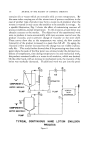
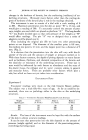
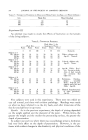
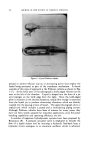
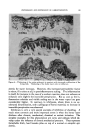
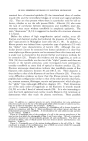
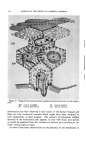
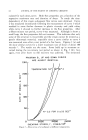
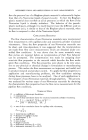
PROCESSING PRODUCTS IN VOTATOR APPARATUS 515 uct while heating, the emulsion phases reversed completely. In addi- tion, once the proper emulsion and consistency were attained in the heating step, the rate of cooling and the amount of work were found to have adverse effects. Too much cooling and work resulted in a watery product. In- sufficient work resulted in an excessively high immediate viscosity (or flow number), and the product could change to a fluid state if the bottle was shaken. Figure 4 shows the flow diagram of the process for this particular hand lotion emulsion. The most interesting feature is not the 'fact that within a very short span of pilot plant work the required operating condi- tions and equipment were established, but that with one formula and rela- tively minor changes in the time-temperature-mechanical work relation- ship, emulsions of many characteristics were easily obtainable. This is significant since the ease of product quality control and equipment versa- tility were not obtained in parallel work attempted with batch equipment and sequence mixing. In other words, the process becomes a' continuous, easily controllable repetitive operation rather than an art. Time does not permit going into similar work done to develop continuous systems for processing shaving cream, tooth paste, pharmaceutical emulsion, cream deodorants, paste shampoo, pharmaceutical salves, petrolatum jelly, etc. Nevertheless, in all this work, continuous operation and accurate control of temperature are predominant features. The one function that is common to good heat transfer and emulsification, crystallization, dispersion is agitation. The efficiency.or rate of heating or cooling is accelerated by agitation. On the other hand, emulsification by agitation without good control of the heat energy added or developed may not result in as tight or stable an emulsion as required particularly, if in both cases, thickening or particle solidification of the ingredients occurs as it often does. By the same token nonuniform crystal or texture formation also occurs if the agitation does not keep pace with the rate of heat transfer or vice versa. 'i:• The efficient and economical application or removal of heat from a prod- uct, the control of power in terms of work and the reduction of processes to a uniform, controllable, repetitive operation, are compulsory industrial considerations in our competitive economy. Whether kettle, coil, plate or scraped surface equipment, or batch or continuous systems are employed, the fundamental mechanics of heat transfer are the same and should be understood if the product developed on a small laboratory scale is to be duplicated economically on a produc- tion scale, or an existing production line is to be changed to produce the same result at a lower cost per item. The following is a brief review of the basic mechanics of heat transfer: ':• Heat transfer is most efficiently achieved by presenting a comparatively small amount of product in a thin layer to a relatively large heat transfer

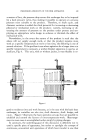
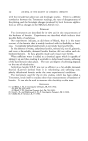
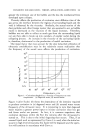
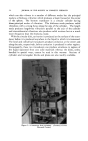
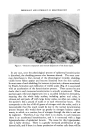
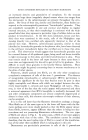
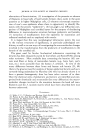
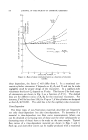
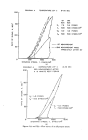
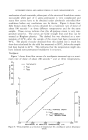
516 JOURNAL OF THE SOCIETY OF COSMETIC CHEMISTS area, agitating it vigorously and rapidly, and simultaneously removing the product film next to this area. Although all factors mentioned are important, the last factor, film re- moval is one of the cardinal features of good heat transfer. This is a situation where little things make a big difference. All materials---' metals, liquids, mixtures--have different and varying ability to pass, take up or release heat. This is known as thermal conduc- tivity. For example, at 212øF., copper conducts heat approximately seven times faster than stainless steel and six times better than nickel. And water is much easier to heat or cool than shaving or facial cream. It is also established that when forcing convection by agitation, heating or cooling is considerably accelerated, while at the same time local- ized scorching or freezing is minimized. Although all are c6ntribut0ry, choosing a good metal and providing agitation by various means, such as stirring, pumping at high velocities to create turbulence, arid even present- ing a thin layer to the heat transfer surface, is not the complete solution. All liquids, but particularly viscous materials such as are common in the field of cosmetics, adhere to or wet the heat transfer surface. By practical demonstration and mathematical reduction to specific terms of heat, it is firmly established that immediately adjacent to the heat transfer wall there is a stagnant, residual film that resists removal. This extremely thin but stagnant film plays a major role in efficiency and, incidentally, in prod- uct quality 'because all the heat reaching or leaving the bulk of the material must pass or be driven through this film by conduction. Although these films are extremely thin, their resistance to heat flow is very large because their thermal conductivity or ability to pass heat is very low. As an ex- ample, at 212øF., nickel will pass about 36 B.t.u.'s per hour, per square foot, per degree Fahrenheit, while stainless steel will pass about 26. But for a water film, which is one of the easiest substances to heat, this value is only 0.35 B.t.u.'s per hour, or approximately one hundred times lower than nickel. For cosmetic items with relatively high solids or oil content, high viscosity and pasty semifluid consistency, this thermal conductivity is below that of water. In a cooling operation, film removal has a dual importance and must or should be given special attention, particularly when handling cos- metics of plastic or semifluid consistency. Here the film resistance becomes very acute because the heat transfer surface becomes not only wetted by the product film, but also actually coated with a high viscosity product layer from several thousandths to several sixteenths of an inch, thus insu- lating the metal surface from the bulk of the fluid. In some instances where the film removal blades are purposely or inadvertently omitted from the mutator shaft of the equipment being discussed, production capacity is reduced by as much as 50 per cent. Even in kettle operation the effect of agitation is measurable. See Fig. 5.
Purchased for the exclusive use of nofirst nolast (unknown)
From: SCC Media Library & Resource Center (library.scconline.org)