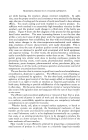
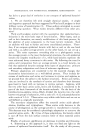
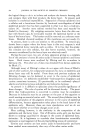
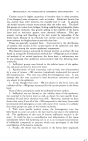
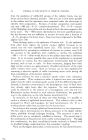
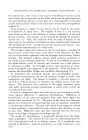
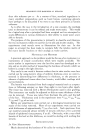
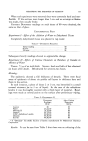
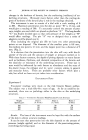
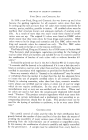
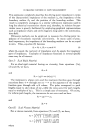
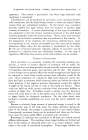
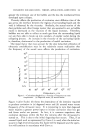
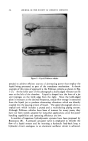
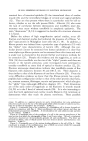
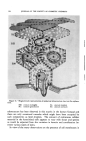
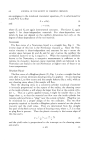
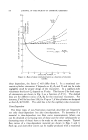
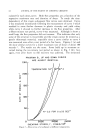
INTERPRETATIONS AND APPLICATIONS OF FLOW MEASUREMENTS 613 both viscosities. Thus a small change in c can cause a large change in •. For dilute suspensions of solid particles in a liquid, a similar law can be applied. In this case, •0 is the viscosity of the liquid and c is the con- centration of the solid particles. For concentrated suspensions of mineral powders in high viscosity asphalts the same law was found to be appli- cable (10). The suspensions behaved in all these cases like Newtonian fluids, at least under the conditions of measurement. This means the vis- cosity of the mixture did not change with the shear rates over which the measurements were made. For pigment suspensions which showed Bingham plastic flow behavior, a similar law was established (11) for estimating the change in flow proper- ties with a change in concentration. In this case it was found that the plastic viscosity or the yield value could be substituted for • in equation (11) and that •0 had to be substituted by other material constants which did not only depend on the viscosity of the liquid •0 but also on the pig- ment characteristics. Also, the material constants m were found to have different values in both equations although both constants were functions of the pigment characteristics, such as particle size, shape and surface. If the material constants m are large, the flow properties will be very sen- sitive to even slight changes in solid concentration. After the material constants m are obtained experimentally, equation 11 can be used to estimate the flow properties at other concentrations than those measured. This is best done by using a semilogarithmic plot of equation 11. In some cases pigment suspensions will change from pseudoplastic or Bingham plastic to dilatant flow behavior, when the solid concentrations are in- creased or decreased. In those cases equation 11 is, of course, not applicable. ,00rl I ,ooo[,oo r OIlt ooIol it ,,ooor k r g Ok m • OL I 0 20 40 60 0 •0 40 60 PERCENT •ATER Figure 9.--Flow properties as a function of volume per cent of water for two water-mineral oil emtfisions with di•erent emulsifying agents.

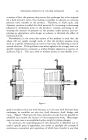
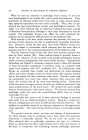
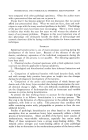
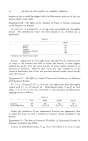
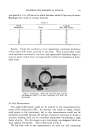
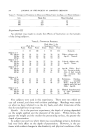
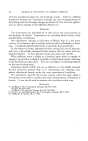
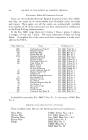
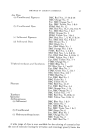
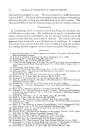
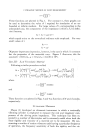
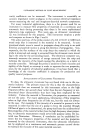
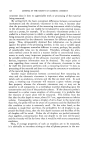
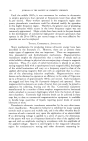
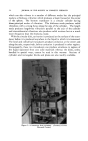
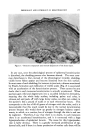
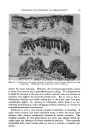
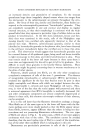
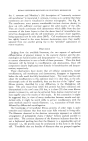
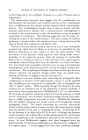
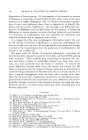
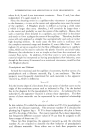
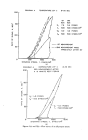
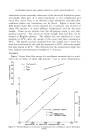
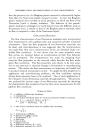
614 JOURNAL OF THE SOCIETY OF COSMETIC CHEMISTS If liquid particles are suspended in a liquid, such as is the case in emul- sions, no law could be established but the flow properties do change sub- stantially with the concentration. This is shown in Fig. 9 for two water- mineral oil emulsions to which small amounts of different emulsifying agents had been added. The flow curves of these emulsions could be treated as Bingham plastics. The plastic viscosities and yield values, which were calculated for the different emulsions, are plotted against the per cent water content. At the point of maximum viscosity, inversion of the emulsion phases started and became very pronounced after the yield value maximum was passed. Both the plastic viscosity and yield value increase and decrease very rapidly with changes in the water to oil ratio. Since the flow properties are affected not only by the volume concentra- tion of the suspended particles, but also by their shape, size and surface, all means, be it chemical or mechanical action, which lead to changes of these particle characteristics can have an affect on the finished product. Thus the flow properties and the finished product can be substantially altered for example, by making small changes in formulation such as adding surface-active or emulsifying agents or by changing the technique, temperature, duration or power application of the manufacturing process (12). As an example of this, photomicrographs of two suspensions of 20 u 20• (a) Figure 10.•Photomicrographs of two suspensions of titanium dioxide pigment in linseed oil: (a) no water, (b) with some drops of water. titanium dioxide pigment in linseed oil are shown in Fig. 10. The only difference between these suspensions is that some drops of water had been added to the one shown on the right. The addition of water was so small that it could have occurred without intention during any manufacturing process. This addition of water apparently changed the particle surface and caused a substantial increase in flocculation as is indicated by the
Purchased for the exclusive use of nofirst nolast (unknown)
From: SCC Media Library & Resource Center (library.scconline.org)