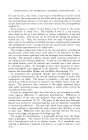
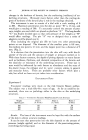
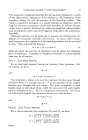
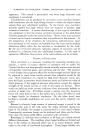
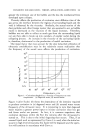
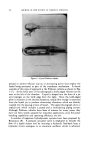
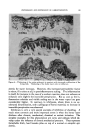
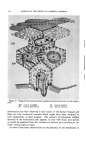
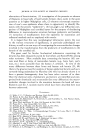
578 JOURNAL OF THE SOCIFTY OF COSMETIC CHEMISTS ß ½'7- ... ß . .":':'. '..•, •'•.."....•,½½?'..q::•,',i':., ..,•..-i•,:• ......... % ' ß %'"--"'.:. .:--.•: ... .'-•i Figure 2--Visible horny lamellae in psoriasis (accelerated keratinization). an increased progeny, i.e., a greater number of cornifying and cornified cells than normal will form during the same time period. How the acceleration of keratinization hinders the disintegration of the horny lamellae into invisible powdery particles is again not quite clear. But we can say this much about it: All evidence available indicates that accelerated keratinization is also an incomplete keratinization. The nuclei of the keratinizing cells are not completely disintegrated: micro- scopically, remnants of nuclei can be easily recognized up to the highest strata of the stratum disjuncture, a situation called "parakeratosis" by the anatomists. In parakeratosis the granular layer is usually absent. Furthermore, the findings Flesch mentioned, namely, that psoriatic scales contain less free amino acids and less peptides but more sulfhydryl groups also can be interpreted as a sign of incomplete keratinization. These

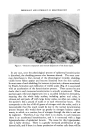
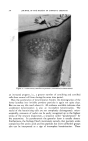
PHYSIOLOGY AND PATHOLOGY OF KERATINIZATION 579 peptides and amino acids are shed off when the protein molecule is re- shuffled to be converted into keratin while nonsulfur-containing amino acids are shed, sulfur-containing amino acids are built into the molecule. All this is done poorly in incomplete keratinization: less amino acids are shed and less cystine is built into the molecule. In the last few years, in remarkable agreement, several authors found that in accelerated kerati- nization, such as psoriasis, there is less water-soluble material in the horny scales than in the normal horny layer. This was found by Szakall (4) in Germany, by Paschoud (5) in Switzerland and by Flesch and Jackson (6) in Philadelphia. Blank (7) has shown that the flexibility of horny struc- tures depends primarily on their water content, and of course, their water content depends, among other things, on their water-holding capacity. In turn, there is good evidence that water-holding capacity depends on the amount of water-soluble materials in these structures. Thus, if there is not sufficient water-soluble material present, as is the case in psoriasis, the epidermal horny layer cannot hold enough water, it loses flexibility, it become5 brittle and it breaks before all the preparations for a complete disintegration into single cells has taken place. This, in my judgment, is the best available interpretation for the separation of visible scales when keratinization is accelerated and incomplete. Accelerated keratinization occurs not only in serious skin diseases but it also can be a rather trivial event. It occurs always after an acute in- flammatory process has subsided. Everybody knows the copious peeling after scarlet fever or the peeling after a sunburn. Furthermore, most sub- acute inflammatory processes are associated with excessive scaling. In all these cases the visible exfoliation can be traced to an increased prolifera- tion of epidermal cells with subsequent hyperproduction of keratin there is a proliferative reaction of the epidermis to the inflammatory irritation. However, there is another, very different anomaly of keratinization with disturbance of the normal shedding in which there is an inhibition of shedding (1). The keratin layer does not separate as it should first into disjunct layers and then into single cells. On the contrary, the horny ma- terial is piled up so that a horny layer results which is several times thicker and usually more compact than normal. This anomaly is not connected with an increased proliferation of epidermal cells. No more horny ma- terial is formed per time unit than normal but the horny layer does not separate. There are no loosely adherent or separating scales in these anomalous situations but rather a rough and sometimes hard unsightly surface. One example for this disturbance of shedding is an inherited anomaly, ichthyosis vulgaris or ichthyosis simplex. In its thickened horny layer flexibility is lost and the upper part cracks and becomes reminiscent of fish scales (Fig. 3). In ichthyosis there is no increased proliferation
Purchased for the exclusive use of nofirst nolast (unknown)
From: SCC Media Library & Resource Center (library.scconline.org)