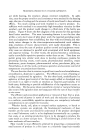
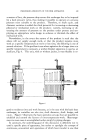
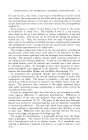
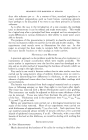
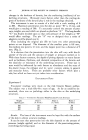
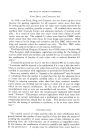
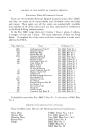
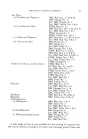
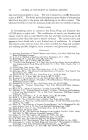
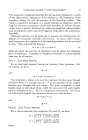
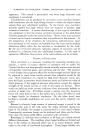
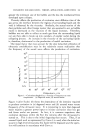
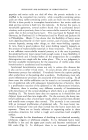
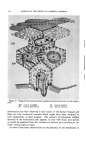
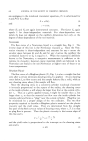
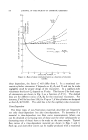
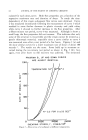
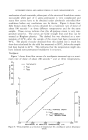
INTERPRETATIONS AND APPLICATIONS OF FLOW MEASUREMENTS 601 MATERIAL NEWTON!AN BINGHAM PSEUDO- DILATANT TIME- PLASTIC PLASTIC DEPENDENT FLOW G / G G G G CURVES T f T T T FLOW CURVE 6 -- 1 ? 6 = • (• - f) G m •N and 6 = 1 ROTATIONAL VISCOMETER C = 1.00 6 -- n/klC C = 1.00 C 1.00 C 1.00 C • 1.00 ß • _- T/k 2 f -- k•T 0 CAPILLARY VISCOI•ETER 6 = V/KlC p Cp -- 1.00 Cp 1.00 Cp • 1.00 Cp • 1.00 Cp • 1.00 • = P/K 2 u 7 6 UG FLOW • UG, t , t PROPERTIES f N i N 1 or fg,t NG,t Figure 1.--Flow curves and flow properties. cylinder rotational viscometer is proportional to the measured rotational speed and the shearing stress r is proportional to the measured torque. Both G and r are inversely proportional to r 2 and thus increase across the annular space from R, to R•. For a viscometer with a small annular width, it is suggested to use the midpoint radius, r= (R, + R•)/2 for calculating G, r and C (1). Then G = n/k•C (1) and r = r/k= (2) where k• and k= are instrument constants. The factor C equals 1 for shear- independent materials. For shear-dependent materials, C depends on their degree of shear-dependency and is then also a function of r (1). In a capillary-tube viscometer the sample is sheared through a capillary tube. Pressure P is applied to the sample and the volume flowing out of the capillary per unit time is measured. This flow rate divided by the cross-sectional area of the capillary gives the mean velocity v at which the sample flows through the capillary. Under laminar flow conditions the rate of shear in a capillary-tube viscometer is proportional to the meas- ured mean velocity and the shearing stress to the applied pressure. The shearing stress r is proportional to d and thus decreases linearly from the wall to the center of the capillary. At the capillary wall, the equations

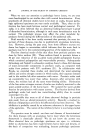
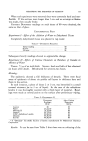
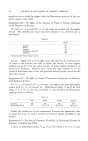
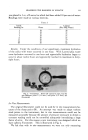
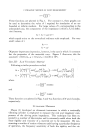
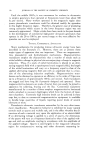
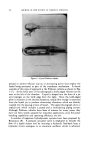
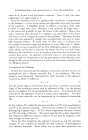
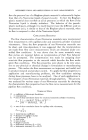
602 JOURNAL OF THE SOCIETY OF COSMETIC CHEMISTS are analogous to the rotational viscometer equations, if v is substituted for n and P for T, so that W = v/K•Cv (3) and r = P/K• (4) where K• and K2 are again instrumental constants. The factor Cv again equals 1 for shear-independent materials. For shear-dependent ma- terials Cv does not depend on the capillary dimensions but only on the degree of shear-dependency of the test material. Newtonian The flow curve of a Newtonian liquid is a straight line, Fig. 1. The inverse slope of this line is the NewtonJan viscosity u. Since the New- tonian viscosity is shear-independent and constant for any r across the annular space between Rc and Rb and for any d across the capillary the correlation factor C or Cp is equal to 1. When the material is definitely known to be NewtonJan, a one-point measurement is sufficient to de- termine its viscosity however, many materials which are believed to be NewtonJan are found to be non-Newtonian at higher rates of shear or at lower temperatures. Bin,•ham Plastic The flow curve of a Bingham plastic (2), Fig. 1, is also a straight line but only after a certain minimum shearing stressf is applied. At any shearing stress below f, no flow occurs and the sample behaves like a solid, while at any shearing stress above./the sample will flow. Since the shearing stress in a concentric-cylinder rotational viscometer is inversely proportional to the square of the radius, the shearing stress at the inside cylinder rb will always be larger than that at the outside cylin- der re. Thus at a given applied torque, f might be smaller than ro but larger than re, so that the material can flow near the inside cylinder but remains solid and forms a "plug" near the outside cylinder. Plug flow can be minimized by a proper design of the two cylinders. The two flow properties required to describe a Bingham plastic material are the plastic viscosity and the yield value. They are determined from the straight line part of the flow curve at values of shearing stress, where r• 5 f so that no plug flow is present. Then the plastic viscosity is the inverse slope of this line and is u - r - ,0 = k (7'- •',,) (5) G n and the yield value is proportional to the intercept on the shearing stress axis and is = k•7• (6)
Purchased for the exclusive use of nofirst nolast (unknown)
From: SCC Media Library & Resource Center (library.scconline.org)