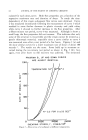
566 JOURNAL OF THE SOCIETY OF COSMETIC CHEMISTS oratory investigations to }arge scale production installations has not successfully been made due to both technical and economic limitations. Consequently, rather than presenting detailed accounts of further lab- oratory experiences in the study of ultrasonic emulsification, this paper will be devoted to a review of the basic principles with the view that better understanding of the scientific basis for this phenomenon may lead to a more rapid solution to the many problems that confront one who attempts to close the gap between laboratory experimentation and full scale pro- duction. • EMULSIFICATION The production of emulsions by ultrasonic means appears to involve competition between the breaking up of liquid particles by the forces associated with cavitation and the agglomerating or coagulating effect associated with the vigorous particle motion due to the pressure gradients existing in the sound field which increases the probability that emulsified droplets will collide and coalesce. In fact, simple experiments can be per- formed whereby emulsions are produced at low frequencies, say about 30 kc. per second at high sound levels and these same emulsions can be im- mediately broken by irradiation at a high frequency, say 400 kc. per second at a lower power level. In the former case, the rupturing effects of cavi- tation greatly exceed the agglomerating effects of particle motion. When the emulsion is irradiated at the high frequency, cavitation is less effec- tive in rupturing the multiphase components and the agglomerating effects of particle motion are permitted to cause recombination of the emulsified constituents. Therefore, it is suggested that lower frequencies be employed to produce emulsification. In order to employ cavitation to produce an emulsion, the various phases of the emulsifying constituents must, of course, be present in the regions of cavitation. For example, let us consider a simple case of a two-phase oil-water system. If oil is simply poured on the top of the water phase and if cavitation is produced in the water but not near the region of the inter- face, emulsification will not be produced unless sufficient turbulence agi- tates the interface so that mixing occurs. Emulsification of this system would be produced more rapidly and far more efficiently if the oil and water were mechanically shaken prior to irradiation so that a gross mixture was first produced. In this case, the region of cavitation would encom- pass numbers of large oil globules that could be broken up into fine drop- lets by the tremendous forces produced by collapsing bubbles. Therefore, efficient use of ultrasonic equipment dictates that some facility for mixing the various components be provided. Some degree of circulation is usually provided by high level ultrasonic irradiation but it is far cheaper to obtain the appropriate mixing by means of more conventional and cheaper

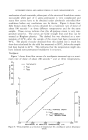
ULTRASONIC EMUI.SIFICATION: THEORY, APPI.ICATIONS, LIMITATIONS 567 apparatus. This remark is particularly true when large industrial scale equipment is considered. Emulsification can be produced by cavitation at the interface between solid transducers and the liquid being treated or within the liquid volume remote from any solid-liquid interface. In the former case, cavitation proceeds rapidly but large surface areas are required to produce large volumes of emulsion. A serious disadvantage of this type of emulsifica- tion equipment is that the intense cavitation produced at the solid-liquid interface gradually erodes the metal surfaces. Hence some trace amounts of metal can be found in emulsions that are produced in this manner. In the preparation of fat emulsions for intravenous administration, emul- sions produced in this manner are harmful since the trace metals produce deleterious effects when the fat emulsion is metabolized by the body. By the use of focused ultrasonic radiation, regions of cavitation can be produced at a distance from any solid-liquid interface. In this type of apparatus, difficulties from erosion of the solid surfaces can be avoided. THEORY OF CAVITATION Since cavitation is a necessary condition for successful emulsion pro- duction, a review of current theories of cavitation will be useful (4). Liquids that have not been specially treated normally contain some amount of impurities, dissolved gases, dust particles and the like. The presence of such foreign matter greatly affects the tensile strength and the liquid can be ruptured at much lower tensile stresses than otherwise would be the case. Since irradiation of a liquid by high level ultrasonic waves sub- jects the liquid to pressures which alternate above and below the value of static pressure, if the negative pressure alternations exceed the rupture strength of the liquid, cavities or voids in the liquid are formed. These voids can build up under certain conditions from microscopic bubbles to cavities of larger size. If bubbles exceed a certain size, the buoyancy forces will cause them to rise to the surface and, in fact, this effect is used to degas liquids by ultrasonic irradiation. On the other hand, sizes leading to unstable equilibrium can occur and the cavity suddenly col- lapses. Because a relatively large amount of potential energy is stored in the membrane-like wall of the void, when the radius decreases during col- lapse of the bubble, this energy is concentrated in a very small volume. Consequently, enormous forces can be produced and these are the forces that cause the many useful effects associated with cavitation. Rosenberg (5) indicates that cavitation at 60 kcps can include several different phenomena. The condition where larger bubbles are formed and float to the surface as discussed above sets in at sound pressure ampli- tudes in the order of one-fourth atmosphere. These larger bubbles are,
Purchased for the exclusive use of nofirst nolast (unknown)
From: SCC Media Library & Resource Center (library.scconline.org)