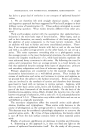
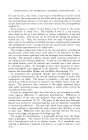
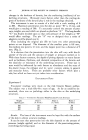
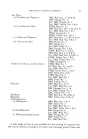
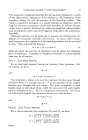
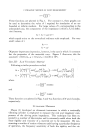
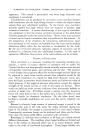
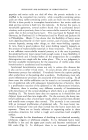
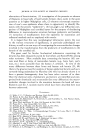
THE ROLE OF CO1.OR IN COSMETICS 347 Azo Dyes (a) Unsulfonated Pigments (b) Unsulfonated Dyes (c) Sulfonated Pigments (d) Suloeonated Dyes Triphenyhnethanes and Xanthenes Fluorans Xanthene Quinoline Anthraquinones (a) Sulfonated (b) Unsulfonated (c) Hydroxyanthraquinones D&C Red Nos. 35-36 & 38 D&C Orange No. 17 Ext. D&C Orange No. 1 Ext. D&C Yellow Nos. 5 & 6 FD&C Red No. 32 D&C Red Nos. 16, 17, 18, 31 & 39 Ext. D&C Red Nos. 1 & 2 FD&C Orange No. 2 FD&C Yellow Nos. 3 & 4 D&C Red Nos. 7, 9, 10, 15 & 34 Ext. D&C Red Nos. 9 & 12 D&C Brown No. 1 D&C Black No. 1 Ext. D&C Black No. 1 D&C Orange Nos. 3 & 4 FD&C Red Nos. 1, 2 & 4 D&C Red Nos. 5, 6, 8 & 33 Ext. D&C Red Nos. 8, 10 & 1i FD&C Yellow Nos. 5 & 6 Ext. D&C Yellow Nos. 1-4 FD&C Orange No. 1 FD&C Blue No. 1 DC Blue Nos. 4, 7 and 8 Ext. D&C Blue No. 3 FD&C Green Nos. 1, 2 & 3 D&C Green Nos. 4 & 7 FD&C Red No. 3 Ext. D&C Red No. 3 D&C Violet No. 1 D&C Yellow No. 8 D&C Red Nos. 21-27 Ext. D&C Red Nos. 4-6 D&C Orange Nos. 5-16 Ext. D&C Orange No. 2 ß D&C Yellow Nos. 7-9 D&C Red Nos. 19, 20 & 31 D&C Yellow Nos. 10 & 11 D&C Blue Nos. 5 & 9 D&C Green No. $ Ext. D&C Blue No. 4. Ext. D&C Violet Nos. 1 & 2 D&C Green No. 6 Ext. D&C Blue No. 5 D&C Orange No. • 15 D&C Violet No. 2 Ext. D&C Red No. 7 A wide range of dyes is now available for the coloring of cosmetics but the cost of extensive testing for irritation and toxicology greatly limits the

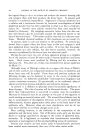
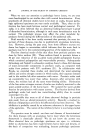
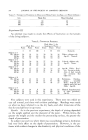
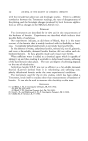
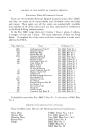
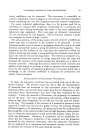
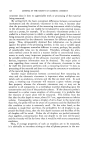
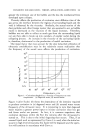
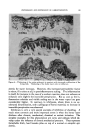
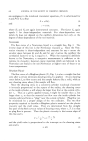
548 JOURNAL OF THE SOCIETY OF COSMETIC CHEMISTS introduction of new additions to the list. It has been estimated that a new color can be certified for about one thousand dollars and six months' ex- tensive testing. Of course the color must show freedom from sensitive action or irritation. There is still a severe limitation of colors for cos- metics that contain cationics or are strongly reducing in their action. HAiR ConoRs In the field of hair dyes noncertified coal tar dyes may be used but the product should be properly labeled with cautions. It is surprising that relatively few coal tar dyes are used in this field in spite of this freedom from the need of certified colors. In the hair dye colors the great majority of products used are aromatic amines or phenols such as paraphenylene diamine, metaphenylene diamine or aminophenol, paraminophenol, di- aminophenol, meta-toluylene diamine, resorcinol, catechol, pyrogallol, paramino diphenylamine, diamino diphenylmethane and sulfonated de- rivatives of these amines. These aromatic amines and phenols are dispersed in an alkaline solu- tion or in alcoholic alkaline solutions and mixed with hydrogen peroxide just before applying to the hair. The aromatic amines or phenols are oxidized slowly to insoluble dark colored pigments. These colored pig- ments are formed within the hair shaft and are extremely fast to rinsing and shampooing. The hydrogen peroxide also acts on the natural color in the hair to lighten or to completely destroy the color, leaving the hair much lighter or completely bleached. The amino phenols are then oxi- dized in the bleached hair shaft to give a new shade to the hair. By con- trolling the ratio of hydrogen peroxide and amino phenol or aromatic dia- mine a wide range of shades can be obtained. The following table gives the shade which these aromatic amines and phenols give on oxidation within the hair shaft. Lower concentrations give lighter shades. Blondes Reds Browns Mahogany Black p-Phen.ylene Nitrophenylene Amino diphenyl Nitrophenylene p-Phenylene diam•ne diamine amine diamine diamine Nitrophenylene p-Phenylene Meta-amino Picramic acid Resorcinol diamine diarnine phenol Meta-toluylene p-Aminophenol Meta-phenylene p-Phenylene Tri-hydroxy- diamine diamine diamine toluene Resorcinol Resorcinol Nitro. phenyl Aminonitro Aminoanisol p-Toluylene Pyrogallol glycine phenol diamine The concentration of these aromatic amines is rarely over 1 per cent in the hair dye and the phenols are rarely over 5 per cent. The nitro- amines are rarely used in concentrations of over one-tenth of one per cent. There is no question but that the aromatic amines and the amino-
Purchased for the exclusive use of nofirst nolast (unknown)
From: SCC Media Library & Resource Center (library.scconline.org)