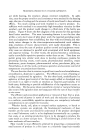
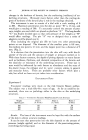
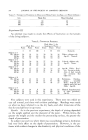
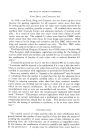
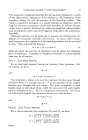
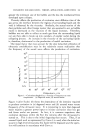
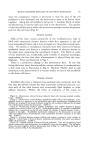
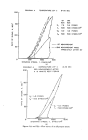
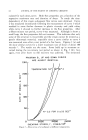
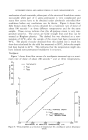
PROCESSING PRODUCTS IN VOTATOR APPARATUS 513 sistency, crystal size and uniform distribution of color and perfume. These are only a few of the myriad of operations that must be performed before the various ingredients emerge as shaving cream, shampoo, creams, lotions, deodorants, antiperspirants, depilatory creams, tooth paste, etc. .The control of heating or cooling in such operations is essential because of the profound effect it has on the final product quality. For example, in emulsification, crystallization, gelation and texturization, it is a rare case when their successful attainment is not a function of a time-temperature- mechanical work relationship. Variation of any one of these three con- trolling items usually causes a marked and measurable difference in the final product. For example, at any one condition of time and temperature the variation of mechanical work during heating or cooling can result in a fluid material when a paste is required or vice versa. In the case of emulsion formation, if the formulation, the degree of mechanical work and the hold- ing time in process are held constant but the temperature gradient is allowed to vary, a product ranging from a very thin pourable fluid to a still solid paste can be created. This is particularly true when a formula 50 =. 3oo o uJ •_• .-. so =' • •oo 50 IOO so 14o FOUR DAYS •mpemtur• Flow Number .t79'F IN [OUT 4 DAYS LATER •verog• 141 /90 66.P 61.0 605 6P.56 158 90 :3599 $61.0 327J :349.4 182 89 76.8 75.9 75.2 74.6:3 196 90 5Z.2 50.6 49.9 50.9 199 94 652 60.6 60.4 62.66 Note: Only one VOTATOR Heot Exchonger Used /60hr$ LATER-• / '/ , , //AFTER RUN ) // I I I I I 150 160 170 180 190 200 EMULSIFICATION TEMPERATURE Figure 3

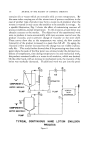
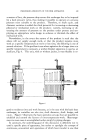
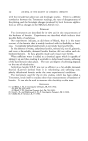
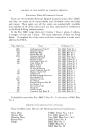
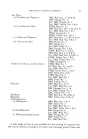
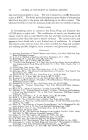
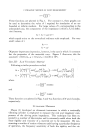
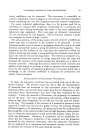
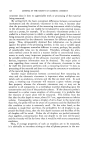
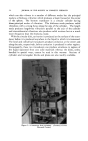
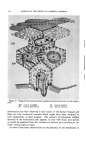
514 JOURNAL OF THE SOCIETY OF COSMETIC CHEMISTS contains oils or waxes which are normally solid at room temperature. By the same token varying one of this triumvirate of process conditions in the case of another type of product may form a water-in-oil emulsion when the reverse is wanted or may cause the emulsion to be unstable in storage. As a specific illustration , Fig. 3 shows the effect of maintaining constant.all process conditions, except temperature. In this instance, a hand lotion was already a success on the market. The objectives of the experimental work were to produce it more economically with more accurate control over the product viscosity, and to prevent change of viscosity on the store shelf. 'These curves show that as the temperature was raised, the flow number '(viicosity) of the product increased to a peak then fell off. On aging, the ß viicosity or flow number increased but the change was not visible or physi- cally felt. This study further showed that if the processing was done at the point where the peak of the flow point was attained under the dictated con- 'ditions of temperature, time during temperature rise and mechanical work, the product remained stable as a water-in-oil emulsion, which was desired. On the other hand, with an increase in mechanical work, the viscosity of the lotion was markedly decreased. If additional work was put into the prod- ROTAMETER COMPONENTS (WATER MlSClBLE) PUMP PUMP PUMP VOTATO R HEAT EXCHANGER TYPICAL CONTINUOUS HAND LOTION EMULSION PROCESS Figure 4
Purchased for the exclusive use of nofirst nolast (unknown)
From: SCC Media Library & Resource Center (library.scconline.org)