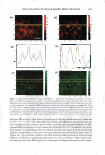
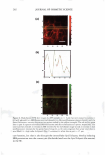
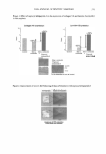
J. Cosmet. Sci., 59, 263-289 Ouly/August 2008) Visualization and quantification of skin barrier perturbation induced by surfactant-humectant systems using two-photon fluorescence microscopy SASWATA GHOSH, DAEKEUN KIM, PETER SO, and DANIEL BLANKSCHTEIN, Departments of Chemical Engineering (S.G., D.B.) and Mechanical Engineering (D.K., P.S.), Massachusetts Institute of Technology, Cambridge, MA 0213 9. Accepted for publication February 20, 2008. Synopsis In order to visualize the effects of aqueous surfactant-humectant systems on the skin barrier, an in vitro two-photon fluorescence microscopy (TPM) study, including dual-channel visualization, was carried out. TPM is a non-invasive imaging technique based on two-photon induced nonlinear excitations of fluoro phores, with the capability for deep-tissue imaging (up to several hundred micrometers). The following aqueous solutions of surfactants, a humectant, and a surfactant+humectant mixture that contacted pig full-thickness skin (p-FTS) were studied: (i) a harsh surfactant solution-sodium dodecyl sulfate (SDS) (1 wt%) (ii) a harsh surfactant+humectant solution-SDS (1 wt%) + glycerol (10 wt%) (iii) a mild surfactant solution-sodium cocoyl isethionate (SCI) (1 wt%) (iv) a control solution-phosphate-buffered saline (PBS) and (v) a humectant solution-glycerol (10 wt%). Sulforhodamine B (SRB), a hydrophilic fluorescent probe, was used to visualize the effects of aqueous contacting solutions i - on the skin barrier morphology. The results of the TPM visualization study revealed that SDS induces corneocyte damage by denaturing keratins and creating intracorneocyte penetration pathways. On the other hand, SDS+glycerol did not significantly induce corneocyte damage. The dual-channel TPM images corresponding to aqueous contact ing solutions iii-v showed low SRB penetration into the corneocytes, as well as localization of the SRB probe within the lipid bilayers surrounding the corneocytes of the SC. Through a quantification of the amount of SRB that penetrated into the skin as a function of skin depth, we found that adding glycerol to an SDS aqueous contacting solution can significantly reduce the SDS-induced penetration depth of SRB, which provides evidence of the ability of glycerol to mitigate SDS-induced skin barrier perturbation. The distri bution of SRB in the p-FTS samples was analyzed using a theoretical model that quantified changes in the skin aqueous pore characteristics induced by aqueous contacting solutions i, ii, iii, and v, relative to aqueous contacting solution iv, the control. The results of the theoretical model indicate the following ranking order in the extent of perturbation to the skin aqueous pores (from the highest to the lowest): i ii iii iv v. The development of such an in vitro visual ranking methodology, including quantification using TPM, can potentially reduce mariy costly in vivo screening procedures, thereby significantly reducing the cost and time-to-market of new cosmetic formulations containing surfactants and humectants. INTRODUCTION Surfactants are commonly used in skin cleansing formulations because of their ability to stabilize oil-water emulsions and clean the surface of the skin. However, some surfac- Address all correspondence to Daniel Blankschtein. 263

264 JOURNAL OF COSMETIC SCIENCE tants like sodium dodecyl sulfate (SDS) may penetrate into the skin and induce skin barrier perturbation by reducing the barrier properties of the stratum corneum (SC) (1-9). On the other hand, humectants like glycerol can maintain the water content of the skin and preserve the skin barrier (10-15). In addition, humectants like glycerol have been shown to mitigate surfactant-induced skin barrier perturbation in vitro (2). We have recently investigated the effect of SDS and glycerol on the skin barrier in vitro using macroscopic measurements of skin barrier perturbation in the context of a hindered transport aqueous porous pathway model (2). This analysis quantified the effect of glycerol on the SC morphology in vitro by showing that glycerol could reduce the size of the aqueous pores 1 in the SC relative to the size of the SDS micelles, such that the larger SDS micelle2 could not penetrate into the SC through the smaller aqueous pores and induce skin barrier perturbation. Because glycerol can mitigate SDS-induced skin barrier perturbation by modifying the SC morphology relative to: (a) a control (phos phate-buffered saline, PBS), (b) an aqueous solution of SDS, and (c) an aqueous solution of a mixture containing SDS and glycerol (2), one should be able to visually detect this change in SC morphology. Such a skin imaging capability can provide visual evidence of the ability of glycerol to mitigate SDS-induced skin barrier perturbation. In addition, once surfactants like SDS have penetrated into the SC, it is not known whether they are located in the keratins in the corneocytes or in the intercellular lipids in the lamellar bilayers comprising the SC. Several researchers have hypothesized that surfactants interact with the corneocyte keratins (6,9,26) and also with the lamellar lipid bilayers (5 ,28). A skin imaging technique, which can visualize the morphology of skin that has been exposed to an aqueous surfactant solution, may help shed light on this important issue. In addition, by contacting skin with surfactant solutions in the presence and in the absence of humectants, using an appropriate skin visualization technique, one can obtain fundamental insight into the modification of the skin barrier morphology induced by surfactants in the presence of humectants. Specifically, one may also be able to determine conclusively if a specific surfactant interacts strongly with the keratins in the corneocytes and/or with the intercellular lipids. Furthermore, one may also deter mine conclusively how such surfactant-skin interactions are modified by a humectant like glycerol when it is added to the aqueous surfactant solution contacting the skin. With the above need in mind, we have used two-photon fluorescence microscopy (TPM), an important invention in biological imaging (19), to visualize, as well as to quantify, the effects of surfactants and humectants on the skin morphology. Traditional biopsies of tissues, which are one of the principal pathological analysis methods for tissues such as human skin and pig full-thickness skin (p-FTS), can provide morphological infor mation with subcellular details. However, this method has some inherent limitations: (a) it involves tissue excision, fixation, and imaging to obtain useful morphological infor mation, and as such, is of an invasive nature, and (b) much of the cellular biochemical information is inevitably lost during the surgical and fixation procedures. On the other hand, advanced imaging methods like confocal laser scanning microscopy, 1 Structurally continuous, though tortuous, lacunar domains in the SC provide a morphological basis for the existence of aqueous pores in the SC (31-38). In fact, aqueous pores are the primary transport route for hydrophilic chemicals, such as an SDS micelle, to penetrate into, and across, a hydrophobic SC membrane (2,31-38). 2 Surfactants, such as SDS, consist of a hydrophilic head and a hydrophobic tail, and self-assemble to form micelles at a concentration above the critical micelle concentration (CMC) (3,4).
Purchased for the exclusive use of nofirst nolast (unknown)
From: SCC Media Library & Resource Center (library.scconline.org)