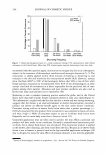
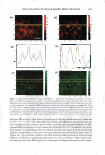
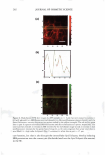
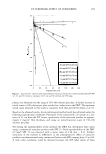
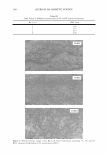
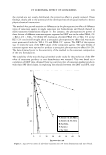
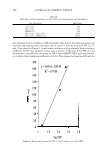
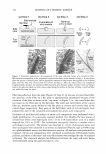
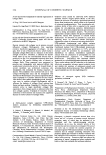
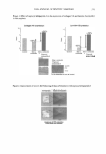
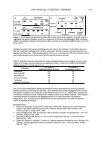
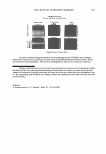
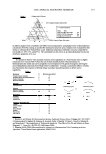
354 JOURNAL OF COSMETIC SCIENCE CERAMIDASE CONTROL: AN APPROACH TO IMPROVING SKIN HEALTH Abstract David W. Koenig, Ph.D. and Ben Minerath Global Science and Technology, Kimberly-Clark Corporation, Neenah, WI Skin care products that enhance skin barrier function can provide health and beauty benefits. Ceramides are essential for normal skin barrier function. Depletion of stratum comeum ceramides results in loss of skin barrier integrity and skin disease. Botanical compositions that modulate the activity of stratum comeum lipid processing enzymes in vitro were identified. Specifically, botanicals were found to decrease ceramidase and increase sphingomyelinase activity, respectively. Taken together such compositions could be an effective means to preserve stratum comeum ceramides in vivo and improve skin barrier function. Such an approach can be used alone or in combination with current topical products containing ceramides that supplement endogenous production. Introduction Normal skin barrier function depends on the presence of intracellular lipid structures in the stratum comeum. Ideal lipid structures are multilamellar in appearance and reside between comeocytes. They are comprised of fatty acids, ceramides, and cholesterol in the appropriate proportions ( l ). Stratum comeum lipid structures arise from the exocytosis of precursors and processing enzymes by viable epidermal keratinocytes. These events result in the requisite spatial-temporal proximity of enzymes and substrates that eventuate in the formation of the stratum comeum lipid structures (2). A variety of exogenous and endogenous factors can impact skin barrier function which can result in skin inflammation directly or by allowing penetration of various irritants. Examples of exogenous factors include surfactants, solvents, and biological insults. These factors can deplete one or more key stratum comeum lipid constituents. Many products and technologies are available to help restore barrier function via topical application of lipids to the skin to replenish depleted components (3). These approaches are typically quite expensive. Cost effective, natural means to maintain normal skin barrier function are needed. Materials and Methods The ceramidase and sphingomyelinase activity in both fecal extracts and nasal secretions were assayed by incubation of fluorescent BODIPY® FL C5-ceramide (N-(4,4-difluoro-5,7-dimethyl-4-bora-3a,4a-diaza sindacene-3-pentanoyl) sphingosine) or BODIPY® C5-sphingomyelin (N-(4,4-difluoro-5,7-dimethyl-4- bora-3a,4a-diaza-s-indacene-3-pentanoyl) sphingosyl phosphocholine) with the biological material. Assays were conducted in phosphate buffered saline (PBS) at pH 7.4 overnight at 25 °C. Following incubation, solvent extraction was performed followed by thin layer chromatography (TLC). Digital images of the TLC plates were collected when illuminated with UV light (364 nm). The relative enzyme activity for each sample was determined using densitometry. The ability of botanicals to alter ceramidase or sphingomyelinase activity was determined by incubation of the purified enzyme with the botanical of interest in PBS at pH 7.4 with constant mixing for 30 min at 25 °C. A positive control was included to determine enzyme activity with the BODIPY® lipid substrate in PBS buffer devoid of any botanical. Likewise, a substrate control was run using the BODIPY® lipid substrate plus the botanical in PBS. Enzyme activity was determined as described previously, employing solvent extraction of the test mixture, followed by TLC, imaging of the plate, and finally densitometry. Impact of the botanical on enzyme activity was determined by comparing activity observed in the positive control to that with the botanical present. Results and Discussion Fecal extracts and nasal secretions were ·observed to hydrolyze ceramides in vitro (Figure la, b). Forty three botanical compositions were evaluated for their impact on the activity of ceramidase (Figure le) and sphingomyelinase, respectively. Of these, six botanical compositions reduced ceramidase activity at least 90% and seventeen more that doubled sphingomyelinase activity. A few of the botanical composition shared both attributes (Table I).

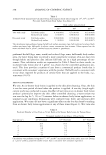
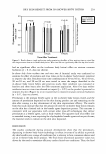
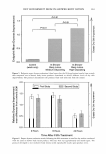
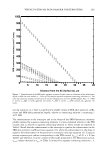
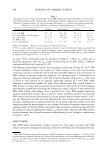
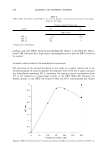
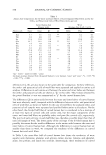
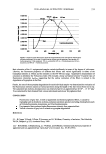
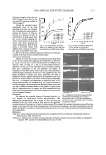
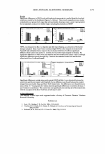
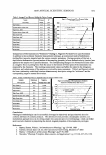
2008 ANNUAL SCIENTIFIC SEMINAR a Ceramide Fatty Acid No Fecal Extracts C I.! '"' :_------A _. -1 . ._. � - Ceramide 1-b----=================-IFatty Acid No Nasal Sttn:liou Ceramide El e e - - • Fatty Acid - • Ceramidase - .. Dragoderm Tea Extnct - Comrrey Lear - 355 Figure 1. Fecal extracts (a) and nasal secretions (b) are able to hydrolyze cerarnides. Selected cosmetic ingredients can inhibit ceramidase activity (c). Images are of thin layer chromatography plate containing samples of cerarnide incubated with biological sample or botanical in phosphate buffered saline, pH 7.4 for 18 hr at 25 °C. Biological exudates from humans can damage skin and result in skin irritation. Such irritation may be in part due to enzymatic degradation of vital skin components. Both fecal extracts and nasal secretions can degrade ceramide in vitro. When this degradation occurs in vivo, the reduction of this key stratum comeum lipid could eventuate in loss of skin barrier function and increase skin irritation. Table 1. Selected botanical compositions can change sphingomyelinase and ceramidase activity in vitro. Values are% change in activity observed as compared to control. buffered saline, pH 7.4 for 30 min at 25 °C. Botanical Dragoderm Aloe Ferox HS Phytoplenolin American Ginseng Tea Extract Comfrey Leaf Extract % Change in Sphingomyelinase Activity 450 410 430 320 -20 -30 Assays were conducted in phosphate % Change in Ceramidase Activity -90 -50 -50 -50 -90 -90 The in vitro results reported here indicate that botanical extracts can modulate the activity of enzymes normally involved in processing key skin lipids. Skin treatments that increase sphingomyelinase activity will produce ceramides, a key component of skin barrier function in vivo (4). Additionally, compositions that decrease ceramidase activity could preserve ceramide content in the stratum comeum. Taken together, coordinated control of ceramidase and sphingomyelinase in vivo may be possible with botanical compositions. If so, inclusion of these botanicals into products may present a cost effective means to deliver an important skin benefit. Literature Cited l. Kessner D, Ruettinger A, Kiselev MA, Wartewig S, Neubert RH. Properties of ceramides and their impact on the stratum comeum structure: part 2: stratum cornewn lipid models systems. Skin Pharmacol Physio/. 21(2): 58-74. 2008. 2. Choi MJ, Maibach HI. Role of ceramides in barrier function of healthy and diseased skin. Am J Clin Dermatol. 6(4): 215-223. 2005. 3. Machado M, Bronze MR, Ribeiro H. New cosmetic emulsions for dry skin. J Cosmet Dermarol. 6(4): 239-242. 2007. 4. Jensen JM, Schutze S, Neumann C, Proksch E. Impaired cutaneous permeability barrier function, skin hydration, and sphingomyelinase activity in keratin IO deficient mice. J Invest Dermato/. 115(4): 708-713. 2000.
Purchased for the exclusive use of nofirst nolast (unknown)
From: SCC Media Library & Resource Center (library.scconline.org)