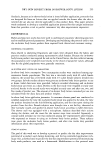
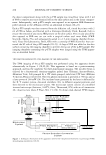
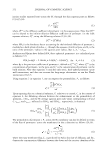
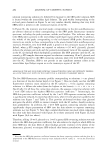
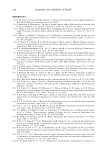
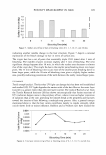
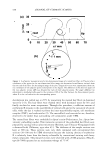
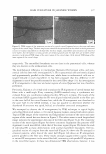
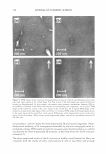
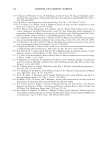
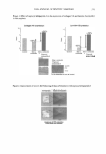
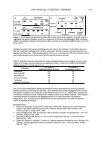
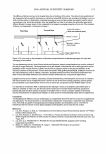
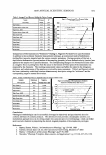
HAIR CURVATURE IN JAPANESE WOMEN 321 In the second staining method, with silver nitrate, hair fibers were reduced in an aqueous solution of 0.54 M thioglycolic acid at pH 9.0 at 25 ° C for 10-40 min. The reduced hair fibers were then washed twice with deionized water for 30 s and finally air-dried. The reduced hair fibers were embedded in Spurr's resin. Transverse and longitudinal thin sections, of 100-nm thickness, of the reduced hair fibers, were prepared with an ultra microtome and a diamond knife. The thin sections were immersed in an aqueous solution of 1.0 mM AgNO3 , 2.0 mM EDTA, and 100 mM Tris/HNO3 buffer at pH 7.0 at 25 ° C for 10 min, and then washed twice with deionized water and air-dried at room temperature. The prepared sections were observed by TEM as mentioned above. In the case of staining with silver nitrate, the cystine (disulfide) bonds of proteins in the hair fiber are reduced to cysteine. The free sulfhydryl (R-SH) groups of cysteine are stained with silver ions due to the high reactivity of silver cations with thiolate anions (10,11). The matrix region between intermediate filaments (IFs) in macrofibrils and exocuticles are observed to be darker than IFs and surrounding cell components under TEM because they contain larger amounts of cystine-rich proteins such as the high sulfur keratin-associated proteins. In the above TEM observations, we attempted to observe the relationship between the microstructure and the curved shape of the hair fiber. When a curved hair fiber was sectioned with an ultra-microtome, the cross-sectional shape of the embedding resin with the fiber was prepared as an asymmetrical, trapezoidal shape, having one set of parallel sides in relation to the direction of the hair curvature. During the TEM obser vation, the direction of hair curvature and the relative position of the observed area were determined, based on the asymmetrical shape of the cross section. For example, when the concave side of a curved hair fiber is oriented to the longer side of the parallel sides of the trapezoidal section, the half area from the fiber center to the longer side and the opposite half area are determined as the inner and outer regions of the curved shape, respectively. AMINO ACID ANALYSIS The amino acid compositions of keratin in the inner and outer halves of the curved hair fibers were determined. Typical highly curved fibers (curl radius: 0.7-2.5 cm) were sampled from 39 selected volunteers. Each of the curved fibers was divided into an inner half and an outer half by cutting the fiber at its midpoint along the longitudinal direction. The schematic diagrams of the preparation of the inner and outer halves are shown in Figure 2. A curved hair fiber of 1.0-cm length was put on a flat celluloid plate. An appropriate amount of ethyl acetate was applied to the celluloid plate until the hair fiber was covered with this solvent (Figure 2a: Step 1). Since the celluloid near the plate surface was partially dissolved in the ethyl acetate, the hair fiber on the plate was covered with the dissolved celluloid. After the ethyl acetate was completely evaporated from the plate, the curved hair fiber was fixed near the plate surface (Figure 26: Step 2). The fixed hair fiber was then hand cut with a sharp scalpel (Feather, Surgical Blade #11) along the midline of the fiber axis (Figure 2c: Step 3). The midline was determined by the position of porous medulla because the medulla usually exists at the center of hair fiber. The hand cutting with the scalpel was performed under a stereoscopic zoom microscope (Nikon, Type SMZ-10) because the magnification (x 10-x40) and focal depth (mm order) of the stereoscopic microscope were adequate for the hand cutting of hair fiber. Then, each half

322 Side view Top view JOURNAL OF COSMETIC SCIENCE (a) Step 1 Ethyl acetate Hair fiber J Hai�//? fiber {jf Celluloid plate (b) Step 2 (c) Step 3 Evaporation of Hand-cut �ch (d) Step 4 C (· .. ··· ► D Outer half Inner half Figure 2. Schematic diagrams for the preparation of the inner and outer halves of a curved hair fiber. Micrographs corresponding to the preparation steps are also shown at the bottom. (a) Step 1: A curved hair fiber was put on a celluloid plate, and an appropriate amount of ethyl acetate was applied to the celluloid plate until the fiber was covered with this solvent. (b) Step 2: After the ethyl acetate was completely evaporated from the plate, the curved hair fiber was fixed near the plate surface. (c) Step 3: The curved hair fixed on the plate was hand cut with a sharp scalpel along the midline of the fiber. (d) Step 4: Each half fiber was pulled out from the plate. fiber was pulled out from the plate (Figure 2d: Step 4). In the case of curved hair fiber, the direction of the fiber on a flat plate is spontaneously determined because of the curvature of the fiber, as shown in the "top views" in Figure 2, i.e., the curved fiber does not rotate on the fiber axis on the flat plate. The inner and outer halves of the curved fiber are, therefore, easily defined on the flat plate as concave and convex sides of the curved shape, respectively. Four pairs of the half fibers, each of 1.0-cm length, were prepared for each of the volunteers and analyzed for amino acid composition. Hydrolysis of the fibers and analysis of amino acid composition were performed with a slight modification of a previously reported method ( 12). Briefly, the four pieces of divided hair fibers were hydrolyzed with 1.0 ml 6 M hydrochloric acid in a sealed ampoule for 24 h at 110°C. The hydrolysate was gently dried to a residue with a centrifugal concentrator. The residue was dissolved in 1.0 ml of ultra-pure water, and then its aliquots were subjected to an amino acid analyzer (Hitachi type 1-8500) using an o-phthalaldehyde amino acid derivatization reaction. All analyses were performed in triplicate. Amino acid compositions were calculated as residues per 100 residues (moles percent), and those in the inner- and outer-fiber halves were averaged for the 39 analyzed volunteers. The statistical analyses for differences between the inner and outer halves were performed using the paired Student's t-test.
Purchased for the exclusive use of nofirst nolast (unknown)
From: SCC Media Library & Resource Center (library.scconline.org)