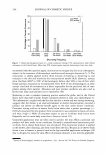
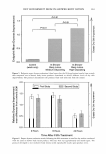
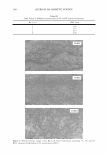
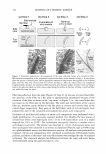
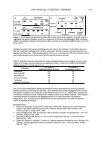
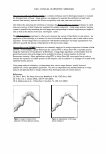
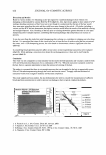
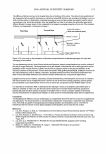
372 JOURNAL OF COSMETIC SCIENCE VESICULAR DELIVERY SYSTEMS: FROM PHOSPHOLIPIDS TO SILICONES FOR TARGETED SKIN SITES Shaow B. Lin, Ph.D.1, Stephanie Postiaux2, and Joanna Newton2, Ph.D. 1 Science & Technology, Specialty Chemicals Business, Dow Corning Corporation, Midland, MI 2 Application Development, Life Science Innovation Team, Dow Corning Europe, Seneffe, Befoium Email: shaow.lin@dowcorning.com Introduction: Vesicles are technically complex structure like "hollow particles" with aqueous phase at the exterior and the interior of the "particles", with a bilayer forming the vesicular particles. Because of this unique structure, vesicles are recognized as unique delivery systems for their ability to encapsulate lipophilic actives within the bilayer membrane. Some vesicles remain highly flexible and defonnable while loaded, making it possible to design vesicle that are capable of penetrating through the skin barrier layer and deliver actives to the target sites. Vesicles are historically synonymous to liposomes as vesicles are predominantly phospholipids-based. Recently a new class of silicone-based vesicles has been introduced and their potentials for delivery of actives have been suggested [1, 2). In this study, the structural characteristics of both phospholipid vesicles and silicone vesicles are described along with the comparison of their efficacy for the delivery of actives to targeted skin sites. Materials and Met.bods: The lipid-based vesicles in this report are prepared from soybean lecithin fraction which was further purified to high phosphatidylcholine (PC) and linoleic acid contents. The high PC/linoleic acid derived vesicles are flexible and very deformable, making them capable of penetrating into the upper skin layers. An ESR ( electron spin resonance) methodology was used in an ex-vivo evaluation to demonstrate the penetration of liposome containing model actives. Non-penetrating vesicular delivery systems consist of two structural types: sterically hindered liposomes and silicone vesicles. The sterically hindered liposomes are prepared with long PEG-grafted phospholipids on the exterior surface of the PC bilayer. Silicone vesicles are prepared from selected PEG-12 Dimethicone polymers via a Dow Coming patented process [3]. PEG-12 dimethicone is a rake-type linear silicone polyether with siloxane backbone and PEG-12 polyether grafted on the siloxane. Figure I illustrates (A) how the PEG-12 dimethicone arranges into bilayer and vesicular formation, and (B) structure of sterically hindered liposomes. (A) PEG polymer --. Dimethicone (B) Figure I. Non-penetrating vesicles options (A) Si vesicles from polymeric PEG-12 dimethicone, (B) sterically hindered liposomes from PEG-grafted phospholipid vesicles Results and Discussion: The vesicular delivery systems - both phospholipid-based and silicone-based vesicles, provided the essential protection to the encapsulated actives in aqueous cosmetic products, as have been previously demonstrated [2- 4].

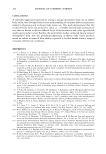
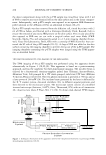
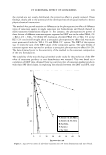
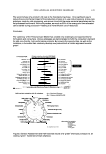
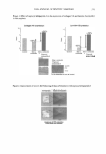
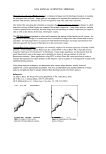
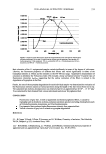
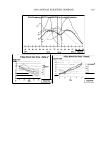
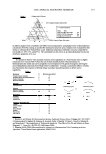
2008 ANNUAL SCIENTIFIC SEMINAR 373 The efficacy of delivery actives to the targeted skin sites is the focus of this study. The study of skin penetration of the encapsul ted actives and tbe liposomes are carried out using ESR (electron spin resonance) technique in ex-vivo with a test free radical. A formulation containing liposome encapsulated anti-oxidant was applied, and the radical scavenging activity within the epidermis layer was quantified over time to determine the antioxidant penetration efficacy through tbe upper layers of skin, compared to the natural scavenging properties of neat skin. The schematic of the ex-vivo experiment is illustrated in Figure 2. Neat Skin J 0 0 C Treated Skin \ 0 0 .,/ A�plicd fo:mulation /With anti-oxidants (blue) Stratum C•rneum Figure 2. Ex-vivo study on the penetration of liposome-encapsulated anti-oxidant through upper skin layer and scavenging of test radicals The non-penetrating vesicles, both silicone vesicles and liposomes, deposit encapsulated actives onto the surface of the skin (or target substrates). The encapsulated actives are released via mechanical rub-on after application and no penetration of the vesicular delivery systems into the skin are expected, based on the physical bulkiness or the sterically hindrance of the polymeric silicone molecules and the PEG-grafted phospholipids. Examples of actives for skin topical deposition such as vitamins, sunscreens, and plant extracts have been successfully encapsulated into these vesicles and further formulated into selected cosmetic formulations for such potential applications. Lipophilic actives such as vitamins, sunscreens, silicone fluid emollients, and hydrophilic actives such as vitamin C and natural extracts can be incorporated into Si vesicles via one of two Dow Coming proprietary process options: pre-load method or post-load method, where actives of interest are incorporated into pre-formed empty vesicles. It is important to note that the PEG-12 dimethicone for making Si vesicles is hydrophobic and exhibits poor to almost no solubility in water. Yet, the derived silicone vesicles show excellent bilayer flexibility, good active payload and good structural stability in aqueous environment. The Si vesicle is uniquely capable of delivering silicone fluid emollients at high payload, making it an ideal option for non-penetrating topical delivery applications. Conclusions: Two �damentally different vesicular technologies are compared for their fit for delivery of actives to targeted skin site applications. The skin penetration or non-penetration characteristic of liposomes is controlled at the molecular level, while both are capable of encapsulating and retaining lipophilic and hydrophilic actives. The PEG-12 Dimethicone derived silicone vesicles deposit lipophilic and hydrophilic actives onto the skin surface. References: I. Lin, S.B., Postiaux, S., Kim, G., "Development of A Novel Silicone-based Vesicle Delivery System," 23rcl IFSCC (Octo r 2004, Orlando, FL). 2. Lin, S.B., Postiaux, S., and Newton, J., "Novel Silicone Vesicles for Delivery of Actives in Personal Care," pp. 88-89, Program and Preprints of2005 Society of C05metic Chemists Annual Scientific Seminar (June 2005, Las Vegas, NV). 3. Lin, S.B., et al., WO2005103157, WO2005 l 03118, and WO2005 l 02248, assigned to Dow Corning Corporation (April 2005). 4. Blume, G., Sacher, M., Teichmuller, D., Jung, K., "Method/or The Analysis ofLiposomes," WO2007/003538Al (January 2007).
Purchased for the exclusive use of nofirst nolast (unknown)
From: SCC Media Library & Resource Center (library.scconline.org)