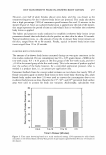
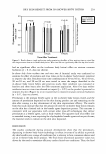
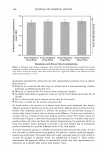
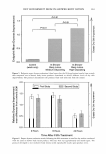
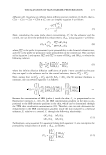
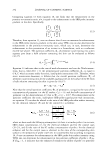
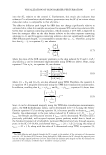
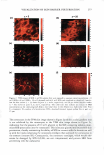
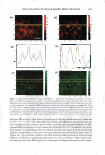
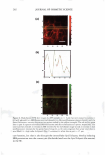
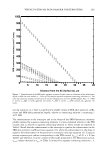
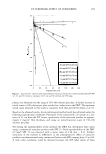
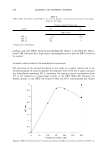
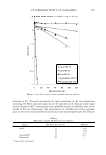
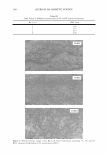
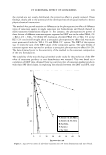
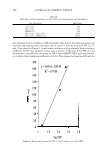
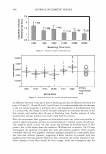
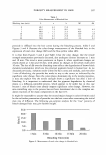
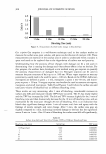
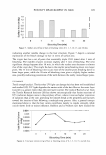
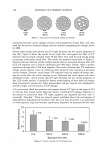
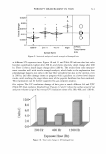
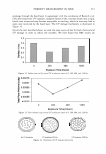
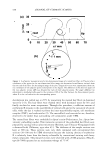
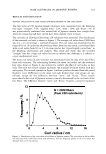
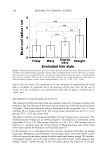
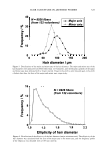
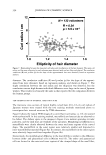
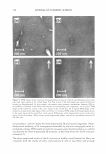
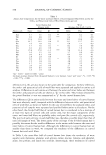
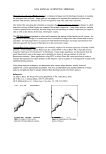
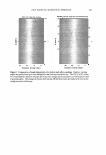
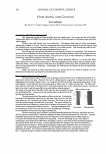
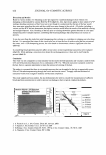
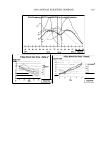
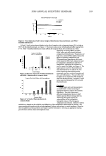
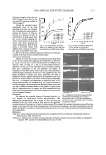
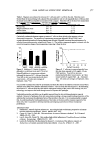
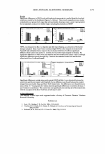
352 JOURNAL OF COSMETIC SCIENCE Looking at the replicas showed that, within as little as 28 days of application, a significant reduction in fine lines and wrinkles could be observed in the presence of caprooyl tetrapeptide-3, for an average reduction of 16% and a maximum of 29% over placebo (Figure 2). Interestingly, for older people aged 50-65 within the group, benefits kept on progressing over 2 months for an average reduction in fine line & wrinkles of27% (maximum 35%). Ultrasonographic study: To further docwnent the in-vivo effect of caprooyl tetrapeptide-3 on dermal structures, echographic measurements were taken. High-frequency ultrasound imaginf ( echography) can be used to identify the dermis which is thus visualized as a speckled pattern . The echoes of the dermis are considered to originate from the boundaries between collagen and elastin fibers, the surrounding water-rich ground substance, and cells 5 • Changes in echogenicity may thus reflect an altered connective tissue composition of the dermis. In particular, appearance of a superficial low-echofenic band in the dermis, immediately below the epidermal entrance echo, has been related to age6' • Dermal echogenicity has therefore been proposed as a marker for skin aging. All 27 women volunteers aged 40 to 65 applied a placebo serum on the crow's feet of one randomized temple area and the same formulation containing 2.5% caprooyl tetrapeptide-3 on the crow's feet of the other temple. Applications were repeated twice daily for 168 days. Skin echography scanning was performed on temple areas at day O and day 168. A 20-MHz ultrasound scanner was used to obtain cross-sectional images of the skin (B mode). Results showed that caprooyl tetrapeptide-3 treatment had a positive influence on skin connective tissue. Application of the peptide for 6 months restored the echogenic response of the upper dermis known to be lost with aging. Most notably, the ultrasound parameter "entropy" improved significantly in the treated area versus placebo for 78% of the volunteers. Entropy represents the "disorder" of an image which increases with better skin hydration. Conclusion Biomimetic peptides are potent instruments to restore and support skin physiology. They mimic natural skin factors and have the potential to revive signaling pathways that have lost responsiveness with age. In this report, we present evidences supporting the use of a growth-factor derived peptide (caprooyl tetrapeptide-3) for the reduction of fine lines and wrinkles. Ultimately, the study demonstrates that supporting the production of structural proteins involved in skin cohesion at the DEJ is an effective strategy to provide a long term significant reduction in the appearance of fine lines & wrinkles in mature skin. References 1- RE Burgeson and AM Christiano, Curr Opin Cell Biol 9(5), 651-8, (1997) 2- Y Jiang, DW Cheng, ED Crook, and LP Singh, Mo/ Cell Biochem 278(1-2), 165-75, (2005) 3- S Schoepe, H Schacke, E May, and K Asadullah, Exp Dermato/ 15(6,) 406-20, (2006) 4- SM Milner, OM Memar, G Gherardini , JC Bennett, and LG Phillips, Dermato/ Surg 23(1), 43-5, (1997) 5- S Richard, B Querleux, J Bittoun, 0 Jolivet, I Idy-Peretti, 0 de Lacharriere, and JL Leveque, J Invest Dermato/ 100(5), 705-9, (/993) 6- K Tsukahara, Y Takema, S Moriwaki,T Fujimura, T Kitahara, and G Imokawa, Dermatology 200(4), 303-7, (2000) 7- JM Waller and HI Maibach, Skin Res Technol 11(4), 221-35, (2005)

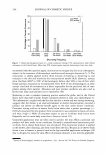
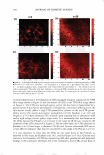
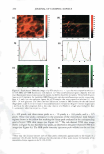
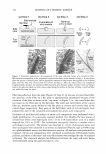
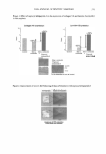
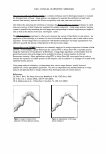
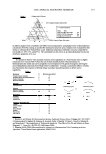
2008 ANNUAL SCIENTIFIC SEMINAR 353 Figure l. Effect of caprooyl tetrapeptid 3 on the expression of collagen VII and larninin-5 at the DEJ in skin explants Co j V Exp Ion j Lami � Exp Ion Figure 2. Impr vement of crow's feet following 28 days of treatment with caprooyl tetrapeptide-3
Purchased for the exclusive use of nofirst nolast (unknown)
From: SCC Media Library & Resource Center (library.scconline.org)