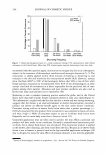
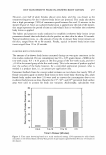
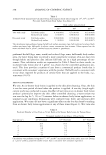
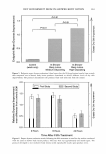
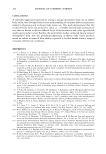
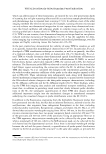
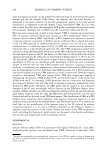
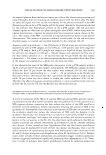
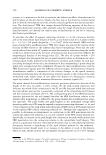
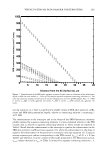
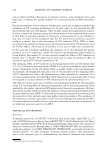
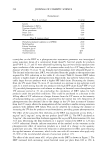
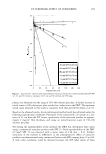
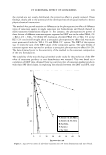
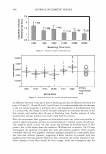
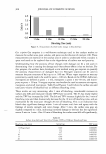
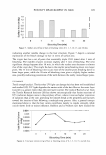
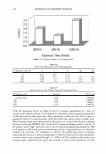
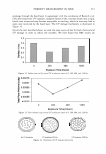
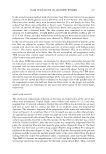
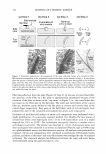
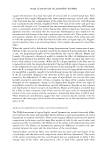
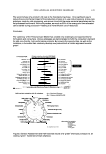
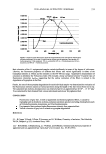
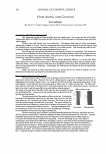
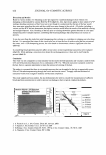
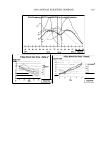
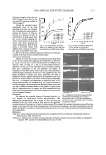
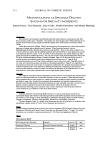
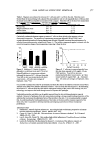
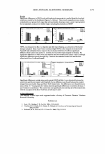
306 JOURNAL OF COSMETIC SCIENCE 2.5 0 -, Q) E 2 I:! - 0 · � :I: 1.5 0 � 1 s 1.306 1.442 1.118 1.188 1.05 0 0.5 0Mn 1 Mn 5Mn 10 Mn 15 Mn 20Mn Bleaching Time (min) Figure 1. Tensile strength of bleached hair. 0.0025 .L 0.0005 0 ........ -----.-------.-----.------,---�---........----------' 1 in 10 Min 15 Min 20Min 5Min Virgin Sample Name Figure 2. Statistical analysis for tensile strength measurement. All Pairs Tu key-Kramer 0.05 no difference between 1 min and 5 min of bleaching and also no difference between the pairs of 10 and 15, 10 and 20, and 15 and 20 min. It is understandable that the decrease in the wet tensile properties is primarily due to the degradation of disulfide bonds, but it is unclear why the change in tensile strength undergoes an immediate decrease in the first minute, and another after 10 min of bleaching time. Further analysis of color measurement and gas sorption was used to help find the answers. Hair color measurement. Hair pigments are distributed within the cortex and medulla in ovoid or spherical granules, and are not normally found in the hair cuticle of scalp hair. The oxidative attack on hair not only causes the breakage of disulfide bonds in hair protein, but it also breaks down the melanins. Wolfram and co-workers (16,17) have investigated the oxidation of human hair with and without pigment. Their research concluded that hair with pigment consumes hydrogen peroxide at a measurably faster rate than hair without pigment, suggesting a faster reaction of peroxide with hair pigment than with hair protein. Based on that conclusion, the initial response of oxi dative damage to hair fiber should be color change, under the assumption that the

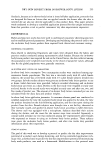
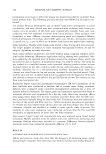
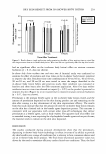
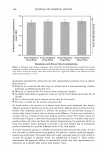
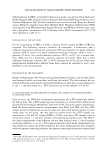
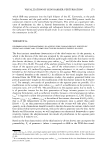
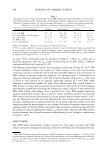
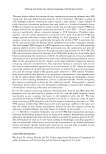
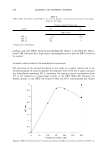
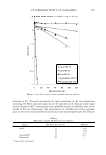
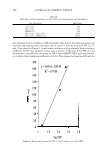
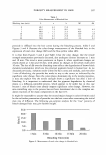
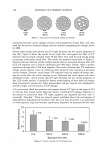
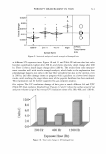
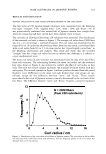
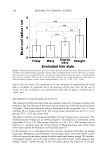
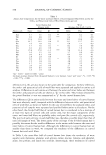
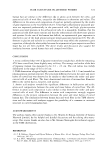
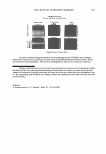
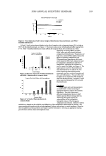
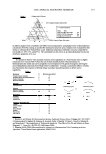
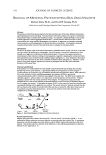
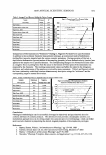
POROSITY MEASUREMENT IN HAIR Table I Color Measurement of Bleached Hair Bleaching time (min) L a b 0 38.2 6.1 15.9 1 45.2 7.2 20.1 5 48.8 7.2 21.3 10 53.8 7.1 23.1 15 57.8 6.2 23.0 20 58.8 6.1 23.2 dE 21.3 10.9 14.9 12.2 2.9 307 db 4.2 1.2 1.8 -0.1 0.2 peroxide is diffused into the hair cortex during the bleaching process. Table I and Figures 3 and 4 illustrate the color-change measurement of the bleached hair in the expression of total color change (LlE) and the blue-yellow index (.6.b). It is clear from Figures 3 and 4 and Table I that the color change, like the tensile strength measurement previously discussed, also undergoes distinct decreases at 1 min and 10 min. The trend is more prominent in Figure 4, where significant changes are clearly shown at 1 min and 10 min, with almost no changes in the yellow index after 10 min. The loss of L\b over the bleaching time reflects the degradation of brown-black melanins (eumelanins), which are the principal pigments found in human hair. As we discussed previously, melanins reside within the hair cortex and medulla, and even after 1 min of bleaching, the peroxide has made its way to the cortex, as indicated by the significant color change. Since the cortex plays a dominant role in the tensile properties, it may also explain why the tensile strength shows a significant loss after 1 min of bleaching. It is important to understand that the pigment degradation by chemical means is a diffusion-controlled process, which appears to be rather fast in this case because 1 min of bleach time already imparts significant color change. However, the rate-controlling step in the process has not been determined due to the complex oxi dation reactions of the many components in the hair (17). It might be reasonable to assume that the second major change in color (10 min) could be due to further penetration of peroxide into the hair cortex after overcoming the initial slow rate of diffusion. The following gas-sorption analysis for the "true" porosity of bleach-damaged hair may give further insight. 25.0 ------------------------------, 20.0 � 15.0 � 10.0 5.0 0.0 4---1i......---.....,..----...._____._ _ __. _ _,..._..____...____,___......_-----I 1 Min 5Min l0Min 15 Min 20Min Bleaching Time (min) Figure 3. Measurement of total color change in bleached hair.
Purchased for the exclusive use of nofirst nolast (unknown)
From: SCC Media Library & Resource Center (library.scconline.org)