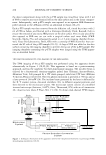
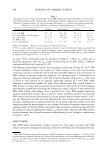
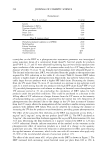
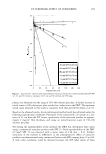
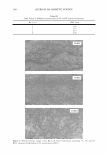
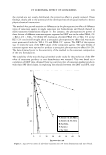
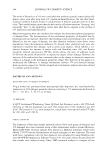
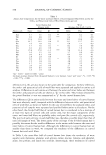
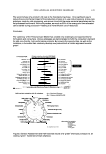
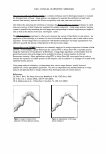
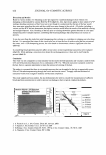
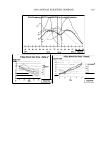
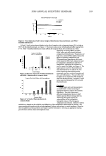
374 JOURNAL OF COSMETIC SCIENCE MIC ROEMULSIONS AS SPRAYABLE DELIVERY SYSTEMS FOR SPECIALTY INGREDIENTS Jonette Payne1, Terri Germain1, Gina Cosby1, Natalie Fasouliotu1 and Monna Manning2 1 Mclntyre Group, University Park, IL 2 Abitec Corporation, Columbus, OH Introduction Microemulsions are transparent and thennodynamically stable emulsions, meaning once they form they will remain stable unless "disturbed". The droplets are small enough (l0nm-lO0nm) that they do not interfere much with the passing of light and therefore appear clear (I 0nm-50nm) to translucent (50nm- l 00nm). Unlike Macroemulsions (400nm- 700nm), microemulsions fonn spontaneously without the need for a high input of energy and are therefore easy to prepare. When formulated properly, they are thermodynamically stable therefore they can have a long shelf life. They can also have a relatively low viscosity and do not require special handling equipment and lend themselves to spray applications as well as to traditional delivery systems. If oils or actives are the internal phase, the smaller droplet size offers greater area and more uniform application. 1 The size and curvature of the Surfactant/Emulsifier film at the Oil-Water interface determines the type of emulsion formed. Type I (O/W microemulsion) consist of swollen micelles surrounded by water where surfactant coexist with excess oil. Type II (W/O microemulsion)is the reverse of Type I where surfactants coexist with excess water. Type Ill consists of oil, water, and a bi continuous phase coexisting in a three phase equilibrium. Type IV is a single-phase microemulsion where both oil and water are completely solubilized in the surfactant microemulsion phase. 2 A flexible surfactant film is also important in fonning microemulsions. Depending on the molecular structure of the surfactant, certain co-solvents can improve the flexibility of the surfactant film (i.e. short chain alcohols), while other surfactant lend to a more rigid lamellar phase (Graph 2). Objective Since Type /Vmicroemulsions are single-phase, isotropic, and low-viscous fluids, they are particularly useful for cleansing and delivery of functional ingredients in skin care products.2 Many desired cosmetic active ingredients are not water soluble, e.g. organic sunscreens, tocopheryl acetate, essential oils and ester emollients to name a few. Products that incorporate these ingredients are typically opaque emulsions. Recently, clear sprayable products have been introduced, e.g. clear, sprayable sunscreens. However, these products contain a significant amount of short chain alcohols which can be drying to the skin. Microemulsion technology can be utilized to create a clear to translucent water-based active delivery system without the use of Ethanol or other short chain alcohols. Methodology Combine emollients with mid-range HLB emulsifiers to create an emulsifying concentrate via experimental design and evaluate its emulsifying potential. Emulsifiable ingredients tested include but are not limited to (with varying use levels depending on combination and design), Water Insoluble Vitamins, Fragrance Components, Silicones, Ester emollients, Essential oils, and Organic Sunscreens. The phase diagram (Graph I) is helpful when detennining the ratio of surfactant to co-surfactant when emulsifying a greater amount of"active" into a transparent microemulsion. 3 Results An emulsifying concentrate based on the low skin irritation ingredients PEG-6 Cafrylic/Capric Glycerides, Polyglycerol-6 Dioleate and Caprylic/Capric Glycerides was developed (Table I). Using 5-15% of the concentrate, we were able to create microemulsions of 1-3% of the tested ingredients (Table 2). Table I Microemulsion Blend3 IPEG-6 Caprylic/Capric Glycerides !Emulsifier HLB 12.5 80% IPolyglycerol-6 Dioleate !Emulsifier, humectant, emollient HLB 8.5 10% ICaprylic/Capric Glycerides ICo-Oil, Emollient Required 10% HLB 5-6

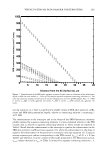
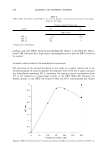
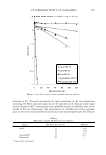
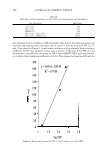
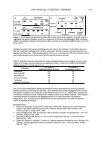
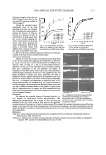
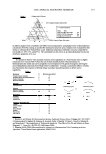
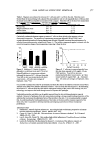
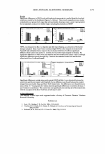
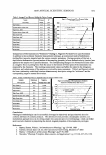
Graph l Water 2008 ANNUAL SCIENTIFIC SEMINAR Polyglycerol-6 Dioleate l !-'.----+--I-·�,;-__-:.--:-..·.....,.... 0.01 Caprylic/Capric Glycerides 1 = Clear/Translucent Water 90% Caprylic/Capric Glyceride PEG-6 C8/Cl0 Glycerides Polyglycerol-6 Dioleate PEG-6 Caprylic/capric Glycerides In addition, higher levels of sunfilters (20-28%) were incorporated by using higher levels of microemulsion concentrate (30-42%) creating an alcohol-free translucent sunscreen spray. Samples were evaluated by their ability to withstand three Freeze/Thaw cycles. Additional temperature stabilities were also completed for one month (i.e. 25°C, 4°C, and 43°C). The concentrate not only serves as an emulsifying base but also has emolliency properties of its own. Conclusion It is possible to deliver water insoluble cosmetic active ingredients in a water-based, clear to slightly translucent, low viscosity form without the use of short chained alcohols. Microemulsions are thermodynamically stable and can be prepared at room temperature with gentle mixing thus allowing for ease of manufacture and protection of heat sensitive components. Creating a concentrate offers a versatile, easy formulation that requires no thermal energy to produce sprayable products to deliver active ingredients. Table 2 Emollients Propylene Glycol Caprylate Propylene Glycol Di:aprylate/Dicaprate Glycerol Carbonate Butyloctyl Palmitate Silicones % 2 2 3 1 Mlcroemulsion Blend 10 10 10 10 10 Graph 2 375 Cyclomethicone Vitamins Stabilising agent Stabilising agent Vitamin E Acetate Vitamin A Palmitate Sunscreens Octisalate Oclinoxate Oxybenzone Fragrances & Essential Olis Linalool Geranyl Acetate Vanillin Benzyl Acetate Eugenol Beta-lonone Tea Tree Oil References 1 0.5 2 1 1 10 15 10 10 10 10 10 10 10 10 10 10 '-..___/ II Water A 0/1/v �n Water B. W,O I. Rosano H, and Clausse M, Microemulsion Systems, Surfactant Science Series, Volume 24, 1-102 (1987) 2. Komesvarakul N, Sanders M, Szekeres E, Acosta E, Faller J, Mentlik T, Fisher L, Nicoll G, Sabatini D, and Scamehorn J, "Microemulsions of Triglyceride-based oils: The effect of Co-Oil and Salinity on Phase Diagrams", J Comet Sci., 55, 309-325 (July/August 2006) 3. Manning, MM, (2004) Microemulsion for cosmetics or Pharmaceutical Use Containing an Active Ingredient., United States Patent Application, 20040175341
Purchased for the exclusive use of nofirst nolast (unknown)
From: SCC Media Library & Resource Center (library.scconline.org)