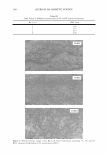
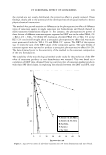
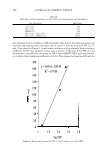
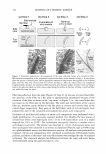
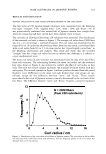
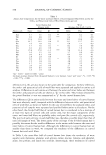
HAIR CURVATURE IN JAPANESE WOMEN 331 human hair are similar to the differences (Li) in amino acids between the ortho- and paracortical cells of wool fiber, except for the differences in threonine and valine. The differences in the amino acid composition of wool are partially explained by the results of gene expression in the wool follicle (8,17). Ultra-high sulfur keratin-associated pro teins are expressed preferentially in the paracortical cells, and high glycine-tyrosine keratin-associated proteins in the orthocortical cells. It is reasonable, therefore, that the paracortical cells show more cysteine and that the orthocortical cells show more glycine and tyrosine. In the case of the human hair follicle, an asymmetrical gene expression is observed in one of the high glycine-tyrosine keratin-associated proteins (18). The dif ferences in glycine and tyrosine in curved human hair may reflect the asymmetric gene expression, although the relationship between the asymmetrical gene expression and hair shape has not yet been clarified. The above results and discussion also suggest the similarity between curved human hair and crimped wool fibers. CONCLUSIONS 1. It was confirmed that 53% of Japanese women have straight hair, while the remaining 47% have curved hair, from slightly wavy to frizzy. The average curl radius of the hair of Japanese women was measured to be 4.4 ± 2.3 cm. The curl radius was widely distributed in the range of 0.6 to 16 cm. 2. TEM observation of typical highly curved hairs (curl radius: 0.6-1.0 cm) revealed an inhomogeneous internal structure. The structural difference between the outer and inner halves of curved hair was observed to be similar to that between the ortho- and para cortical cells of wool fibers. The three-dimensional structure of intermediate filaments (IFs) in the curved hair is, however, still unclear. 3. Amino acid analyses revealed the significant differences in half-cystine and acidic amino acid compositions between the outer and inner halves of curved hair. The dif ference in amino acid composition is also similar to that between the ortho- and para cortical cells of wool. The difference in amino acid composition strongly suggests differences in the protein composition between the outer and inner halves of curved human hair. The similarities between human hair and wool fiber in the TEM observa tions and the amino acid analyses suggest the possibility of a common or universal structure in curved mammalian hair. ACKNOWLEDGMENTS The authors express their sincere thanks to Dr. Warren G Bryson, formerly of Canesis Network Limited, for his helpful and fruitful discussions and for editing this manu script. Our sincere thanks are also due to Ms. Hiromi Shimogaki for technical support in the TEM observations. REFERENCES (1) C.R. Robbins, Chemical and Physical Behavior of Human Hair, 4th ed. (Springer-Verlag, New York, 2002), pp. 386-473. (2) A. J. Swift, "Morphology and Histochemistry of Human Hair," in Formation and Structure of Human Hair, P. Jolles, H. Zahn, and H. Hocker, Eds. (Birkhauser Verlag, Basel, 1997), pp. 149-175.

332 JOURNAL OF COSMETIC SCIENCE (3) Y. Kajiura, S. Watanabe, T. Itou, K. Nakamura, A. Iida, K. Inoue, N. Yagi, Y. Shinohara, and Y. Amemiya, Structural analysis of human hair single fibres by scanning microbeam SAXS,J. Struct. Biol., 155, 438--444 (2006). (4) E. H. Mercer, The heterogeneity of the keratin fibers, Text. Res.]., 23, 388-397 (1953). (5) D. F. G. Orwin, J. L. Woods, and S. L. Ranford, Cortical cell types and their distribution in wool fibres, Aust. J. Biol. Sci., 37, 237-255 (1984). (6) W. G. Bryson, D. N. Mastronarde, J.P. Caldwell, and J. L. Woods, High voltage electron micro scopical imaging of macrofibril ultrastructure reveals the three dimensional spatial arrangement of intermediate filaments in Romney wool cortical cells, Proceedings of the 10th International Wool Textile Research Conference (Aachen, Germany), in CD-ROM publication, ST-P3, 1-8 (2000). (7) J. P. Caldwell, D. N. Mastronarde, J. L. Woods, and W. G. Bryson, The three-dimensional arrange ment of intermediate filaments in Romney wool cortical cells,]. Struct. Biol., 151, 298-305 (2005). (8) J.E.Plowman, L. N. Paton, and W. G. Bryson, The differential expression of proteins in the cortical cells of wool and hair fibres, Exp. Dermatol., 16, 707-714 (2007). (9) S. Nagase, M. Ohshika, S. Ueda, N. Satoh, and K. Tsujii, A universal structural model for human hair to understand the physical properties 1, Bull. Chem. Soc. Jpn., 73, 2161-2167 (2000). (10) R. E. Benesch, H. A. Lardy, and R. Benesch, The sulfhydryl groups of crystalline proteins. I. Some albumins, enzymes, and hemoglobins,]. Biol. Chem., 216, 663-676 (1955). (11) A. J. Swift, Silver-methenamine staining of keratin fibre sections for transmission electron microscopy, J. Microsc., 184(Pt 1), 1-2 (1996). (12) Y. Masukawa, H. Tsujimura, H. Tanamachi, H. Narita, and G. Imokawa, Damage to human hair caused by repeated bleaching combined with daily weathering during daily life activities, Exog. Dermatol., 3, 273-281 (2004). (13) W. A. Munro and G. A. Carnaby, Wool-fibre crimp. Part 1: The effect of macrofibrillar geometry,]. Text. Inst., 90, 123-136 (1999). (14) V. G. Kulkarni, R. M. Robson, and A. Robson, Studies on the orthocortex and paracortex of Merino wool, Appl. Polym. Symp., 18, 127-146 (1971). (15) H. Ito, H. Sakabe, T. Miyamoto, and H. Inagaki, Fibrillation of the cortex of Merino wool fibers by freezing-thawing treatment, Text. Res.]., 54, 397--402 (1984). (16) H. Sakabe, H. Ito, H. Suzuki, and T. Miyamoto, Isolation and characterization of orthocortical and paracortical cells from wool fibers, Sen-I Gakkaishi, 45, 388-393 (1989). (17) B. C. Powell and G. E. Rogers, "The Role of Keratin Proteins and Their Genes in the Growth, Structure and Properties of Hair," in Formation and Structure of Human Hair, P. Jolles, H. Zahn, and H. Hocker, Eds. (Birkhauser Verlag, Basel, 1997), pp. 59-148. (18) M. A. Rogers, L. Langbein, H. Winter, C. Ehmann, S. Praetzel, and J. Schweizer, Characterization of a first domain of human high glycine-tyrosine and high sulfur keratin-associated protein (KAP) genes on chromosome 21q22.1,J. Biol. Chem., 277, 48993--49002 (2002).
Purchased for the exclusive use of nofirst nolast (unknown)
From: SCC Media Library & Resource Center (library.scconline.org)