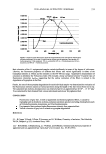
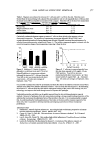
348 JOURNAL OF COSMETIC SCIENCE RESULTS In the B16-Fl melanocyte model, SPPNF tested at 0.001% induced a reduction of both extracellular melanin release and tyrosinase activity (respectively -57% and -54% vs. non treated cells), lightening reference molecules globally showing similar effects (respectively -13% and - 15% for arbutin 0% and -11% for kojic acid both tested at 0.004%), while a-MSH tested at 50 nM induced the opposite effect (+66% and +152%, respectively). In non-irradiated phototype VI PRE, the formulation containing 3 % SPPNF induced a decrease of the melanin productions (- 3 1 % vs. placebo formulation) and a reduction of the Chromameter® parameters a* and b* (respectively - 17% and -10% ), while inducing an increase of the L * parameter ( +5%) the formulation also induced such decreases for most of these parameters in irradiated phototype VI PRE. At the molecular level, variations observed on cDNA arrays showed that SPPNF tested at 0.001 % on normal human melanocytes induced a global depigmentation-associated effect, more particularly by decreasing expression of two genes mainly involved in the regulation of melanogenesis, i.e. tyrosinase and, MITF (microphtalmia-associated transcription factor), and by increasing that of MICI (macrophage inhibitory cytokine 1), these regulations having been confirmed by Q-PCR (respectively -56% -59% and +292% vs. non treated cells). In keratinocytes, SPPNF tested at 0.00025 % induced a significant reduction of ET-1 production (-53% vs. non treated cells) as well as a slight reduction oflL-la production (- 54%) in non-irradiated cells and conferred a photoprotection to the irradiated cells (respectively 121 %, p0.05 and 20% vs. non treated cells). Finally, SPPNF showed the following clinical efficacy (from the 56th day of treatment): i) on normal skin, an increase in ITA0 (+I AU.) as well as a decrease in both b* (-0.33 AU.) and the melanin index (-7) (respectively on 64%, 64% and 67% of volunteers), and ii) on hyperpigmented spots, an increase in ITA0 (+3 AU.) and L* (+0.8 AU.) and a decrease in b* (-0.26 AU.) (respectively on 88%, 82% and 58% of volunteers). CONCLUSION The lightening properties of SPPNF could be demonstrated both in vitro and in vivo. Such an efficacy seems to be correlated on the one hand to its ability to act directly on melanocytes and on the other hand to its soothing effects. Thus, SPPNF can act both on basal and stress-induced melanogenesis. Even if further investigations would be necessary to identify all the biological links that are involved in its different properties, the following correlations are suggested. First, SPPNF ability to modulate keratinocytes IL-Ia and ET-I productions is likely to be partially responsible for its lightening efficacy. Second, BMP (bone morphogenetic proteins) can regulate the expression of the main melanogenesis-related transcription factor, i.e. MITF [14]. Thus, the SPPNF-induced decrease in expression of the BMP family member, MIC 1, is likely to be responsible for the decrease in tyrosinase, MITF and other melanogenesis-related gene expression. In conclusion, SPPNF, which is also easy to formulate, seems to be perfectly appropriate to treat photo-aged skin-associated pigmentation and offers a precious advantage in comparison to the other lighteners, most of which being irritant. REFERENCES [1) Huggins et al., Acta Dermatovenerol Alp Panonica Adriat. 2005 Dec 14(4):137-42, 144-5 [2] Imokawa, Pigment Cell Res. 2004 Apr l 7(2):96-110 [3) Funasaka et al., Br J Dermatol. 1998 Aug I 39(2):216-24 [4) Stulberg et al., Am Fam Physician. 2003 Nov 15 68(10): 1963-8 [5) Lynde et al., Skin Therapy Lett. 2006 Nov 11(9): 1-6 [6] lchihashi et al., JFSCC Congress 2006, Osaka, Japan [7] Maeda and Fukuda, J Pharmacol .Exp Ther. 1996 Feb 276(2):765-9 [8] Serra Baldrich et al., Contact Dermatitis. 1998 Aug 39(2):86-7 [9) Levin and Maibach, Am J Clin Dermatol, 2001 2(4):213- 7 [lOJ Parvez et al., Phytother Res. 2006 Nov 20(1 l):921-34 [11) Paine et al., J Invest Dermatol. 2001 Apr 116(4):587- 95 [12] Passeron et al. : FASEB J. 2004 Jun l8(9):989-91 [13) Choi et al., Pigment Cell Res. 2005 Dec l8(6):439-46 [14] Liu et al., J Biol Chem. 2006 Jun 23 281(25): 17156-63.

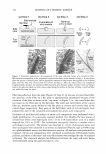
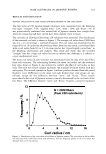
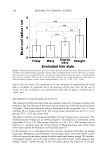
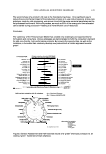
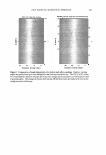
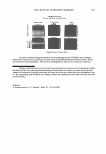
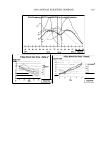
2008 ANNUAL SCIENTIFIC SEMINAR 349 COMPLEX EFFECT PIGMENTS: INNOVATIVE SOLUTIONS FOR ETHNIC COLOR COSMETICS Leila S. Song, Ph.D., Gabriel E. Uzunian, Betty F. Aucar and James B. Carroll Jr., Ph.D BASF Corporation INTRODUCTION Formulating color cosmetic products for ethnic groups is a challenging and interesting scientific pursuit. Skin with dark complexion, from a cosmetic formulator's perspective, can be considered as Skin Types IV-VI according to the Fitzpatrick Skin Type classification developed in 1975. The Fitzpatrick Skin Type classification ranges from Type I for light skin to Type VI for dark colored skin based on a person's complexion and response to sun exposure. The cosmetic formulators' challenges for make-up applications for Types IV-VI skin is the development of hyper pigmentation or hypo-pigmentation (1). Additionally, dark skin types can often develop a gray ashy appearance when the skin is dry. Formulations that leave trace residue are not especially acceptable for ethnic groups because such residue can often result in distinct imperfections or dullness on darker skin tones. Effect pigments are relatively transparent, thus allowing the skin tone on which they are applied to show through. It has been demonstrated in our study that colors generated by effect pigments are clearly dependent on the background (2). The interference color effect on ethnic skin is enhanced by the reflection color of the effect pigment due to the dark background. The transmitted light through transparent effect pigments modifies the skin tones. Incorporating effect pigments in cosmetic and personal care fonnulations can enhance or modify ethnic skin tones and can provide contrasting effects. METHODOLOGY The method of measurement and cosmetic formulations for color and appearance of ethnic groups allowing for the interactions among color cosmetic formulations and ethnic skin tones are described below: Method of measurement An instrumental goniospectrophotometric method was employed to measure the reflected light for color and gloss. Experimental data are expressed in L*a*b* color space for D-65 illuminant. Goniospectroscopic measurements of the samples at an aspecular angle of20 ° were used. The measurements at this aspecular angle agree with visual observation. An UV/Vis spectrophotometric method was also used to measure the transmitted light for translucency and clarity of the formulations. Cosmetic formulations Color cosmetic fonnulations were prepared and films of the formulations were made onto skin tone cards and volunteers' skin for color measurements. The fonnulations contain effect pigments with different types of interference colors: red (Red EP), yellow (Gold EP), blue (Blue EP) and green (Green EP). Colorant of Red 7 Lake was also used for study of skin modification. DISCUSSION Color can be fonned in different ways. In dealing with light, colors are formed by the additive mixing of the primary colors. Interference pigments mix additively because the visible color is the reflected portion of light. However, absorption pigments mix subtractively because the visible color is the non-absorbed portion of light (3). Interference pigments reflect light of one color and
Purchased for the exclusive use of nofirst nolast (unknown)
From: SCC Media Library & Resource Center (library.scconline.org)