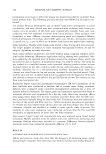
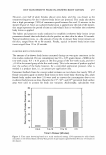
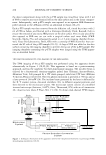
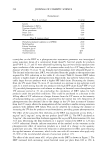
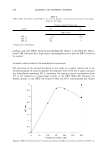
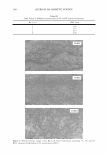
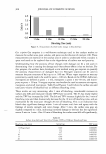
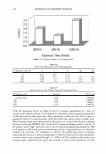
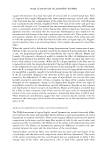
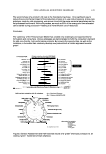
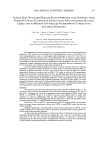
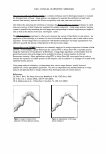
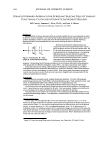
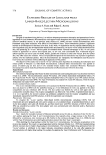
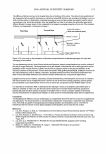
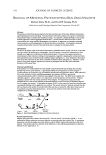
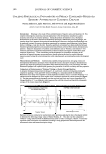
376 JOURNAL OF COSMETIC SCIENCE REMOVAL OF MICROBIAL PATHOGENS FROM SKIN USING MAGNETS Michael Daley, Ph.D., and David W. Koenig, Ph.D. Global Science and Technology, Kimberly-Clark Corporation, Neenah, WI Abstract The presence of microbial species adapted to the skin constitutes one of the many defenses animals have against pathogenic bacteria and fungi. Non-discriminate removal by surface active agents or annihilation using antimicrobials can destroy this beneficial ecology. It is therefore a health advantage to use a gentle nontoxic approach to remove pathogens from the skin. Candida albicans and Escherichia coli were removed from skin using modified paramagnetic microspheres, by attraction to a substrate containing cationic polymers, and by displacement on the skin by anionic microfibers. All alternative treatments evaluated enhanced the removal of microbes from skin as compared to untreated controls. Introduction The skin is the largest organ of the body and possesses a remarkable barrier system. However, it can often serve as a vehicle for transmission of pathogens. One of the means to control this transmission is often through use of aggressive surfactants and antimicrobials agents. However, these agents typically are indiscriminate in their removal or killing of microorganisms, negatively impacting the normal micro biota. This natural flora serves as the first mode of defense against pathogens (1 ). Thus disruption of the natural flora of the skin will leave the skin more vulnerable to attack by future pathogens (2). Therefore, a need exists to use a gentle nontoxic approach for removal of pathogens from the skin which minimizes disruption of the natural flora. Materials and Methods Skin squames were collected from the volar forearm using D-Squame® skin sampling discs and then blocked with bovine serum albumin. A generalized outline for all experiments is shown in figure I. Candida albicans or Escherichia coli were added to each skin disc and allowed to attach. After removal of the loosely attached microbes, modified paramagnetic microspheres (MPM) or micronized carboxymethylcellulose (MCC) treatments were applied to the skin discs. The MPM were modified with antibodies against C. albicans and E. coli, respectively, to bind the particles to that microbe. A fibrous substrate or plastic film was used in association with a magnet. For experiments using cationically modified fibrous or non-woven substrate to enhanced removal of yeast from skin, the treatment step and use of a magnet was omitted. To determine the impact of MCC on the removal of yeast from skin the steps involving the blotting with an applicator were omitted. The amount of yeast or bacteria removed from the skin was based on the number of microbes left on the skin disc as counted by either direct visual count or by quantitative enzyme linked immunoassay. In all cases the numbers of microbes removed were compared to an untreated sample. C) I , ""-,,., � . 1Hr33oC :_. _ 1Hr33ac .�r �-� -�--QD :: -���0�� '-G)�-�4 Q Biol Make Tissue Analysis Wash Tape Strip Applicator Figure 1. Generalized diagram of adhesion and removal protocol. Results and Discussion Magnets were observed to enhance the removal ofC. albicans and E. coli from skin (Table!). It was observed that fibrous substrates were more effective in removing yeast then a plastic film. A contrasting observation was that the magnet was more effective with the fibrous substrate then the plastic film with bacteria. This attribute may be a reflection of the differences in the underlining mechanism of adherence between the two organisms (3, 4).

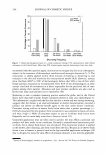
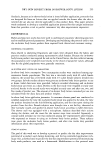
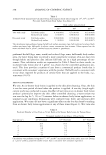
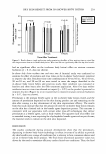
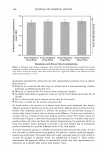
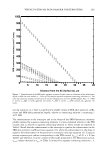
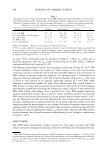
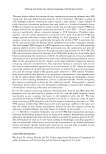
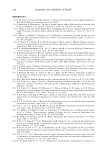
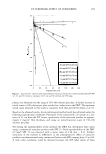
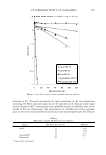
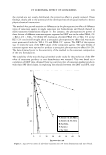
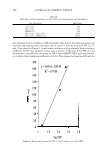
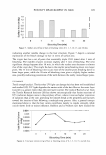
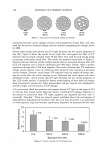
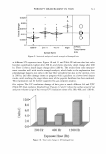
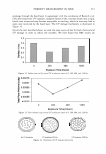
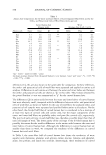
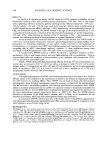
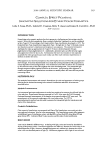
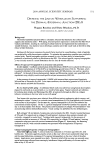
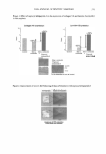
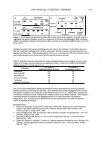
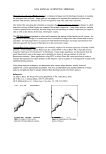
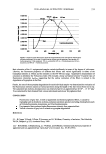
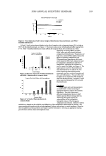
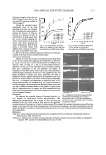
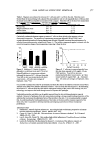
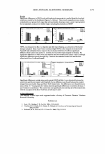
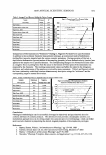
2008 ANNUAL SCIENTIFIC SEMINAR Table 1. Magnets can enhance the removal of C. albicans and E. coli from the skin. Microbes were blotted from the skin utilizing with a plastic film (non-adhesive side of a D-Squame® disc) or fibrous sheet (Kimtech Science® Kimwipes®) in association with a magnet. Microbes left on the skin were enumerated by an enzyme linked immunoassay. All values are averages of triplicates,± SD. Treatment % Removal C. albicans % Removal E. coli Plastic Film 23 ± 10 I± 1 Magnet and Plastic Film 64 ± IO 7 ± 1 Fibrous Sheet 67 ± 6 12 ± 7 Magnet and Fibrous Sheet 77 ± 9 29 ± 2 Cationically enhanced substrates appear to remove C. albicans from skin by what appears to be an electrostatic interaction. The presence of a quaternary ammonium debonder (Witco C6001) and octadecyldimethyltrimethoxyl-silpropylammonium chloride (Silgard®) increased the performance of a cellulose tissue and nonwoven, respectively (Figure 2). The cationic compounds appear to interact with the overall net negative charge of microorganisms, removing it from the skin. 100 80 "ffi � 60 E 0::: 40 '?ft. 20 O Untreated Treated Untreated Treated Tissue Tissue Nonwoven Nonwoven Figure 2. Addition of 15 kg/mt of cationic debonder to a cellulose tissue and 0.7% (w/w) Silgard® addition to a nonwoven substrate increased the removal of C. albicans from skin. Yeast left on skin was enumerated with direct visual counts. All values are averages of triplicates. Bars = SD. 1000 10 +--,---,---�--r--r--,-- 0 10 20 30 40 50 60 Contact Time (min) Figure 3. C. albicans is removed quickly from the skin when exposed to 0.25 mg/ml, 3-4 µm CMC particles. Yeast left on skin was enumerated with direct visual counts. ■ = Skin treated with 0.25 mg/ml CMC. A = Untreated skin. All values are averages of triplicates. Bars =SD. It is possible to enhance the removal of attached yeast from the skin by the addition of anionic micro-fibers. Anionic micro-fibers were found to efficiently release C. albicans from the skin (Figure 3). By facilitating the release of C. albicans from the skin and the subsequent binding of the yeast to the cleaning web, this technology can improve skin health though control of a potent skin pathogen. Undesirable microbes and debris can be gently removed from the skin utilizing alternative removal methods. Removal of pathogens from skin necessitate providing a strong enough binding interaction of the substrate that overcomes the adherence force of the microbe to the skin. It is not unreasonable to suspect that, by understanding the binding phenomena of microbes on the skin and the energies required to free these cells, that it is possible to develop materials and cleaning system that will have exceptional performance. Literature Cited I. Dethlefsen L, McFall-Ngai M, Reiman DA. An ecological and evolutionary perspective on human microbe mutualism and disease. Nature. 449:811-818. 2007. 2. Cogen AL, Nizet V, Gallo RL. Skin microbiota: A source of disease or defence? Br J Dermatol. 158(3):442-455. 2008. 3. Law S, Fotos PG, Wertz PW. Skin surface lipids inhibit adherence of Candida albicans to stratum comeum. Dermatology. 195(3):220-223. 1997. 4. Leclerc B, Fairbrother JM, Boulianne M, Messier S. Evaluation of the adhesive capacity of Escherichia coli isolates associated with avian cellulitis. Avian Dis. 47(1):21-31. 2003. 377
Purchased for the exclusive use of nofirst nolast (unknown)
From: SCC Media Library & Resource Center (library.scconline.org)