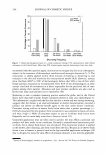
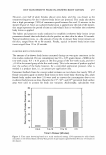
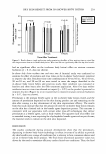
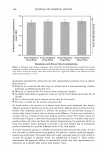
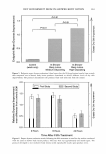
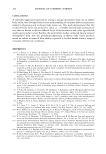
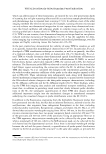
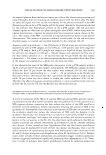
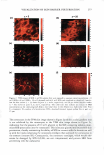
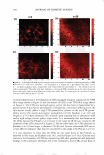
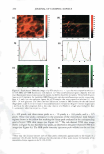
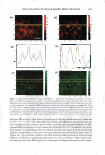
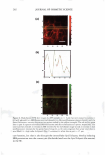
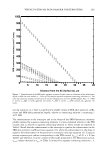
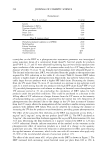
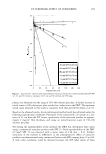
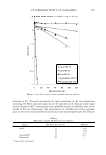
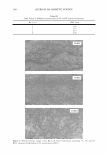
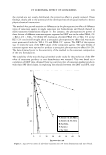
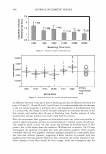
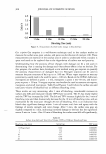
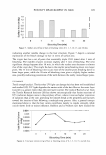
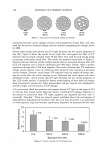
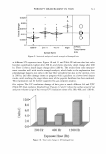
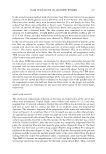
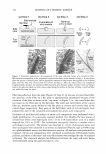
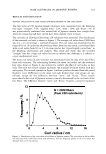
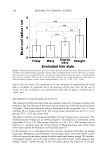
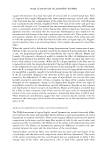
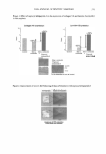
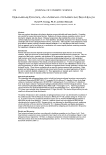
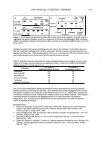
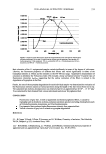
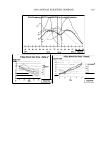
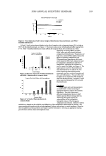
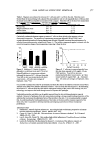
1000 900 800 r,;i = 700 = 0 u � 600 500 = QI QI 400 = QI r,;i ... 300 0 = � 200 00 100 0 VISUALIZATION OF SKIN BARRIER PERTURBATION 285 I I I I :! I I I I I I I I I I I I I I I I Ii: I I I I1I I !! III:: II nn I I I I I 5 10 .15 20 25 30 35 40 Distance from the SC Surface (z), µm Figure 7. Quantification of the SRB probe intensity in units of pixel counts as a function of the skin barrier depth (z) from the skin surface (z = 0) for p-FTS samples exposed to aqueous contacting solutions i-v. The error bars represent standard errors based on six skin imaging sites on seven p-FTS samples. Key: ◊-SDS (1 wt%) 0-SDS (1 wt%)+glycerol (10 wt%) *-SCI (1 wt%) x-PBS control □-glycerol (10 wt%). tacting solutions iii-v lead to significantly smaller values of SRB-skin partition coeffi cients and SRB-skin penetration depths, relative to contacting solution i containing 1 wt% SDS. The enhancements in the intercepts and in the slopes of the SRB fluorescence intensity profiles induced by aqueous contacting solutions i-v were evaluated relative to the PBS control, that is, relative to aqueous contacting solution iv. These results are reported in Table I. Recall that the enhancement in the intercept is equal to the enhancement in the SRB-skin partition coefficient (see equation 16), while the enhancement in the slope is equal to the enhancement in the porosity-to-tortuosity ratio (see equation 13). Using an average aqueous pore radius corresponding to the PBS control (r pore ,c) of 20 ± 3 A (see Table I and reference 2) in the context of the model presented in the Theoretical section, r por e,E values (denoted as r pore in Table I) induced by aqueous contacting solutions i, ii,

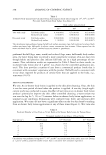
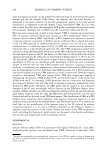
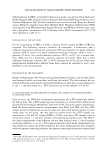
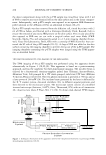
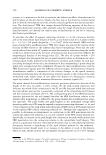
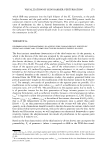
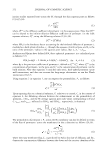
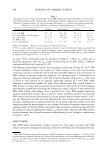
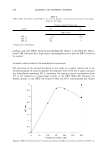
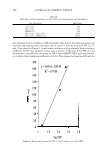
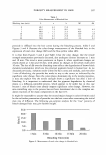
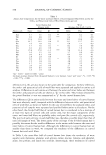
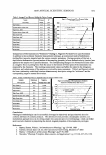
286 JOURNAL OF COSMETIC SCIENCE Table I Enhancements in the Slopes and Intercepts of the SRB Fluorescence Intensity Profiles as a Function of Skin Barrier Depth, and the Corresponding Theoretically Computed Aqueous Pore Characteristics (the Porosity-to-Tortuosity Ratio, si'r, and the Average Pore Radius, r p or ,) Induced by Aqueous Contacting Solutions i, ii, iii, and v Relative to Aqueous Contacting Solution iv, the Control Aqueous contacting solution E(slope) E(intercept) E(sh)* 1 p ore (i) 1 wt% SDS 6.5 ± 1.5 9.3 ± 0.9 6.5 ± 1.5 34 ± 5 (ii) 1 wt% SDS+ 10 wt% glycerol 3.1 ± 1.2 2.8 ± 0.7 3.1 ± 1.2 19 ± 6 (iii) 1 wt% SCI 2.5 ± 1.3 2.4 ± 0.6 2.5 ± 1.3 28 ± 5 (iv) PBS control 1 1 1 20 ± 3** (v) 10 wt% glycerol 0.5 ± 0.2 0.3 ± 0.2 0.5 ± 0.2 13 ± 5 * Note that E(slope) = E(e/'T), as discussed in the Theoretical section. ** This r p ore value, induced by aqueous contacting solution iv, was determined previously using log P-log R measurements in the context of a hindered-transport aqueous porous pathway model (2,34), and was utilized as an input to the model described in the Theoretical section to determine the r pore values induced by aqueous contacting solutions i, ii, iii, and v. iii, and v were determined, and are reported in Table I. 14 These rpore values are in excellent agreement with the rpore values obtained by us recently, using a different experimental/theoretical approach (2,45 ). The findings reported here indicate that an aqueous contacting solution of 1 wt% SDS (a harsh surfactant) induces the largest eh value relative to the other four aqueous contacting solutions considered, which indicates that SDS enhances skin penetration of SRB, relative to aqueous contacting solutions ii-v, through mode 2. Furthermore, an aqueous contacting solution of 1 wt% SCI (a mild surfactant) induces an rpore value that is closer to that induced by an aqueous contacting solution of 1 wt% SDS, while inducing a significantly smaller e/T value. This indicates that SCI is mild relative to SDS, because it reduces skin penetration of an irritant by reducing the eh of the aqueous pores without significantly reducing the average pore radius, relative to that induced by SDS. Table I shows that adding 10 wt% glycerol to a 1 wt% SDS aqueous contacting solution significantly reduces the rpore and eh values. Therefore, glycerol can mitigate SDS-induced skin barrier perturbation by closing aqueous pores through modes 1 and 2 (see the Theoretical section) such that SDS micelles (the irritant) cannot penetrate into the skin, a finding that is consistent with our recent study conducted using in vitro skin barrier perturbation measurements in the context of a hindered-transport aqueous porous pathway model (2). Finally, Table I also shows that an aqueous contacting solution of 10 wt% glycerol induces significantly smaller rpore and eh values than does the PBS control, thereby showing that glycerol preserves the skin barrier in vitro through a combination of modes 1 and 2. CONCLUSIONS The TPM skin visualization studies reported in this paper revealed that SDS induces corneocyte damage by rupturing corneocyte envelopes and denaturing keratins. 11 Note that the enhancement in the intercept induced by aqueous contacting solutions i-v relative to the control (aqueous contacting solution iv) is equal to the enhancement in the overall SRB partition coefficient, (E,) r (see the Theoretical section). In addition, note that the (E,) cl values were used to determine r pore ,B values by inputting r p ore,c = 20± 3 A (see the Theoretical section and reference 2).
Purchased for the exclusive use of nofirst nolast (unknown)
From: SCC Media Library & Resource Center (library.scconline.org)