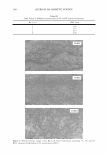
292 JOURNAL OF COSMETIC SCIENCE such as ethical problems, fluctuation in radiation intensity, long irradiation times, and high costs, it remains the "golden standard" for sun protection factor (SPF) determina tion. During development of new sunscreen formulations, quick and inexpensive methods for estimation of UV screening performance are of great value. In vitro methods for SPF determination may serve this purpose. These include mainly spectrophotometric analysis of dilute solutions of sunscreen agents and determination of the transmission spectrum of thin films of sunscreen products (5). However, a shortcoming of in vitro methods is that they are based on the assumption that the UV protection provided by sunscreen products is merely due to the attenuation of UV radiation (UVA, UVB or both), according to the absorption characteristics and concentrations of the UV absorber(s) used (6). Further effects, which may be of relevance in vivo! are not taken into consideration. In the quest for a method combining the simplicity of in vitro methods and greater relevance to in vivo conditions, certain UV-sensitive microorganisms proved useful as living models. For instance, E. coli was utilized to model the effects of UV radiation on human skin (7). Further, Drosophila larvae were used to study the protective effect of sunscreens against UV-induced genotoxicity (8). The damaging effect of UV radiation on microorganisms (9,10) and the human skin (11-13) is initiated by photoalteration of DNA as a result of the formation of pyrimidine dimers. Replication of the UV-altered DNA is usually lethal to the microorganisms. Accordingly, microorganisms may play a role in the assessment of the damaging effect of UV radiation and, hence, the photoprotective effect provided by sunscreens. In a previous communication, the cidal effect of UV radiation on a certain strain of E. coli was investigated as an assay method for SPF determination of sunscreen products (7). The objective of this study was to develop a microbiological method for the assessment of the UV screening effect of sunscreen preparations and to assess the potentials of the method for the quality control and SPF prediction of sunscreen preparations. Develop ment of the method involved testing the influence of some experimental variables on the decimal reduction time (DRT). It also included testing the reproducibility of results and the sensitivity of the method using some market sunscreen products. The suitability of the method as a research and quality control tool was challenged by assessing the effect of some formulation variables such as sunscreen concentration and the incorporation of an additional sunscreen agent on the DR T. MATERIALS AND METHODS MATERIALS A standard strain of E.coli (NCTC* 10418) was used in the study. Luna® SPF 12, 27, and 35 (LUNA Cosmetics, Egypt), SpectraBAN® SPF 55 (Stiefel Laboratories Ltd, Sligo, Ireland), and Photoderm® SPF 100 (Laboratoire Bioderma, France) were the commercial sunscreen lotions tested. Benzophenone-3 (NEO HELIOPAN® BB) and phenylbenz imidazole sulphonic acid (NEO HELIOP AN® HYDRO/USP) were kindly provided by Symrise GmbH + Co. KG, Germany. Titanium dioxide, lanolin, white petrolatum, stearic acid, propylene glycol, triethanolamine, and edetate disodium were obtained * National Collection of Type Culture.

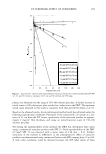
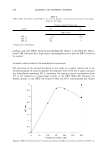
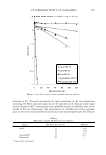
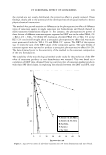
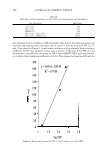
UV SCREENING EFFECT OF SUNSCREENS 293 from El-Nasr Pharmaceutical Co., Egypt. Methylparaben and propylparaben were cour tesy of Alexandria Pharmaceutical Co., Egypt. Nutrient agar was purchased from OXOID Ltd, Basingstoke, Hampshire, U.K. Sodium chloride was obtained from Arabic Laboratory Equipment Company, Egypt. METHODS Microbiolgical procedures and calculation of DRY. Sunscreen preparations were applied as a continuous film on a UV-transparent membrane (Deema Packing and Packaging Ma terials, Egypt) covering nutrient agar plates on which E. coli was spread (7). The initial count/plate was adjusted at 200 colonies using optical density measurements (14). Plates were transferred to a laminar biological safety cabinet (NuAire, Inc., Plymouth, Minn., U.S.A.), with a UV lamp providing an average intensity of 10 mW/cm2 at the horizontal plane defined as the bottom of the work surface of the cabinet (7 6 cm away from the lamp). The plates were placed on a platform, 35 cm away from the UV lamp unless otherwise stated. The UV exposure time ranged from 20 seconds to two hours, depend ing on the SPF label claim of the product or the composition of the test formulation. Five plates were prepared for each exposure time. Non-irradiated plates were used as a control for the initial count per plate. After overnight incubation at 3 7°C, colonies were counted and the DRT determined. The DRT was estimated either mathematically or graphically from the regression equation obtained or the plot relating the average log survivors to the UV exposure time, respectively. Only data obtained with a correlation coefficient higher than 0.9, for the relation between log survivors and exposure time, were taken into account. Effect of experimental variables on the DRY. The influence of some experimental variables on the DR T of some market sunscreen products was investigated. These variables included the distance between the sunscreen/£. coli system and the UV lamp (35 and 76 cm), the sunscreen film thickness (1 and 2 mg/cm2), and the initial bacterial count/plate (100, 150, 200, and 300 colonies per plate). Reproducibility of the results was assessed by repeated testing of the product Luna® SPF 12. The sensitivity of the method was checked by testing market sunscreen products with SPF values ranging from 12 to 100. Testing potential applications of the method. The suitability of the method as a quality control tool was challenged by testing the effect of some formulation variables on the DRT. The effect of increasing the concentration of an oil-soluble sunscreen agent, benzophenone-3 (1 %, 2%, 3%, and 6%) and inclusion of additional sunscreen agents (phenylbenzimidazole sulphonic acid [2%} and titanium dioxide [5%}) on the DRT of a 2% benzophenone-3 o/w test lotion (Formulation 1) was investigated. DRTs of indi vidual o/w lotion formulations containing benzophenone-3, BZ-3 (2%), phenylbenz imidazole sulphonic acid, PBSA (2%) and titanium dioxide, TiO2 (5%) were also determined and compared to their corresponding blends. In addition, the suitability of the method for prediction of SPF was tested by correlating DR T data obtained for a series of market sunscreen products with their corresponding SPF label claim. RES UL TS AND DISCUSSION EFFECT OF EXPERIMENTAL VARIABLES ON THE ORT The effect of three experimental variables, namely the distance between the sunscreen/£. coli system and the UV lamp, the sunscreen film thickness, and the initial bacterial
Purchased for the exclusive use of nofirst nolast (unknown)
From: SCC Media Library & Resource Center (library.scconline.org)