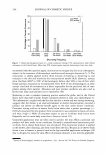
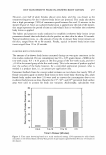
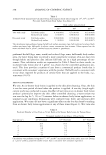
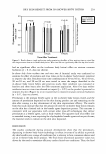
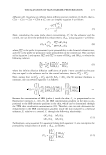
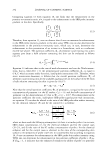
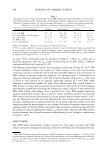
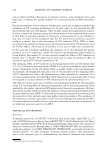
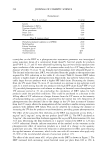
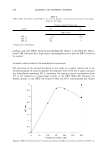
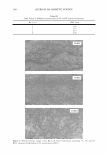
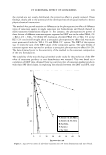
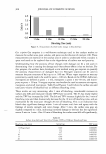
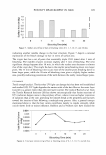
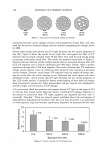
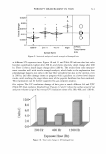
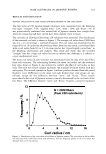
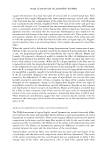
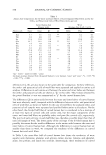
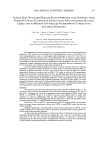
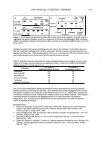
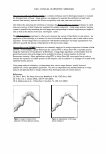
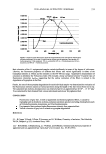
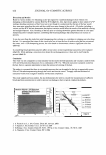
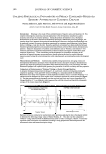
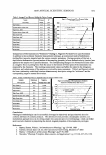
300 JOURNAL OF COSMETIC SCIENCE Table IV DRT Values of Individual Sunscreen Test O/W Lotion Formulations and Their Blends Test formulation TiO2 (5%) BZ-3 (2%) PBSA (2%) BZ-3 (2%) + TiO2 (5%) BZ-3 (2%) + PBSA (2%) DRT (min) 3.01 3.12 7.46 18.16 118.31 data obtained with a correlation coefficient higher than 0.9 for the relation between log survivors and exposure time were taken into account (7). Results for Luna® SPF 12, 27, and 35 are shown in Figure 6. A rank order correlation with a relatively high correlation coefficient (0.987) was obtained. Using such a relation, prediction of the SPF of a test formulation is feasible once obtaining its DRT. SpectraBAN® DRT data was omitted, as it reduced the correlation coefficient to 0.863. The relation between log SPF and the 200 180 y= 369.9x - 399.49 R 2 = 0.9739 160 140 C: 120 ·- 100 80 60 40 20 0 1 1.2 1.4 1.6 1.8 log SPF Figure 6. Relationship between log SPF of Luna® products and their DR Ts.

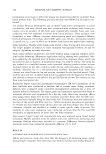
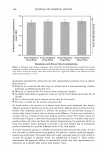
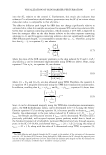
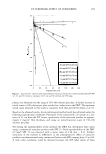
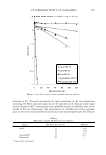
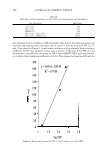
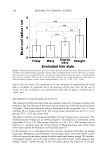
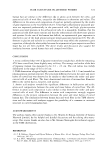
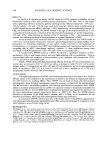
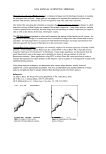
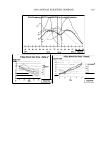
UV SCREENING EFFECT OF SUNSCREENS 301 time required for 50% rather than 90% reduction in viable bacterial count for Luna® products proved also to be linear (Figure 7). This time-saving modification may be appropriate for sunscreen preparations with a relatively high SPF. The microbiological method for assessment of photoprotection against UV radiation using E. coli as a test organism developed in this study may have several applications. As a research and quality control tool, the method is adequately sensitive to formulation variables that affect the protective effect of sunscreen formulations such as concentration, physicochemical interactions involving the active ingredient(s), and incorporation of additional sunscreen agents. Further, the method may be reliable as a simple, practical, and relatively inexpensive surrogate quality control tool for the routine evaluation of sunscreen preparations and prediction of their SPF values based on relationships obtained between the DR Ts and log SPF of market sunscreen products. Moreover, the method could be used to assess the effect of various factors on the viability of E. coli upon exposure to UV A or DVB radiation in the presence of factors capable of enhancing photoprotection or those inhibiting cellular damage such as antioxidants (21,22). .5 u .5 .,g u u Iii 'tl u -� Cl.I = ·= 60 .---------------------, 50 40 30 20 10 y = 96. 753x - 105.33 R2 = 0.9279 ■ 0 -•----.-----,-----.----�--�-- 1.05 1.15 1.25 1.35 log SPF 1.45 1.55 1.65 Figure 7. Relationship between log SPF of Luna® products and the time required for a 50% reduction in count.
Purchased for the exclusive use of nofirst nolast (unknown)
From: SCC Media Library & Resource Center (library.scconline.org)