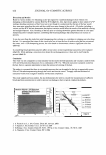
304 JOURNAL OF COSMETIC SCIENCE The work of Ruetsch et al. (8) also concluded that melanin granules remain physically almost intact even after long-term UV irradiation/humidification. On the other hand, chemical oxidation (bleach) results in solubilization of melanin granules and loss of hair color. Their study further proves that the hair cuticle cells show extensive "thinning" and eventually "fuse" to the underlying cuticle layer after hair is exposed to the cycling of UV irradiation and humidification. Many investigations were also conducted to evaluate the deteriorated physical properties of damaged hair. The determination of the mechanical properties of degraded hair by bleaching and sun exposure illustrates that breaking strain and breaking stress are both affected by the two types of damage, but that chemical oxidation causes faster cortex degradation than photochemical oxidation (9). Several other analytical tools were also employed to examine hair damage, such as amino acid analysis, which exhibits a cor relation between the amount of amino acids and bleaching time (10), and Fourier transform infrared spectroscopy (FT-IR), which utilizes the ratio of sulfonate bonds (S=O) with the amide III band (11) to express the degree of hair damage. However, the majority of the studies have been centered either on the change in chemical composition of hair or a change in the mechanical properties of hair. The objective of this paper is to understand the difference in damage mechanisms between UV and chemical damage from a porosity perspective. Tensile strength and colorimetry analyses were also utilized to correlate porosity results. MATERIALS AND METHODS BLEACHING AND UV DAMAGE TREATMENT Virgin brown hair purchased from International Hair Importers Inc. was bleached by immersion in 6% hydrogen peroxide solution containing 1.7% ammonium hydroxide at 40 +/- 1 °C for 1, 5, 10, 15, or 20 min. UV EXPOSURE A QUV Accelerated Weathering Tester (Q-Panel Lab Products) with a 340 UVA bulb emitting at 340-nm maximum was used. The energy dose of the irradiation was 450 J/cm2 . Hair tresses of 1.5 g, each arranged in a single layer, were exposed under UV light for 200, 400, and 1200 hr. TENSILE STRENGTH The diameters of forty hair strands randomly selected from each group of chemical- and UV-damaged hair were measured using a fiber dimensional analysis system (Mitutoyo, Model LSM 5000). The hair samples were placed in a DiaStron miniature tensile tester (Model 170/670) for the determination of tensile strength in a wet condition. The total work force, normalized with the hair diameter, was calculated by using DiaStron soft ware (MTTWIN Application Software Version 5.0). The mean values obtained from 40 hair strands were analyzed using Tukey HSD statistical analysis to compare all the

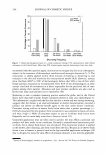
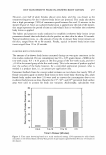
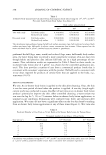
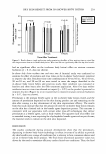
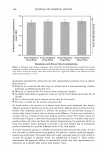
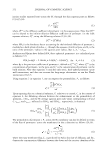
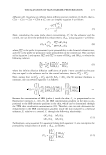
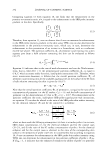
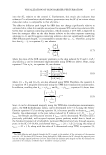
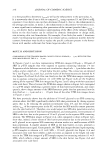
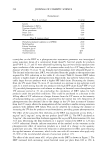
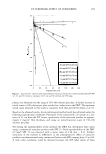
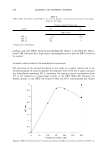
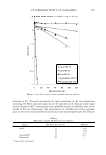
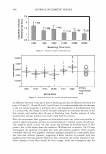
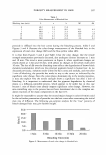
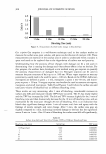
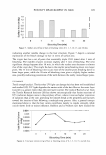
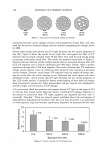
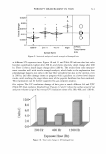
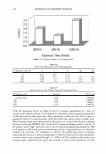
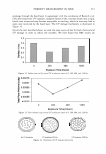
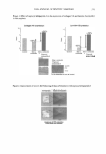
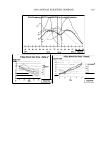
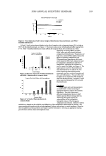
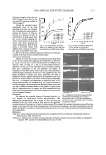
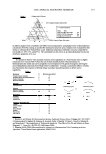
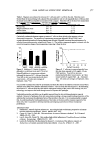
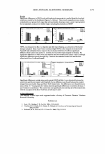
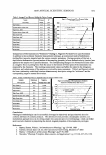
POROSITY MEASUREMENT IN HAIR 305 testing pairs (ANOVA one-way analysis of variance from JMP statistical software, SAS Institute, Cary, NC). HAIR COLOR MEASUREMENT Color co-ordinate L, a, b values for a hair tress were measured using a Hunter colorimeter (LabScan XE), where "L" stands for lightness, "a" for color of green to red, and "b" for blue to yellow. The total color change of LiE = [9*d12 + Lia2 + Lib2} 112 (12), in the case of hair damage by bleaching, was used to calculate the color difference between 0 min and 1 min bleaching or subsequently 1 min and 5 min, etc. The same calculation was also applied to UV damage. The total color change (LiE) represents the color difference between Ohr and 200 hr exposure, or 200 hr and 400 hr, until 1200 hr. We believe the LiE value for color change in this calculation clearly displays the progressive change of hair color due to the progressive damage from both bleach and UV. In addition, color change in the blue-yellow index (Lib) or the light index (Lil) was also included in the evaluation to further understand the degradation status of melanin granules after dam age. The average taken from six measurements in each tested tress represents the values of LiE, Lia, and Lil. GAS SORPTION Nitrogen adsorption studies on hair samples after bleaching and UV damage were conducted using a Quantachrome Autosorb-1 C instrument. Samples were cut in very fine pieces and then added to a sample cell where they were placed under vacuum at 145°C for 0.5 hr. Complete water removal is necessary to obtain accurate measurements, which is why 145°C was used. This value is based on the data collected from differential scanning calorimetry (DSC), in which a dehydration peak appears at about 125°C. A 5-pt BET (Brunauer-Emmett-Teller) surface area analysis was used for all samples. The total pore volume was collected at a P/P 0 of ~0.995. The pore size distribution curves are from the adsorption portion of the isotherm. RESULT AND DISCUSSION CHEMICAL DAMAGE Tensile strength analysis. The cuticle and cortex are the two main morphological compo nents in hair fibers. The cuticle is an important factor in torsional mechanical properties (13), but its contribution to bulk longitudinal mechanical strength is minor (14,15). The cortex constitutes the major part of the fiber mass of human hair and consists of elongated cortical cells, packed tightly and oriented parallel to the fiber axis. They contain microfibrils, which are composed of highly crystalline material, known as a helical proteins. It is believed that the cortex is primarily responsible for the tensile properties of human hair (15). The oxidation of cystine due to bleach causes the dis ruption of crosslinks, which results in the reduced wet tensile strength. Under our specific bleaching treatment, the wet hair tensile strength (Figure 1) displays a signif icant decrease in breaking force (about 20%) after the first minute of bleaching and another decrease in breaking force after 10 min. The statistical analysis (Figure 2) shows
Purchased for the exclusive use of nofirst nolast (unknown)
From: SCC Media Library & Resource Center (library.scconline.org)