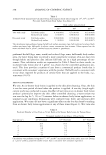
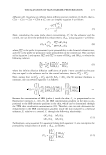
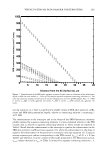
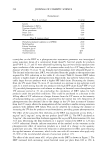
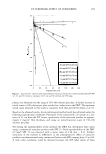
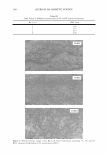
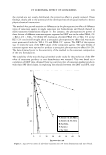
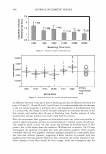
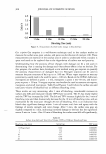
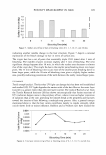
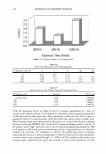
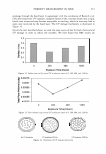
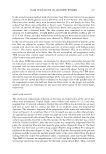
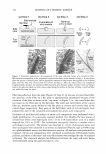
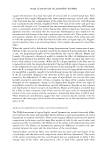
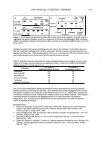
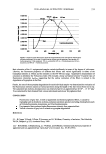
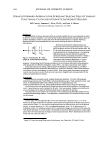
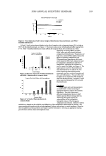
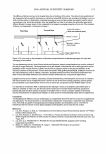
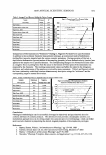
368 JOURNAL OF COSMETIC SCIENCE STRAIGHTFORWARD APPROACH FOR SCREENING SILICONE GELS OF VARYING FUNCTIONALITY FOR USE IN COSMETIC INGREDIENT DELIVERY Jeff Caruso, Summer L. Sivas, Ph.D., and Joan L. Meyer NuSil Silicone Technology, Carpinteria, CA 93013 Background: Biocompatibility of silicone gels makes them an excellent candidate for use as an encapsulant or matrix for delivery of active ingredients. Due to the myriad of silicone functionalities and even greater variety of cosmetic ingredients, a means to assess and screen for desired characteristics is required. Balancing formulation stability with acceptable delivery rate requires tailoring the matrix to the desired characteristics. � Rj CH, I 0-11 . o- 1 1 0-Si..l\/\/WVI CH3 CH3 D m Figure 1: Polysilioxane. R' = CH 3 , (CH2)CF3, (CH2)3O(CH2CH2O)0CH3 Silicones are derived from repeating silicon and oxygen atoms that create the polysiloxane chain. Figure I shows the generic structure of this polysiloxane chain. The R' side chain group represents various substituents that can be introduced onto the siloxane backbone. Incorporating different groups can directly influence the polymer's interactions with the surrounding environment. Methyl is the most common substituent group found in cosmetic formulations and biomedical applications. It is most known for its water resistance and desirable surface properties. Incorporating fluoro R' -groups can improve solvent resistance and modify surface properties while groups that are sufficiently hydrophilic, such as PEG-7, can make a polysiloxane water soluble. 1 In this study silicone gels varying in functionality from dimethicone, fluoromenthicone, and PEG-7 modified dimethicone are compared to demonstrate how variations in chemistry of the siloxane backbone can influence silicone's performance in cosmetic fluids. Water contact angle measurements and percent swell in several common cosmetic fluids are used to provide a straightforward screening method for the selection of suitable delivery matrices. Experimental: Silicone materials evaluated include: standard dimethicone (dimethyl) 100 molo/o trifluoropropyl methylsiloxane (fluoro) and 15 mo!% PEG-7 substituted dimethicone gels. Fluids evaluated include: water (H20), 50 mM phosphate buffer solution (PBS), mineral oil, cyclopentasiloxane (D5), methoxynonafluorobutane (CF-61), ethoxynonafluorobutane (CF-76), and 10 % glycolic acid (GA). Swell measurements were performed on all three gels with all the fluids listed above. Gel sample sizes were 0.5 g and allowed to swell at ambient for 48 hours. Fluid was decanted. Samples were then dried in an air-circulating oven to obtain the extracted sample mass for adjustment of final data. Time dependant Contact Angle (CA) measurements were conducted using Rame-Hart Model 200 and recorded with DROPimage software. Time dependant CA measurements were collected once per second for 180 seconds. Results and Discussion: Contact Angle. The time dependant H 2 0 CA for each silicone gel is plotted in Figure 2. CA is the measure of the angle (0) between the substrate surface and the line tangent form the droplet to the point of contact with the surface. CA is a sensitive enough measurement to characterize the nature of the material surface. A material that has a CA 90° is considered hydrophobic while 90° is characteristic of a hydrophilic surface. For absorbent materials, the CA continuously changes as a function of time where the water droplet penetrates or wets the surface. The dimethicone and fluoromethicone gels have contact angles greater than I 00° and a small rate of change over the time period tested. PEG-7 dimethicone has the lowest overall CA with a final CA of60 ± 5°. 1 Mark, J.E. Some Interesting Things About Polysilioxanes. Acc. Chem. Res., 37, 946-953, 2004.

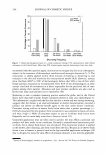
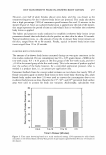
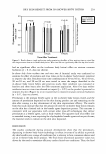
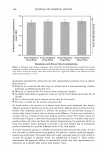
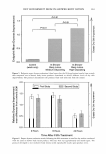
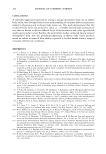
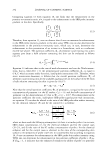
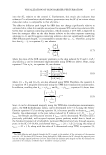
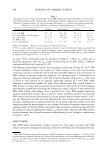
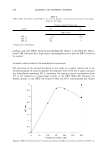
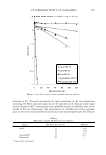
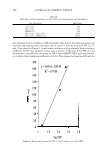
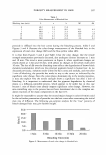
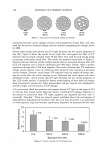
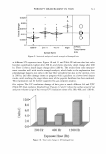
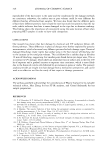
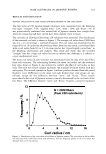
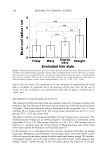
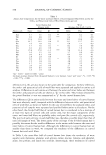
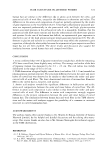
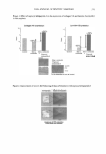
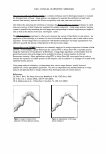
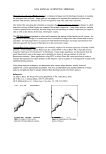
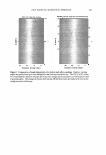
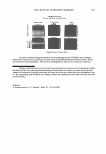
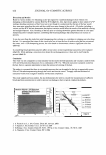
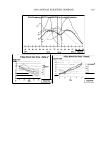
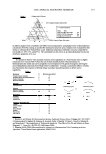
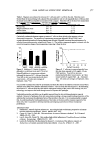
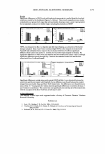
2008 ANNUAL SCIENTIFIC SEMINAR Time Dependant H,O Contact Angle $ 1eo 0 135 oo" 45° o+-····· - 0 30 80 90 Time(•) 120 --15mol'llPEO -Dimelh\,1 -Fluoro 100 Figure 2: Time dependant H2O Contact Angle of dimethicone, fluoromethicone, and PEG-7 modified dimethicone % Swell. Swell testing showed highest values for all samples with cyclopentasiloxane (D5), as high as 580 % for the dimethicone gel, see Figure 3. The lowest values occur with phosphate buffer ranging from 0-7 %. PEG-7 modified dimethicone retains affinity for nonpolar fluids, D5 and mineral oil, while u Co,melio Fluid EiTccLB: PEG 7 vs. Di1nclhioone 0 .J] n,o 10% CJA Mineral ll'A OU Coometk Fluid 05 •Dimethyl OPEG-7 Iii] IIJ CF-76 Figure 3: Measure of percent swell for dimethicone and PEG-7 dimethicone in cosmetic fluids Cosmetic Fluid Swell Effecl1' v.ith Fluorom�-thicone l'BS H,O Minenl Oil IPA Cosmetic Fluid D5 Figure 4: % Swell of fluoromethicone in cosmetic fluids Cli'-76 displaying increasing affinity for polar fluids, water and short-chained alcohols, compared with dimethicone. The presence of high ionic content (PBS) slightly reduces the degree of swelling compared to H20. Fluoromethicone demonstrates the lowest swell values for PBS, H20, mineral oil, and D5 compared to dimethicone and PEG-7 dimethicone, indicating the resistance to swell in many fluid types, see Figure 4. The largest percent swell for fluoromethicone was observed for CF-61 and CF-76, two fluoro-containing ether based solvents commonly used in a variety of cosmetic and skin care formulations. They are often used to replace or in conjunction with alcohol or other fast drying solvents. Accurate % swell values were not obtained for 10% GA with fluoromethicone. Conclusion: Contact angle and swell measurements are useful tools in initial screening of appropriate delivery matrices for cosmetic ingredients. The goal of the matrix delivered cosmeceutical device is shelf stability and an effective dosage delivery. Achieving these goals requires an understanding of the hydrophobic/ hydrophilic nature of the therapeutic compounds and silicones. Effective stability and delivery depends on the solubility and diffusivity of the compound in and through the silicone. The measurements performed provide an understanding of silicone interactions in various mediums. Based on these straightforward measurements one hopes to aid the formulator in selecting an appropriate starting point for their delivery matrix development needs. 369
Purchased for the exclusive use of nofirst nolast (unknown)
From: SCC Media Library & Resource Center (library.scconline.org)