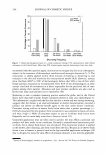
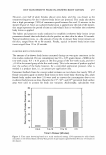
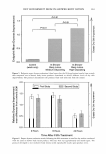
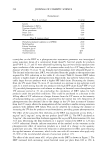
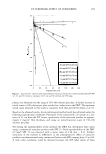
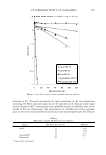
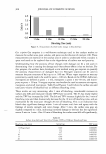
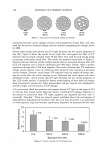
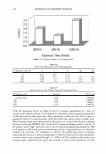
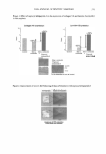
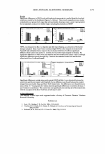
382 Abstract JOURNAL OF COSMETIC SCIENCE C ATIONICEMULSIFIER SYSTEMS FOR SUNSCREENS: COMBINING EFFICACY WITH COST ADVA NTAGE Anna Howe1 and Klaus J enni2, Ph.D. 1 Evonik Consumer Specialties) Evonik Goldschmidt Chemical Corp. 914 East Randolph Road) Hopewell, VA 23860 2 Evonik Consumer Specialties, Evonik Goldschmidt GmbH Goldschmidtstr. 100, D-45357, Essen) Germany klaus.jenni@evonik.com Cationic emulsions have attracted increased interest during the last years due to their unique skin feel, which is more dry and powdery than that of anionic or nonionic emulsions. Since 1999, with the introduction of new cationic emulsions for skin, hand, and baby care in the United States, this market segment has expanded broadly into over 30 new products containing the cationic emulsifier Distearyldimoniwn Chloride in 2007. Cationic moieties have typically been associated with hair care for conditioning. In this application, they impart lubricity, antistatic properties and smoothness to the hair fibres. Due to the eye initation profile of monoalkyl quats it is expected that the concentration limits of these will be fixed in the range of max. 0.5 % (for leave-on products) up to max 3.0 % (for rinse-off products). However, as long chain dialkyl quaternaries are milder on the skin than long chain monoalkyl analogues and as alkylamidoamine quats are also known to be less irritating than their amide and spacer group-free analogues, we concentrate on the evaluation of the latter product types. Formulating with cationic emulsifiers is straightforward and similar to the techniques employed with the traditional non-ionic emulsifiers. Cationic emulsifiers are incompatible with anionic moieties, such as Carbomers or anionic water soluble sunscreens such as Phenylbenzimidazole Sulfonic Acid. These materials should be avoided or their use minimized. Special advantages for the use of cationic emulsifiers tor the preparation of sunscreens are then high water resistance which they impart to a formula without any addition of a polymeric film former, their sand repellence and their long lasting moisturization efficacy. Water resistance is an important factor in sun care formulas, especially those intended to be used at the pool or on the beach. Data from an in-vitro water resistance study conducted according to a protocol that is published by a scientific collaboration between different industrial laboratories and testing institutes in Europe were gathered with sunscreens containing the identical filter combination as well as the identical emulsion base only varying the emulsifier. The study evaluated the water resistance of four emulsifiers: Ceteareth-25, Polyglyceryl-3 Methylglucose Distearate, Distearyldimonium Chloride (all three O/W) and Polyglyceryl-4 Diisostearate/ Polyhydroxystearate/Sebacate (W/O for comparison reasons). The result for the pure non-ionic emulsifier Ceteareth-25 is in this test somewhat higher than expected. Usually the in-vivo results for this emulsifier are below 50% water resistance. For an exact matching with in-vivo results further adaptations of the method seem to be necessary. The result for the lipid emulsifier Polyglyceryl-3 Methylglucose Distearate is in line with the expectations of previous in-vivo testing where the results are normally lower. Values between 50 and 65% have been reported there.

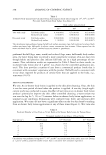
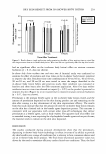
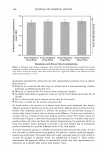
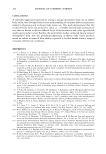
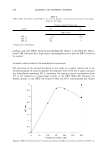
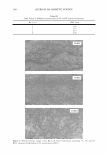
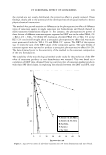
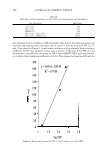
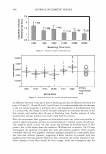
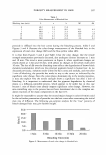
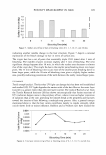
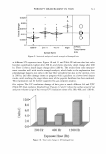
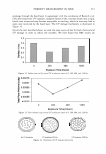
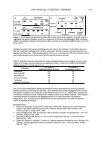
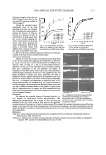
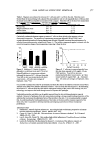
2008 ANNUAL SCIENTIFIC SEMINAR 383 The cationic emulsifier, however, leads to an emulsion that is 100 % water resistant without the usually incorporated film-forming polymers, and is comparable to most of its W/0 counterparts. This allows a considerable cost reduction in the segment of water-resistant 0/W sunscreens. The water-resistance can now be achieved without film formers at the same performance level as with W /0 systems, especially those containing silicone emulsifiers. Comparing the results received with this new in-vitro method to the results with the in-vivo CO LIP A method on the same formulas, one can say that they are - with the exclusion of one example - in general tendentiously higher than the corresponding in-vivo results. A safe prediction whether a product is water-resistant or not, however, is though possible. All formulas that have been proven to be water-resistant in-vitro were found to be water-resistant in-vivo as well, because the criterion for that claim is that the value needs to be greater than 50%. A good sand-repellent effect is a claim that is ofteii made for sunscreens to be used on the beach. Customers who bathe in the sun won't like the sand particles which are transported by the wind to be deposited on their body, especially shortly after having applied a new layer of sunscreen. To check whether there is an advantage of cationic emulsions in this aspect we have developed an in-vivo sand-repellent test. Having applied this test on the forearms of hwnans, it was detected that the best overall values are achieved with the cationic sun screen emulsions compared to other 0/W or even W/0 emulsifiers. Thus, cationic emulsifiers have a clear advantage over conventional emulsifiers for the property of sand-repellence. A comparison of the moisturizing properties of a non-ionic versus a cationic emulsifier was conducted by an outside laboratory. An emulsion with Glyceryl Stearate SE was tested against one with Distearyldimonium Chloride. The moisture measurements were taken in May 2005 on 11 panelists over a 12 hour period using a Comeometer by Khourage & Khazaka. After 8 hours the cationic film showed superior performance versus the Glyceryl Stearate SE. This result is most likely due to the ability of Disteacyldimonium Chloride to form a substantive durable film on the skin in which the hydrophobic moieties of the emulsifier are directed to the outside.
Purchased for the exclusive use of nofirst nolast (unknown)
From: SCC Media Library & Resource Center (library.scconline.org)