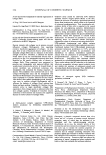
344 Introduction: JOURNAL OF COSMETIC SCIENCE HGREEN,, FORMULATING STRATEGIES Ulrich Issberner, MD Cognis Corporation The global trend for sustainable and green products has had an impact on the formulator's world in the Personal Care industry like no other trend before. It has dramatically changed the way a formulator views raw materials, production process and packaging. Studies have documented the increasing importance of this trend on the Personal Care Industry. In the past, consumers were willing to compromise on product performance in exchange for products which were perceived as "green." Today's consumer demands high performance for products with ingredients derived from renewable, vegetable sources. In addition, other considerations are capturing the consumers' attention e.g. sustainable sourcing, minimizing of environmental impact, social aspects, etc. There has been a permanent paradigm shift in the industry-there's no turning back. How do formulators meet these complicated demands from the customer, while retaining high performance at reasonable costs? Strategies which will be discussed include the sourcing of raw materials and options for energy reduced manufacturing-achieving a holistic approach to formulating green. Discussion: The Personal Care Market has always been highly driven by innovation-leveraging discoveries in various sciences, e.g. chemistry, dermatology, microbiology or biochemistry. In the past, the main challenge a formulator faced was maximizing product performance, providing marketing claims, staying within budget limitations and abiding regulations set by authorities. Today, formulators must be cognizant of the consumer's awareness of sustainability issues. Today's consumer is highly educated by modern technology and connected to others via the Internet. Consumers demand answers to actual questions: Is my product sustainably sourced? Does my product have a minimal environmental impact? What effect does my product/company have on social issues? How "green" is my product? What good can I do for myself and the environment? The principles of green chemistry can be applied to each of the main phases of the chemical and product life cycle: Design, Manufacture, Use, and End-of-life. The presentation will focus on the first 2 phases of the cycle. Designing a "green" product starts with selecting the raw materials. The ingredient selection has to consider the nature of the product itself, whether it is an organic or inorganic material and its environmental impact. In addition, the specific sourcing of a raw material has become a very important part of the green marketing story. Does it consider biodiversity or ethical principles? Finally, the process of producing the raw material has to be examined. Green solutions for high performance cosmetic products are under discovery right now. However, some applications still have performance limitations. Some examples of "green" formula prototypes will be shown, together with data comparing these prototypes with current, "green" benchmarks.

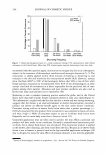
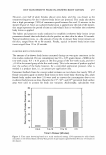
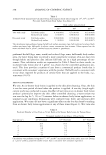
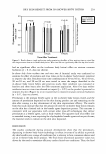
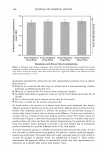
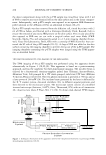
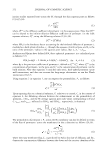
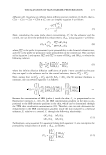
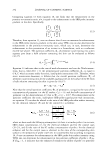
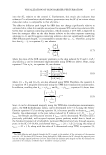
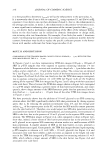
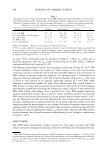
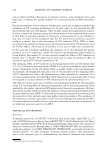
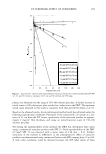
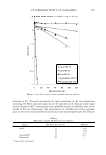
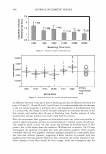
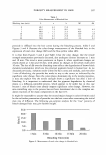
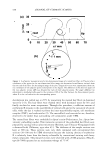
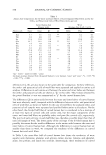
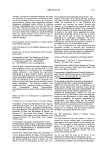
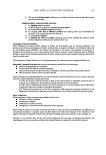
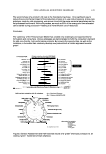
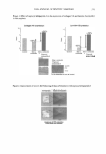
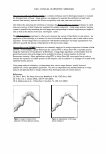
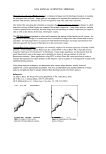
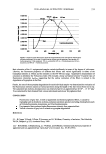
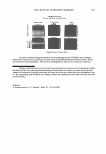
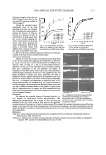
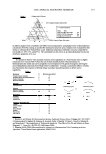
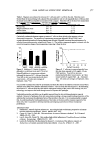
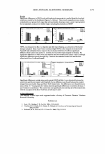
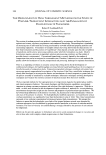
2008 ANNUAL SCIENTIFIC SEMINAR 345 The second phase of a product's life cyle is the manufacturing phase. One significant way to reduce the environmental impact of the production process is to use cold-processing. A face care prototype, made by cold-processing, was proven to exhibit the same sensorial parameters as the hot-processed benchmark. With cold process, as much as 90% of the energy and time allocated can be saved during production-leading to a more efficient use of resources. Conclusion: The "greening" of the Personal Care Market has created new challenges and opportunities for formulators and consumers. Various strategies are demonstrated to fulfill the consumer's demand for safe, eco-friendly, high performance products. By knowing the opportunities, as well as the limitations, a formulator can creatively develop new products with a holistic approach towards green! A = benchmark _. ........ !""'"-"'' f9Mnfoan ,_,,,,., Jll"nuura affbwn l"'Hl ....,,. .. __ p.,,,.J c,..,,._ fk-••1 Fvwn•Cllll), lbHJ foan� l��l fua"nbud)li (11,�sl Alnandf ((ttffie.utl _, ___ lien\ -(--""'•) s....-...(lfllrl!PPlle•-'► P,,ur) .....,__(�,.,.,.l'IH!:I _( __ ,,..,,.,1 ..,,__ C--.....,. (more] ·--(low) Palrwl•• comparlaon or produc, OEJOT� with rellt,.nce produel A In dllt'erenl variables 1tM1:J1•....,toan (rnor.]""NIUfltql....., (� .Mffl ......... Jmor.Jen,..._ fhi,,p1Jfoao_....., (nwrnJfaanct� (nw.,,•Jfoan� }-- !,...•I-I __ _, ,_,a,_, __ 1-•1 __ , ___ , (mote) Smnd,._(__.,.... P,,.•1-•---, uetslllr)lllaaf....,..,.. -O&IQ1�"'•·A ,_. 1'M•..,_ n:==���::::, �:!':4! t-:::.:.!,��)��•����=Jj.t �� �Tk JQ•\ ""'"•�-,r,t() siQNfical«?'OCl1, .,.;_ •ittiuas-?-M4' ,, �fNM•i't61. .� Half head test evaluation with 10 volunteers -+- = Benehmarll Shampoo ..... = Shampoo HB-OE/0710◄3/36 .ftllltlfun[pl.wash) Amutof flanpe--w ash) S = significance p:s 0,05 ratlng system for evaluation 6•verygood 4•good 3 • satisfactory 2•poor 1 • very poor Figures: Sensory Assessment and Half head test results of a "green" shampoo prototype vs. an exsiting "green" market benchmark shampoo.
Purchased for the exclusive use of nofirst nolast (unknown)
From: SCC Media Library & Resource Center (library.scconline.org)