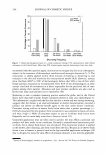
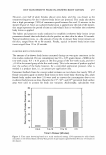
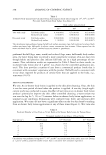
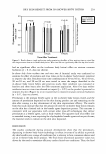
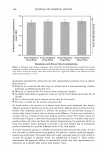
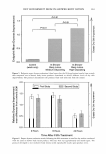
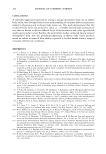
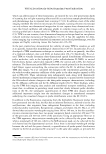
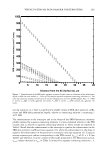
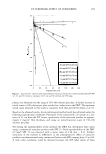
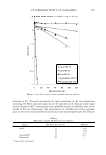
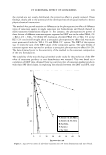
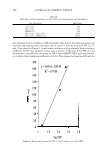
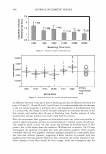
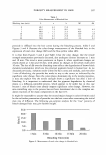
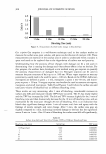
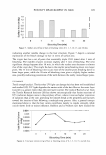
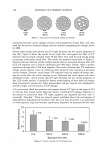
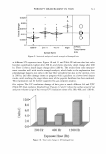
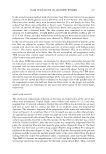
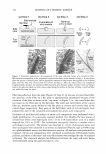
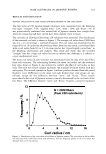
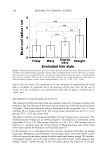
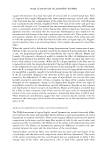
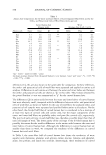
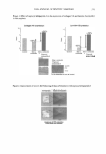
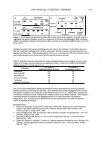
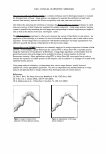
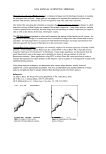
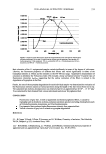
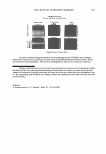
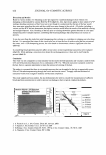
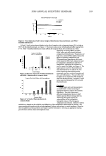
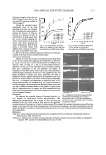
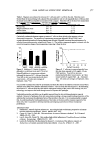
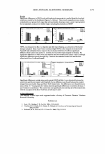
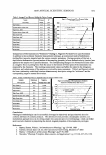
... C: Cl) E 1.5 � L. Q. E (I) 1.0 (I) - CD C � C C: C'G Cl 0.5 :E - ·sC: Q. "C C w 0.0 DRY SKIN BENEFIT FROM IN-SHOWER BODY LOTION 261 I I 1--··.. "-·· ·-· ...... · I Control (wash only) P0.01 P0.01 I P0.01 I In-Shower Body Lotion Medium Depositing I I In-Shower Body Lotion High Depositing ... ... +-' C: Cl) E g;? 0 a. E C: :i2 en � Cl I- ii � (!) Figure 5. Endpoint expert dryness evaluation (three hours after the fifth application) results from a study that compared two in-shower body lotion products formulated to deliver different levels of dry skin improvement. The protocol discriminates the products from each other and from the control. 2.0 .., :e IC] First Study Second Study I C w Cl) ti) E +I C: � 0 1.5 Cl) I■• E - g;? L. C Q. 0 e E u a. - E .E u, 0 1.0 C: (I) I■• :i2 Cl) .... en C B � �c Cl Cf I- Q) ),, ·-i 0.5 � = ,::, ns C (!) cii (U G) 0:: E 0.0 ...__ _ _._____.____. _____ ___.__...__..._____,_ ___ ____...___.__,_____...__-----L. 3 Hours 6 Hours 24 Hours Time After Fifth Treatment Figure 6. Expert dryness evaluation results following the fifth treatment in two five-day studies conducted with the same in-shower body lotion product. The tests were run approximately one month apart. The protocol developed to test in-shower body lotions yields reproducible results upon product retest.

262 JOURNAL OF COSMETIC SCIENCE CONCLUSIONS A controlled application protocol for testing a unique moisturizer form, the in-shower body lotion, was developed based on an understanding of consumer habits and practices related to showering and in-shower body lotion use. This work demonstrates that this in-shower body lotion test protocol is valid, i.e., it reliably discriminates among prod ucts that are known to deliver different levels of moisturization and yields reproducible results upon product retest. Further, the results from studies conducted during protocol development show that the petrolatum-depositing in-shower body lotion products tested are robust in terms of their ability to provide a dry skin benefit across a range of consumer-relevant use conditions. REFERENCES (1) C. L. Froebe, F. A. Simion, H. Ohlmeyer, L. D. Rhein, J. Mattai, R.H. Cagan, and S. E. Friberg, Prevention of stratum corneum lipid phase transitions in vitro by glycerol-An alternative mechanism for skin moisturization, J. Soc. Cosmet. Chem., 41, 51-65 (1990). (2) A. Rawlings, C. Harding, A. Watkinson, J. Banks, C. Ackerman, and R. Sabin, The effect of glycerol and humidity on desmosome degradation in stratum corneum, Arch. Dermatol. Res., 287(5), 457-464 (1995). (3) 0. Tanno, Y. Ota, N. Kitamura, T. Katsube, and S. Inoue, Nicotinamide increases biosynthesis of ceramides as well as other stratum corneum lipids to improve the epidermal permeability barrier, Br. J. Dermatol., 143(3), 524-531 (2000). (4) M. Mao-Qiang, B. E. Brown, S. Wu-Pong, K. R. Feingold, and P. M. Elias, Exogenous nonphysiologic vs physiologic lipids: Divergent mechanisms for correction of permeability barrier dysfunction, Arch. Dermatol., 131(7), 809-816 (1995). (5) J. Bikowski, The use of therapeutic moisturizers in various dermatologic disorders, Cutis, 68(Suppl. 5), 3-11 (2001). (6) A. W. Lucky, A. D. Leach, P. Laskarzewski, and H. Wenck, Use of an emollient as a steroid-sparing agent in the treatment of mild to moderate atopic dermatitis in children, Pediatr. Dermatol., 14(4), 321-324 (1997). (7) Y. Soma, M. Kashima, A. Imaizumi, H. Takahama, T. Kawakami, and M. Mizoguchi, Moisturizing effects of topical nicotinamide on atopic dry skin, Int. J. Dermatol., 44(3), 197-202 (2005). (8) American Academy of Dermatology. Winterize Your Skin: Dermatologists' Top Tips for Surviving the Cold [Internet} October 22, 2003 [cited August 4, 2007}. Available from: http://www.aad.org/public/ N ews/N ewsReleases/Press +Release+Archives/General+Skin+Care/WinterSkinBaumann.htm. (9) J. Hanifin and S. C. Chan, Diagnosis and treatment of atopic dermatitis, Dermatol. Ther., l, 9-18 (1996). (10) K. L. Hon, T. F. Leung, Y. Wong, H.K. So, A. M. Li, and T. F. Fok, A survey of bathing and showering practices in children with atopic eczema, Clin. Exp. Dermatol., 30(4), 351-354 (2005). (11) W. E. Roberts, K. D. Ettel, P. M. Hartwig, R. A. Bacon, V. Rodriguez, and R. D. Farris, Breaking the cycle of dry body skin through effective product design, 62nd Annual Meetinf!, of the American Academy of Dermatology, Washington, DC, February 6-111 2004. (12) K. D. Ertel, P. B. Neumann, P. M. Hartwig, G. Y. Rains, and B. H. Keswick, Leg wash protocol to assess the skin moisturization potential of personal cleansers, Int.]. Cosmet. Sci., 21, 383-397 (1999). (13) United States Environmental Protection Agency, Exposure Factors Handbook, National Center for En vironmental Assessment Office of Research and Development, United States Environmental Protection Agency, Rockville, MD, Chapter 6-Dermal, 2007. Available from: http://www.epa.gov/oppt/ exposure/presentations/efast/use_l 997 _efb.pdf. (14) R. M. Azurdia, J. A. Pagliaro, B. L. Diffey, and L. E. Rhodes, Sunscreen application by photosensitive patients is inadequate for protection, Br. J. Dermatol., 140(2), 255-2'58 (1999). (15) N. Bech-Thonsen and H. C. Wulf, Sunbathers' application of sunscreen is probably inadequate to obain the sun protection factor assigned to the preparation, Photodermatol. Photoimmunol. Photomed., 9, 242-244 (1993).
Purchased for the exclusive use of nofirst nolast (unknown)
From: SCC Media Library & Resource Center (library.scconline.org)