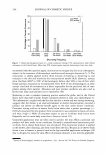
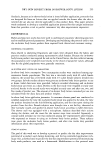
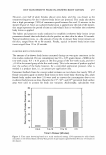
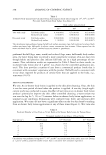
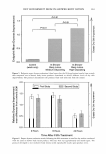
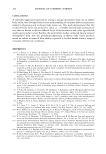
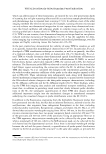
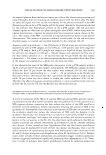
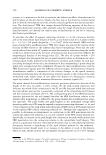
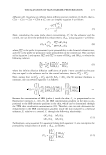
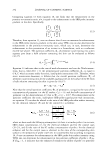
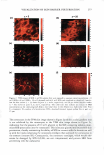
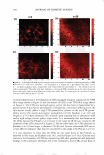
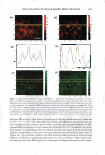
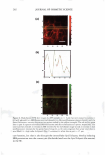
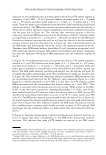
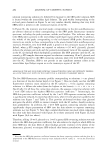
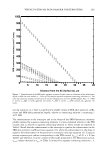
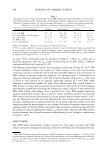
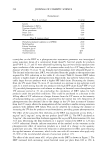
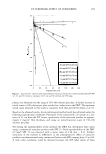
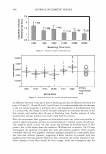
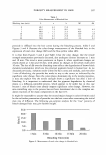
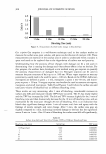
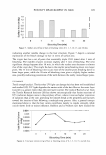
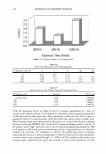
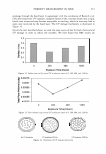
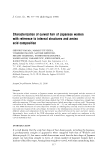
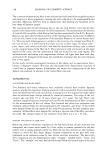
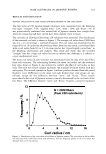
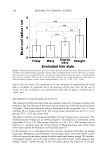
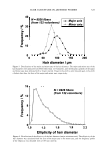
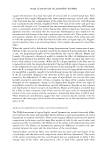
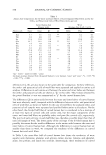
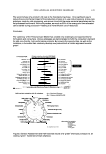
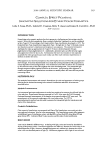
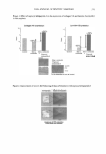
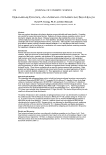
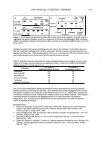
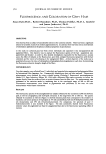
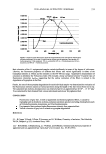
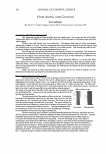
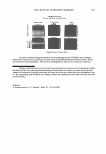
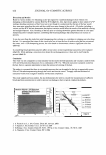
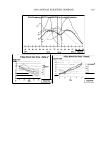
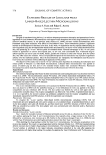
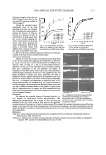
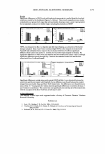
HAIR CURVATURE IN JAPANESE WOMEN 323 RESULTS AND DISCUSSION SENSORY EVALUATION OF HAIR STYLES AND MEASUREMENT OF THE CURL RADIUS The hair styles of 230 Japanese female volunteers were categorized into the following four types: "straight": 53% "slightly wavy": 32% "wavy": 10% and "frizzy": 5%. It was quantitatively confirmed that around half of Japanese women have straight hair, while the remaining half have curved hair, from slightly wavy to frizzy. The curl radii of 2300 hair fibers from 230 volunteers were measured. The distribution of the measured curl radii is shown in Figure 3. The average curl radius from 2300 fibers was 4.4 ± 2.3 cm (average ± standard deviation). The curl radius was distributed in the range of 0.6 to 16 cm for the observed hair fibers. Based on this result, curved hair fibers with a curl radius from 0.6 to 2.5 cm were used as the "typical highly curved hair" in the following observations and analyses. This result also shows that the so-called "straight" hair has a large curl radius but not an infinite one, although it is infinite in a pure mathematical sense. The mean curl radius of each volunteer was determined from the data of ten hair fibers from each volunteer. The relationship between the mean curl radius and the evaluated hair style, shown in Figure 4, was analyzed to confirm the effect of curl radius on hair style. The error bar of each column represents the standard deviation within each hair style group. The asterisk symbols in Figure 4 indicate p-values obtained from the paired Student's t-test. Differences in the mean curl radii between hair style groups are sig nificant, except for the difference between "wavy" and "frizzy." These results mean that the hair style of Japanese women is mainly determined by the curl radii of the hair fibers. The difference between "wavy" and "frizzy," however, cannot be explained � 0 --- C Cl) ::, er Cl) LL. 12 8 4 0 0 N = 2300 fibers (from 230 volunteers) 4 8 12 16 Curl radius / cm Figure 3. Distribution of the curl radius in hair fibers of Japanese women. The curl radius of the hair fiber was measured with 2300 fibers from 230 volunteers, and the frequency profile of the curl radius was obtained with a 0.5-cm interval.

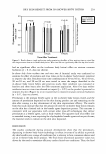
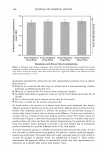
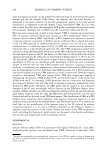
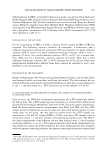
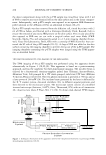
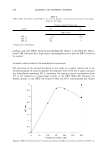
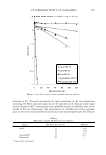
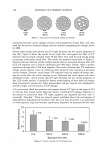
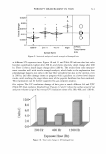
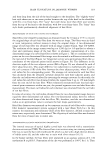
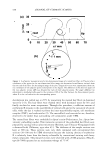
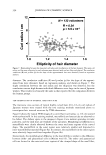
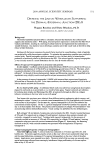
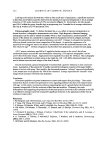
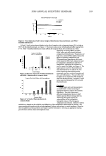
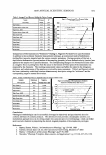
324 E u ....... en ::::J ■- -c f! "t: ::::J u 8 6 4 C 2- ftS :E 0 JOURNAL OF COSMETIC SCIENCE *** *** ·············································-----� * *** , ...................................---------. Frizzy I *** ... .. I Wavy Slightly wavy I Evaluated hair style l . Straight Figure 4. Relationship between the mean curl radius and the evaluated hair style. The hair style of 230 volunteers was evaluated and categorized into four types (see Experimental section). The mean curl radius of each volunteer was calculated from the curl radii of ten hair fibers and then the mean curl radius of each hair style was obtained. The error bar of each column indicates the standard deviation of that data set. Asterisk symbols indicate p-values obtained from Student's t-test: *p 0. 05, ***p 0. 001. only by the curl radius. The synchronicity of the curl phase of neighboring individual fibers is probably an important factor for forming a frizzy hair style. In the case of "frizzy" hair, the curl phase is not synchronized, while the curl phase is synchronized in "wavy" hair. MEASUREMENTS OF HAIR DIAMETER AND ELLIPTICITY The diameters of 8926 hair fibers from the randomly selected 132 Japanese women were measured. The distributions of the major and the minor axes of hair diameter are shown in Figure 5. The major and minor axes are distributed in the ranges from 30 to 1 70 µm and from 30 to 130 µm, respectively. The average major and minor axes are 95.3 ± 16.5 µm and 74.4 ± 10.5 µm, respectively. The ellipticity of hair was also determined from the ratio of major axis to minor axis. The distributions of the ellipticity are shown in Figure 6. The ellipticity is distributed in the range from 1.02 to 2.19. The average ellipticity is 1.28 ± 0.15. The average value of ellipticity is consistent with the reported values of Mongolian hairs and is lower than those values quoted for Ethiopian and Caucasian hairs (1). In the literature (1), it is discussed that hair curvature correlates with ellipticity among Caucasians, Mongolians, and Ethiopians. Interestingly, more curved hair shows a more elliptical cross-sectional shape among the above-mentioned human groups. We therefore investigated whether or not the same tendency was observed only within Japanese hair samples. Figure 7 shows the plot of the curl radius against the ellipticity of the hair
Purchased for the exclusive use of nofirst nolast (unknown)
From: SCC Media Library & Resource Center (library.scconline.org)