]. Cosmet. Sci.! 59, 317-332 Quly/August 2008) Characterization of curved hair of Japanese women with reference to internal structures and amino acid composition SHINOBU NAGASE, MASARU TSUCHIYA, TOSHIHIKO MATSUI, SATOSHI SHIBUICHI, HISASHI TSUJIMURA, YOSHINO RI MASUKA WA, NAOKI SATOH, TAKASHI ITOU, KENZO KOIKE, and KAORU TSUJII, Beauty Research Center! Kao Corporation! 2-1-3! Bunka, Sumida-ku, Tokyo 131-8501 (S.N., M.T., T.M., S.S., N.S., T.I., K.K), Analytical Science Research Laboratories, Kao Corporation, 2606, Akabane, Ichikai, Haga, Tochigi 321-3497 (H. T., Y.M.), and Nanotechnology Research Center, Research Institute for Electronic Science, Hokkaido University, N-21, W-10, Kita-ku, Sapporo 001-0021 (K. T.), Japan. Accepted for publication February 20, 2008. Synopsis The variation of hair curvature in Japanese women was quantitatively investigated and the structure of curved hair was characterized with transmission electron microscopy (TEM) and amino acid analysis. Two hundred and thirty Japanese women volunteers, aged from 10 to 70 years, were randomly selected. The evaluation of the volunteers' natural hair shape showed that 53% of Japanese women have straight hair, while the remaining 47% have curved hair (varying from a slightly wavy shape to a frizzy style). The average curl radius of the volunteers' hair was determined to be 4.4 ± 2.3 cm, and ranged widely from 0.6 to 16 cm. The TEM observation of curved hair fiber revealed an inhomogenous internal structure between the outer and inner regions of the curved shape. In relation to the inhomogeneous structure of the curved hair, different amino acid composition of the hair keratin was observed between the outer and inner regions. Interestingly, these results of the TEM observation and the amino acid analysis are analogous to the difference between the ortho- and paracortical cells in wool fibers, suggesting the universal structure of curved mammalian hair. INTRODUCTION It is well known that the scalp hair shape of East Asian people, including the Japanese, is predominantly straight in appearance when compared with that of Wes tern and African people (1), but more careful observations reveal that the hair shape of Japanese people can vary from straight to wavy. A certain number of Japanese women have a mixture of hair fiber types, varying from straight to curved, with some meandering hairs. 317

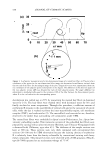
318 JOURNAL OF COSMETIC SCIENCE The curvature of meandering hairs is not synchronized with that of the neighboring hairs and results in a frizzy appearance, causing the total scalp hair to be unmanageable and lusterless. There has, however, been no quantitative data showing the variations in the hair shape of Japanese people. The microstructure of curved human hair is also not well known a few articles have reported the characteristic structure of coiled human hair. The asymmetrical distribution of cortical cells in tightly coiled African hair has been mentioned by Swift (2). Recently, Kajiura et al. have reported the possibility of the inhomogeneous distribution of different cortical cells, based on the alignment of intermediate filaments in curved human hairs (3). This structural inhomogeneity is similar to the structure of a crimped wool fiber. In the case of wool, it is well known that there are two or three types of cortical cells para-, meso-, and orthocortical cells-and that the distribution of these cells is related to the crimped shape of the fiber (4,5). The paracortical cells are located in the inner region of the curve, and the orthocortical cells are located in the outer region. The microstructures and amino acid compositions of these cell types have been well char acterized (6-8). Compared with wool, the availability of similar data for curved human hair is very sparse. In this study, we have investigated variations in hair shape, and its quantitative distri bution, in Japanese women. We have also investigated the characteristic structure of curved hair in Japanese women. Furthermore, the amino acid composition of the hair keratin was analyzed in relation to the curved fiber structure. EXPERIMENT AL VOLUNTEERS AND HAIR SAMPLES Two hundred and thirty volunteers were randomly selected from healthy Japanese women, who had no experience of perm treatment within six months. Perm-treated hairs were excluded from this study to enable an investigation of the original hair shape rather than an artificial shape change induced by chemical treatment. The range of the vol unteers' age was from 10 to 70 years (mean age: 3 7 .5 years). Ten hair fibers were randomly sampled from each volunteer and used for the determination of fiber curvature by the measurement of the curl radius. One hundred and thirty-two volunteers were randomly selected from the above-mentioned 230 volunteers, and about 70 hair fibers were sampled from the top region of the scalp of each person, for hair diameter mea surement. All hair fibers were sampled by cutting at the root end of the fiber, just above the scalp. The average length of the volunteer's hair fibers was 142 ± 51 mm. SENSORY EVALUATION OF HAIR STYLE Before the sensory evaluations commenced, the full head of hair of each volunteer was shampooed and warm water rinsed by a hair stylist to remove materials on the hair surface such as styling polymer and/or oil. Then the wet hair was hot-air dried without tension to avoid the hair shape change. Sensory evaluations of the hair style were performed in an evaluation room by hair stylists and hair researchers. The hair styles were categorized into the following four types: "straight," "slightly wavy," "wavy," and "frizzy." The "straight" hair style has hair fibers that follow the natural shape of the head
Purchased for the exclusive use of nofirst nolast (unknown)
From: SCC Media Library & Resource Center (library.scconline.org)