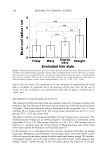
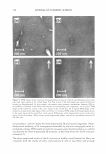
318 JOURNAL OF COSMETIC SCIENCE The curvature of meandering hairs is not synchronized with that of the neighboring hairs and results in a frizzy appearance, causing the total scalp hair to be unmanageable and lusterless. There has, however, been no quantitative data showing the variations in the hair shape of Japanese people. The microstructure of curved human hair is also not well known a few articles have reported the characteristic structure of coiled human hair. The asymmetrical distribution of cortical cells in tightly coiled African hair has been mentioned by Swift (2). Recently, Kajiura et al. have reported the possibility of the inhomogeneous distribution of different cortical cells, based on the alignment of intermediate filaments in curved human hairs (3). This structural inhomogeneity is similar to the structure of a crimped wool fiber. In the case of wool, it is well known that there are two or three types of cortical cells para-, meso-, and orthocortical cells-and that the distribution of these cells is related to the crimped shape of the fiber (4,5). The paracortical cells are located in the inner region of the curve, and the orthocortical cells are located in the outer region. The microstructures and amino acid compositions of these cell types have been well char acterized (6-8). Compared with wool, the availability of similar data for curved human hair is very sparse. In this study, we have investigated variations in hair shape, and its quantitative distri bution, in Japanese women. We have also investigated the characteristic structure of curved hair in Japanese women. Furthermore, the amino acid composition of the hair keratin was analyzed in relation to the curved fiber structure. EXPERIMENT AL VOLUNTEERS AND HAIR SAMPLES Two hundred and thirty volunteers were randomly selected from healthy Japanese women, who had no experience of perm treatment within six months. Perm-treated hairs were excluded from this study to enable an investigation of the original hair shape rather than an artificial shape change induced by chemical treatment. The range of the vol unteers' age was from 10 to 70 years (mean age: 3 7 .5 years). Ten hair fibers were randomly sampled from each volunteer and used for the determination of fiber curvature by the measurement of the curl radius. One hundred and thirty-two volunteers were randomly selected from the above-mentioned 230 volunteers, and about 70 hair fibers were sampled from the top region of the scalp of each person, for hair diameter mea surement. All hair fibers were sampled by cutting at the root end of the fiber, just above the scalp. The average length of the volunteer's hair fibers was 142 ± 51 mm. SENSORY EVALUATION OF HAIR STYLE Before the sensory evaluations commenced, the full head of hair of each volunteer was shampooed and warm water rinsed by a hair stylist to remove materials on the hair surface such as styling polymer and/or oil. Then the wet hair was hot-air dried without tension to avoid the hair shape change. Sensory evaluations of the hair style were performed in an evaluation room by hair stylists and hair researchers. The hair styles were categorized into the following four types: "straight," "slightly wavy," "wavy," and "frizzy." The "straight" hair style has hair fibers that follow the natural shape of the head

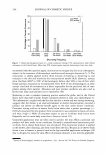
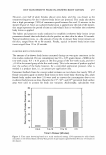
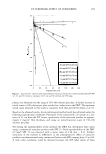
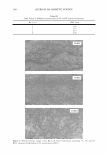
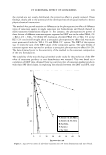
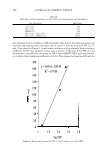
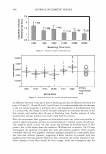
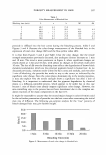
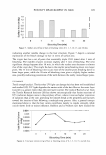
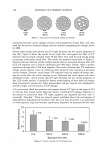
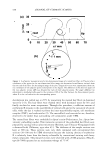
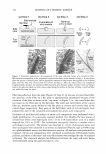
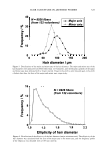
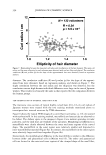
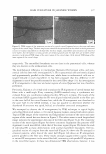
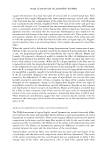
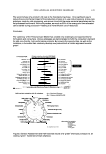
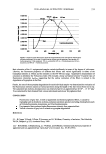
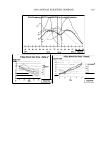
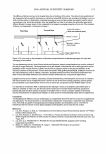
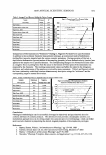
HAIR CURVATURE IN JAPANESE WOMEN 319 and then drop from the side of the head straight to the shoulders. The "slightly wavy" hair style shows one or two wave pitches between the top of the head to the shoulders, with few or no frizzy hairs. The "wavy" hair style shows more than three wave pitches from the top of the head to the shoulders, with few or no frizzy hairs. The "frizzy" hair style shows predominately disordered alignment of hair fibers. MEASUREMENT OF HAIR CURL RADIUS AND DIAMETER Hair fibers were relaxed by immersion in deionized water for 10 min at 25°C to recover the original shape of each hair fiber from the water-set shape. The fibers were air-dried at room temperature without tension to keep the original shape. A two-dimensional image of each hair fiber was obtained with an image scanner (Epson, Type GT-X800). The resolution of the image scanner was kept at 4200 dpi (ca. 6.0 µm/dot) to obtain a clear and continuous image of the hair fiber. A schematic representation of a two dimensional image of a curved hair fiber is shown in Figure 1. The x-y coordinates of the points on the two-dimensional fiber image were determined at millimeter intervals from the root end of the fiber (Figure la). Tangential vectors were approximated from the x-y coordinates of two adjacent points (solid arrows in Figure lb). The difference in the direction angles of the two adjacent vectors (Li8 in Figure lb) was obtained for each of three adjacent points. This angle difference (in radian/mm) is mathematically equal to the curl curvature (J/R) of the fiber between the three adjacent points, where R is the curl radius for the corresponding points. The average curl curvature for each hair fiber was calculated from the obtained curvature datum for each three adjacent points, and then the curl radius was calculated by inverting the average curvature. In this study, the curl radius for each fiber was obtained within the region from O up to 150 mm length from the root end of the hair fiber. When volunteers encountered hairs that had expe rienced perm treatments within one year, the permed segments were excluded from this measurement. The mean curl radius for each volunteer was calculated from the curl radii of ten hair fibers. In terms of accuracy, the curl radius obtained from the two-dimensional image does not equal the three-dimensional curl radius. The two-dimensional radius, however, reflects the three-dimensional shape of the hair fiber. We, therefore, used the two-dimensional radius as an approximate value to evaluate the hair shape quantitatively. Hair fiber diameter was measured on the transverse section of each fiber with a rotating fiber diameter measurement system equipped with a laser (Kato Tech Co.). In this manner, the maximum and minimum values of the fiber diameter, defined as major and minor axes, respectively, were determined. The ellipticity of each hair fiber was obtained from the ratio of major axis to minor axis. TRANSMISSION ELECTRON MICROSCOPIC OBSERVATION The internal structure of typical highly curved hairs was observed with a transmission electron microscope (TEM). We observed hair cross sections using two staining methods. One was to stain the hair with erythrosine B, which is a dye with a high electron density of iodide atoms (9), and the other was to stain with silver nitrate (10,11). In the former method, the hair fibers were immersed in an aqueous solution of 0.1 M erythrosine B at pH 8.5. Penetration of the dye was performed at 100°C for 1 h. Then
Purchased for the exclusive use of nofirst nolast (unknown)
From: SCC Media Library & Resource Center (library.scconline.org)