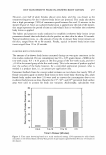
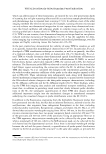
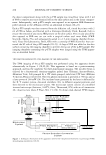
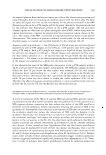
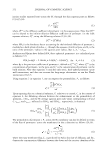
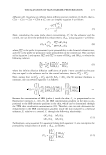
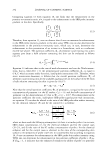
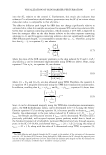
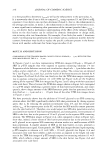
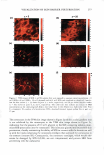
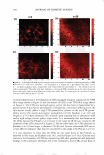
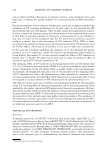
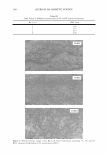
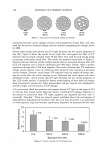
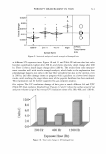
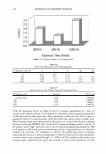
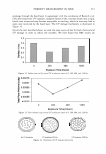
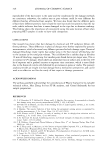
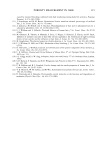
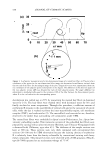
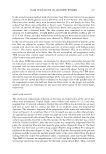
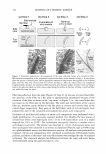
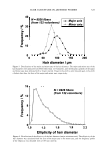
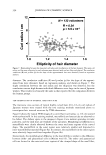
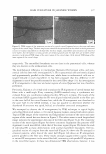
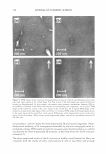
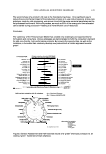
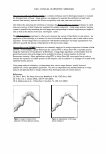
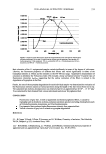
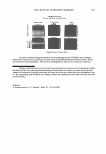
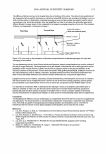
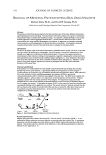
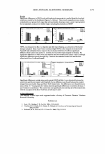
322 Side view Top view JOURNAL OF COSMETIC SCIENCE (a) Step 1 Ethyl acetate Hair fiber J Hai�//? fiber {jf Celluloid plate (b) Step 2 (c) Step 3 Evaporation of Hand-cut �ch (d) Step 4 C (· .. ··· ► D Outer half Inner half Figure 2. Schematic diagrams for the preparation of the inner and outer halves of a curved hair fiber. Micrographs corresponding to the preparation steps are also shown at the bottom. (a) Step 1: A curved hair fiber was put on a celluloid plate, and an appropriate amount of ethyl acetate was applied to the celluloid plate until the fiber was covered with this solvent. (b) Step 2: After the ethyl acetate was completely evaporated from the plate, the curved hair fiber was fixed near the plate surface. (c) Step 3: The curved hair fixed on the plate was hand cut with a sharp scalpel along the midline of the fiber. (d) Step 4: Each half fiber was pulled out from the plate. fiber was pulled out from the plate (Figure 2d: Step 4). In the case of curved hair fiber, the direction of the fiber on a flat plate is spontaneously determined because of the curvature of the fiber, as shown in the "top views" in Figure 2, i.e., the curved fiber does not rotate on the fiber axis on the flat plate. The inner and outer halves of the curved fiber are, therefore, easily defined on the flat plate as concave and convex sides of the curved shape, respectively. Four pairs of the half fibers, each of 1.0-cm length, were prepared for each of the volunteers and analyzed for amino acid composition. Hydrolysis of the fibers and analysis of amino acid composition were performed with a slight modification of a previously reported method ( 12). Briefly, the four pieces of divided hair fibers were hydrolyzed with 1.0 ml 6 M hydrochloric acid in a sealed ampoule for 24 h at 110°C. The hydrolysate was gently dried to a residue with a centrifugal concentrator. The residue was dissolved in 1.0 ml of ultra-pure water, and then its aliquots were subjected to an amino acid analyzer (Hitachi type 1-8500) using an o-phthalaldehyde amino acid derivatization reaction. All analyses were performed in triplicate. Amino acid compositions were calculated as residues per 100 residues (moles percent), and those in the inner- and outer-fiber halves were averaged for the 39 analyzed volunteers. The statistical analyses for differences between the inner and outer halves were performed using the paired Student's t-test.

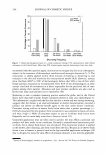
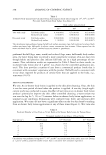
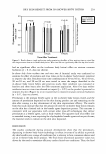
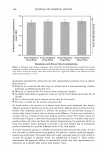
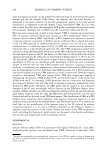
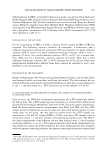
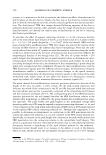
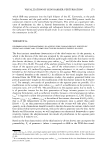
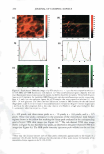
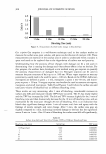
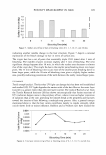
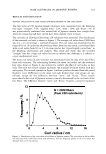
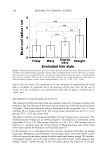
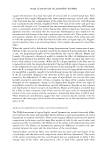
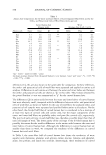
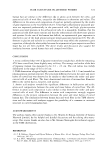
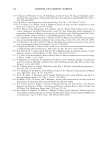
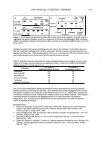
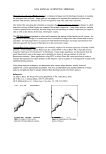
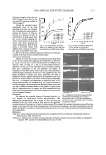
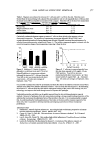
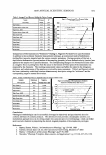
HAIR CURVATURE IN JAPANESE WOMEN 323 RESULTS AND DISCUSSION SENSORY EVALUATION OF HAIR STYLES AND MEASUREMENT OF THE CURL RADIUS The hair styles of 230 Japanese female volunteers were categorized into the following four types: "straight": 53% "slightly wavy": 32% "wavy": 10% and "frizzy": 5%. It was quantitatively confirmed that around half of Japanese women have straight hair, while the remaining half have curved hair, from slightly wavy to frizzy. The curl radii of 2300 hair fibers from 230 volunteers were measured. The distribution of the measured curl radii is shown in Figure 3. The average curl radius from 2300 fibers was 4.4 ± 2.3 cm (average ± standard deviation). The curl radius was distributed in the range of 0.6 to 16 cm for the observed hair fibers. Based on this result, curved hair fibers with a curl radius from 0.6 to 2.5 cm were used as the "typical highly curved hair" in the following observations and analyses. This result also shows that the so-called "straight" hair has a large curl radius but not an infinite one, although it is infinite in a pure mathematical sense. The mean curl radius of each volunteer was determined from the data of ten hair fibers from each volunteer. The relationship between the mean curl radius and the evaluated hair style, shown in Figure 4, was analyzed to confirm the effect of curl radius on hair style. The error bar of each column represents the standard deviation within each hair style group. The asterisk symbols in Figure 4 indicate p-values obtained from the paired Student's t-test. Differences in the mean curl radii between hair style groups are sig nificant, except for the difference between "wavy" and "frizzy." These results mean that the hair style of Japanese women is mainly determined by the curl radii of the hair fibers. The difference between "wavy" and "frizzy," however, cannot be explained � 0 --- C Cl) ::, er Cl) LL. 12 8 4 0 0 N = 2300 fibers (from 230 volunteers) 4 8 12 16 Curl radius / cm Figure 3. Distribution of the curl radius in hair fibers of Japanese women. The curl radius of the hair fiber was measured with 2300 fibers from 230 volunteers, and the frequency profile of the curl radius was obtained with a 0.5-cm interval.
Purchased for the exclusive use of nofirst nolast (unknown)
From: SCC Media Library & Resource Center (library.scconline.org)