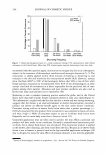
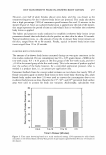
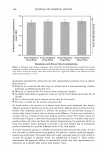
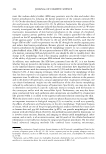
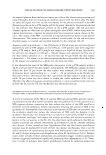
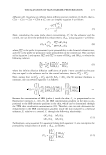
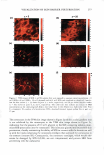
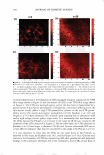
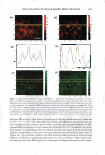
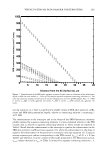
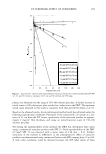
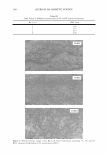
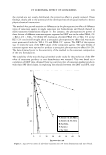
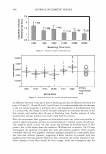
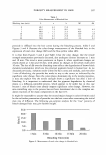
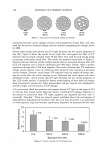
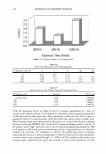
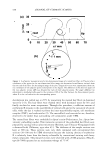
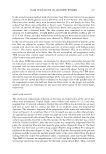
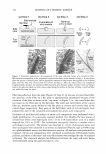
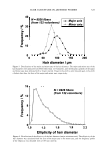
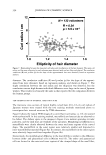
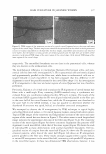
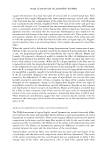
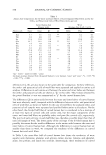
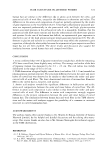
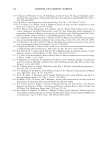
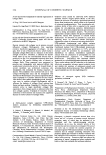
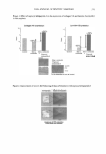
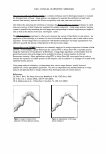
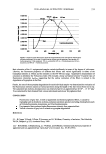
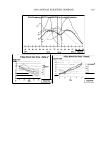
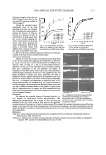
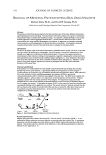
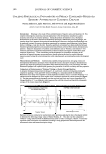
326 12 E u ...... 8"' :I ·-,n -c I! i: :I u JOURNAL OF COSMETIC SCIENCE ◊ N = 132 volunteers R = 0.24 p = 5.9 X 10"'3 0 ,...._ ______ ___,_________,_ 1 1 _______ ___. 1.0 1.2 1.4 Ellipticity of hair diameter 1.6 Figure 7. Relationship between the measured curl radius and the ellipticity of the hair diameter. The mean curl radius and the mean ellipticity for each volunteer were obtained with ten hair fibers and plotted. The correlation coefficient (R) and p-value (p) for the slope of the approximated line were obtained, based on regression analysis. diameter. The correlation coefficient (R) and p-value (p) for the slope of the approxi mated line were obtained, based on regression analysis, and shown in Figure 7. The slight correlation between the curl radius and the ellipticity was observed, but the correlation was not high because individual differences were large in the case of Japanese women. This tendency is basically the same as that reported for the comparison between the human groups. TEM OBSERVATIONS OF INTERNAL FIBER STRUCTURE The transverse cross sections of typical highly curved hairs (0.6-1.0-cm curl radius) of Japanese women were treated with the two staining methods mentioned above to investigate their internal structure by TEM observation. Figure 8 shows the typical TEM images of a curved hair (curl radius: ca. 0.6 cm) stained with erythrosine B. In this staining method, macrofibrils and exocuticles are observed to be darker. The darkest spots in the images in Figure 8 are melanin granules (circular particles), and the dark lines are wrinkles of the specimen. Morphological differences in macrofibrils were clearly observed between the outer and inner regions of the curved shape. The macrofibrils in the outer region were relatively smaller and dispersed in inter-macrofibrillar material (Figure Sa). In contrast, the macrofibrils in the inner region were relatively larger and fused together (Figure 86). Interestingly, the morphological difference in the macrofibrils is similar to the difference between ortho- and paracortical cells in Merino wool (5 ). The ortho- and paracortical cells are located in the outer and inner regions of the crimped shape of the wool fiber,

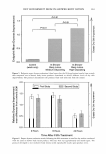
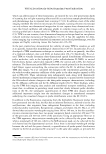
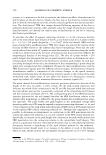
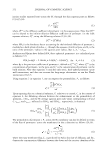
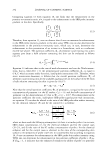
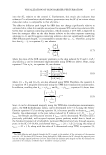
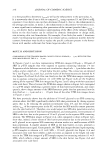
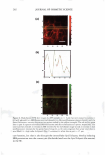
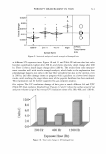
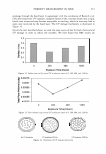
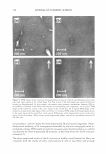
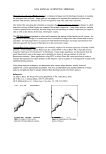
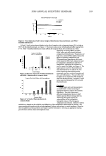
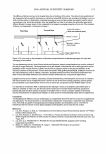
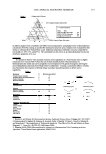
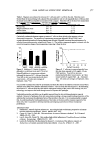
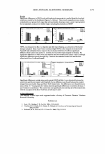
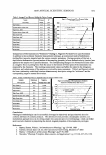
HAIR CURVATURE IN JAPANESE WOMEN 327 Figure 8. TEM images of the transverse section of a typical curved Japanese hair at the outer and inner regions of the curved shape. The hair sample was stained with erythrosine Bas described in the Experimental section to visualize macrofibrils in the hair fiber. In these images, macrofibrils and exocuticles are observed to be darker, but the darkest circular particles are melanin granules and the dark lines are wrinkles of the specimen. (a) A typical TEM image of the outer region of the curved shape. (b) A typical TEM image of the inner region of the curved shape. respectively. The macrofibril boundaries are not clear in the paracortical cells, whereas they are discrete in the orthocortical cells. The morphological difference in intermediate filaments (IFs) between ortho- and para cortical cells has been well investigated (6,7). IFs in paracortical cells are loosely aligned and approximately parallel to the fiber axis, while those in orrhocortical cells are ar ranged helically in each macrofibril. It has been proposed that this difference in IF alignment is one of the possible reasons for the curved fiber shape ( 13 ). An investigation of IF arrangements in the inner and outer regions of curved Japanese hair was, therefore, performed. Previously, Kajiura et al. (3) had tried to analyze the IF alignments of curved human hair fibers with a small-angle X-ray scattering (SAXS) method using a synchrotron mi crobeam X-ray at a synchrotron radiation facility, SPring-8, in Japan. The results of the microbeam SAXS suggested that the IFs were aligned relatively parallel to the fiber axis in the inner half of the curved human hair, while the IF arrangement was disordered in the outer half. In the SAXS method, it was not possible to determine whether the disordered IF structure was spiral, helical, or of another structural arrangement. We attempted to observe the IF arrangements by TEM technique in typical highly curved hair fibers (curl radius: ca. 0.6 cm) of Japanese women, stained with silver nitrate. Typical TEM images of the transverse and longitudinal sections of the outer and inner regions of the curved hair are shown in Figure 9. The white arrow in each longitudinal image indicates the approximate direction of the fiber axis (Figure 9c,d). The transverse section of the outer region (Figure 9a) shows concentric fingerprint-like patterns of IF alignment in each macrofibril, while that of the inner region (Figure 96) shows the ends of individual IFs as many dotted points with unclear macrofibril boundaries. The lon gitudinal section of a region from the outer half (Figure 9c) shows the IFs arranged in crossover patterns, while that of the inner half (Figure 9d) shows an IF arrangement pattern parallel to the fiber axis. These results strongly suggest either a spiral, helical, or twisted IF arrangement in the outer-fiber half, contrasting with parallel IF alignments in the inner-fiber region. In these two-dimensional TEM observations, however, it was
Purchased for the exclusive use of nofirst nolast (unknown)
From: SCC Media Library & Resource Center (library.scconline.org)