356 JOURNAL OF COSMETIC SCIENCE
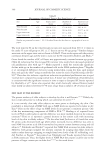
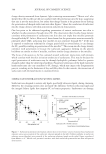
frequency.22 To reconfirm this relationship, they analyzed differences of the CPT value
(5 Hz) between the itch responder and non-itch responder groups. There was a significant
correlation between itch sensation and CPT values of 5 Hz. The itch responder group
showed significantly lower sensory perception value of 5 Hz than the non-itch responder
group.
QUANTITATIVE SENSORY TESTING (QST)
QST is a psycho-physical validated method that uses different stimuli of increasing intensity
to measure somato-sensory perception.23 This method allows evaluation of the participation
of small and large nerve fibers. Currently, QST is used mainly in neuropathic pain or
neuropathic pruritus to look for small-fiber neuropathies.24 The detection thresholds of heat
pain (HPT), vibration pain (VDT), and cold pain (CDT) can be tested using a Computer-
Assisted Sensory Examination (CASE) system IV (WR Medical Electronics Co., Maplewood,
MN, USA).25 A thermal electrode of 10 cm² is placed on the dorsum of the dominant hand
of the subject or elsewhere. The CASE IV software program automatically calculates the
pain ratings of heat pain (HP) HP 0.5, HP 5.0 and HP 5-0.5 with a quadratic regression
equation. HP 0.5 is defined as the midpoint between the smallest stimulus that created
pain and the largest no-painful stimulus. HP 5.0 corresponded to the stimulus that created
a rating of 5 from the subject. HP 5-0.5 was the difference between these two values. In
subjects with sensitive skin, the HPT is significantly lower (14.5 +/-2.8) than in the controls
(17.8 +/− 2.5) (p 0.001).26 Intermediate pain (HPT 5.0) is also significantly decreased.
CUTANEOUS THERMAL SENSATION
This psychophysical test is only based on the assessment of peripheral sensitivity to thermal
stimuli. This test involved the use of a thermal testing instrument—for example, the
Thermal Sensory Analyser (TSA 2001) manufactured by Medoc, Ramat Yishai, Israel—to
assess the thermal functional components of cutaneous nerve endings.16,27 The thermode
delivers thermal stimuli capable of heating or cooling the skin.
SKIN BIOPSIES
Histological analysis of skin biopsies in sensitive skin areas shows a decrease of intra-
epidermal nerve density, like in small-fiber neuropathies.28 However, it is difficult to use
this invasive technique routinely.
PARALLEL TESTS
The aim of many other tests is to evaluate skin properties which can be modified in
subjects with sensitive skin, but are not directly related to sensitive skin: trans-epidermal
water loss (TEWL), cutaneous pH, epidermal thickness (measured by ultrasonography,
optical microscopy, or confocal microscopy), skin penetrability (assessed with UV light),
molecular composition of stratum corneum (using confocal Raman microspectroscopy), or
others.12, 29–32 All these tests are commonly used in studies on sensitive skin, but they never
measure skin hypersensitivity.
frequency.22 To reconfirm this relationship, they analyzed differences of the CPT value
(5 Hz) between the itch responder and non-itch responder groups. There was a significant
correlation between itch sensation and CPT values of 5 Hz. The itch responder group
showed significantly lower sensory perception value of 5 Hz than the non-itch responder
group.
QUANTITATIVE SENSORY TESTING (QST)
QST is a psycho-physical validated method that uses different stimuli of increasing intensity
to measure somato-sensory perception.23 This method allows evaluation of the participation
of small and large nerve fibers. Currently, QST is used mainly in neuropathic pain or
neuropathic pruritus to look for small-fiber neuropathies.24 The detection thresholds of heat
pain (HPT), vibration pain (VDT), and cold pain (CDT) can be tested using a Computer-
Assisted Sensory Examination (CASE) system IV (WR Medical Electronics Co., Maplewood,
MN, USA).25 A thermal electrode of 10 cm² is placed on the dorsum of the dominant hand
of the subject or elsewhere. The CASE IV software program automatically calculates the
pain ratings of heat pain (HP) HP 0.5, HP 5.0 and HP 5-0.5 with a quadratic regression
equation. HP 0.5 is defined as the midpoint between the smallest stimulus that created
pain and the largest no-painful stimulus. HP 5.0 corresponded to the stimulus that created
a rating of 5 from the subject. HP 5-0.5 was the difference between these two values. In
subjects with sensitive skin, the HPT is significantly lower (14.5 +/-2.8) than in the controls
(17.8 +/− 2.5) (p 0.001).26 Intermediate pain (HPT 5.0) is also significantly decreased.
CUTANEOUS THERMAL SENSATION
This psychophysical test is only based on the assessment of peripheral sensitivity to thermal
stimuli. This test involved the use of a thermal testing instrument—for example, the
Thermal Sensory Analyser (TSA 2001) manufactured by Medoc, Ramat Yishai, Israel—to
assess the thermal functional components of cutaneous nerve endings.16,27 The thermode
delivers thermal stimuli capable of heating or cooling the skin.
SKIN BIOPSIES
Histological analysis of skin biopsies in sensitive skin areas shows a decrease of intra-
epidermal nerve density, like in small-fiber neuropathies.28 However, it is difficult to use
this invasive technique routinely.
PARALLEL TESTS
The aim of many other tests is to evaluate skin properties which can be modified in
subjects with sensitive skin, but are not directly related to sensitive skin: trans-epidermal
water loss (TEWL), cutaneous pH, epidermal thickness (measured by ultrasonography,
optical microscopy, or confocal microscopy), skin penetrability (assessed with UV light),
molecular composition of stratum corneum (using confocal Raman microspectroscopy), or
others.12, 29–32 All these tests are commonly used in studies on sensitive skin, but they never
measure skin hypersensitivity.