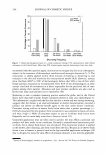
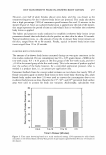
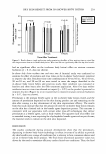
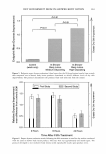
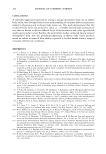
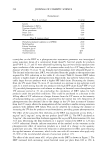
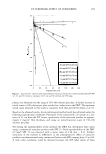
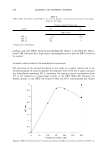
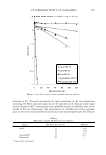
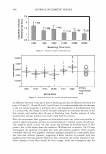
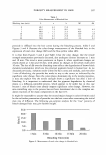
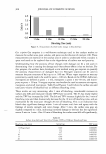
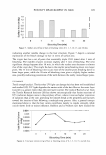
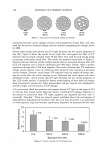
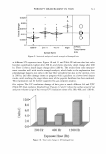
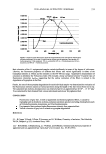
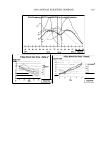
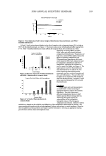
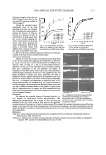
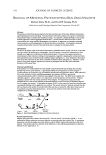
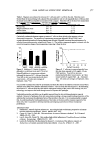
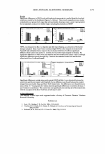
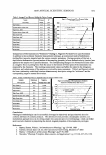
2008 ANNUAL SCIENTIFIC SEMINAR 383 The cationic emulsifier, however, leads to an emulsion that is 100 % water resistant without the usually incorporated film-forming polymers, and is comparable to most of its W/0 counterparts. This allows a considerable cost reduction in the segment of water-resistant 0/W sunscreens. The water-resistance can now be achieved without film formers at the same performance level as with W /0 systems, especially those containing silicone emulsifiers. Comparing the results received with this new in-vitro method to the results with the in-vivo CO LIP A method on the same formulas, one can say that they are - with the exclusion of one example - in general tendentiously higher than the corresponding in-vivo results. A safe prediction whether a product is water-resistant or not, however, is though possible. All formulas that have been proven to be water-resistant in-vitro were found to be water-resistant in-vivo as well, because the criterion for that claim is that the value needs to be greater than 50%. A good sand-repellent effect is a claim that is ofteii made for sunscreens to be used on the beach. Customers who bathe in the sun won't like the sand particles which are transported by the wind to be deposited on their body, especially shortly after having applied a new layer of sunscreen. To check whether there is an advantage of cationic emulsions in this aspect we have developed an in-vivo sand-repellent test. Having applied this test on the forearms of hwnans, it was detected that the best overall values are achieved with the cationic sun screen emulsions compared to other 0/W or even W/0 emulsifiers. Thus, cationic emulsifiers have a clear advantage over conventional emulsifiers for the property of sand-repellence. A comparison of the moisturizing properties of a non-ionic versus a cationic emulsifier was conducted by an outside laboratory. An emulsion with Glyceryl Stearate SE was tested against one with Distearyldimonium Chloride. The moisture measurements were taken in May 2005 on 11 panelists over a 12 hour period using a Comeometer by Khourage & Khazaka. After 8 hours the cationic film showed superior performance versus the Glyceryl Stearate SE. This result is most likely due to the ability of Disteacyldimonium Chloride to form a substantive durable film on the skin in which the hydrophobic moieties of the emulsifier are directed to the outside.

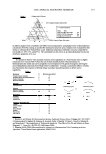
384 JOURNAL OF COSMETIC SCIENCE THE DEVELOPMENT OF HIGH THROUGHPUT METHODS FOR THE STUDY OF POLYMER/SURFACTANT INTER ACTION AND THE EVALUATION OF POLYELECTROLYTE THICKENERS Robert Y. Lochhead Ph.D. The Institute for Formulation Science, The School of Polymers & High Performance Materials The University of Southern Mississippi The creation of modem personal care products is underpinned by an enormous and diversified array of sophisticated science, regulatory requirements and commercial knowledge. The marketplace is demanding an increasing rate of innovation that is being accelerated by crowded intellectual property portfolios and constraining regulations. Formulators of complex mixtures have long known that the characteristics of their final formulation and the position of "equilibrium" often depends critically upon the order of addition of ingredients and the precise processing conditions under which the formulation was made. Modem formulations require a precision in ingredient selection and processing conditions and the number of possible choices is astronomical. Conventional formulation is severely limited by the number of compositions that can be investigated in a reasonable time. Therefore, it behooves us to seek methods that quickly allow the formulator to scan tht. compositional and processing landscape for optimum formulations. There is an impending revolution in cosmetic science that is being driven by the development of combinatorial techniques for high throughput screening. Robotic liquid handling allows the investigation of literally thousands of compositions daily. Compositional gradient techniques combined with atomic force microscopy permits unprecedented investigation of the structure of thin films microfluidic techniques have already been developed to investigate the kinetics and mechanisms of stimuli-responsive systems and also the precise assembly of emulsions by scaleable techniques. Informatics techniques are being developed to manipulate and visualize the enormous amounts of data that emanate from those new methods. We have reported methods for the rapid generation of compositional diagrams that predict phase stability and stimuli-responsive behavior. The correct rheologies and film formation capabilities are extremely important in gaining consumer acceptance and selection if the right thickeners is imperative. With this in mind, we have now advanced to the development of rapid evaluation of methods for viscosity/rheology measurements that provide insight into the structure and properties of polyelectrolyte-type thickeners. We have found large differences in the intrinsic viscosities, [11], that measure of the hydrodynamic volume of unit mass of the polymer in solution. For hydrophobically-modified copolymers, we found that the critical overlap concentration was significantly lower than the theoretical value of 1/[n]. This critical concentration increased at low surfactant concentration but decreased again at high concentrations. We interpret this behavior to mean that the hydrophobic cross-links of the original polymer network were disrupted by surfactant adsorption, but re-established by polymer-micelle interaction at the onset of surfactant micelle formation. The onset of viscosity loss and thickening is strongly affected by the presence of salts and also by temperature. Effectively, this provides guidance to formulators who wish to avoid unexpected changes in viscosities and also to those who wish to employ stimuli-responsiveness to their formulations.
Purchased for the exclusive use of nofirst nolast (unknown)
From: SCC Media Library & Resource Center (library.scconline.org)