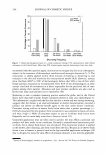
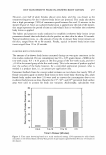
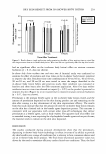
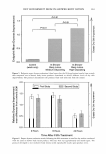
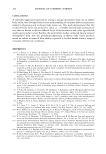
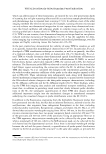
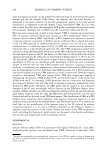
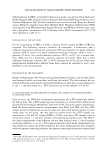
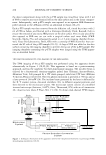
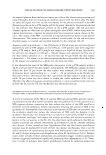
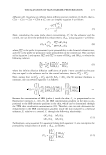
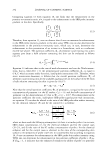
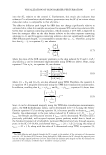
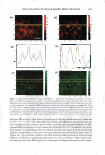
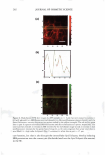
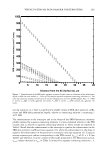
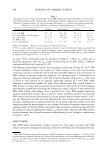
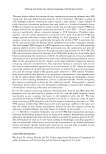
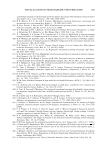
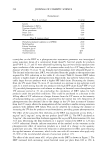
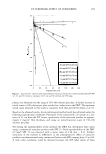
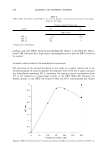
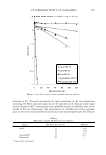
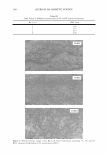
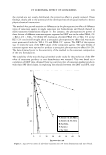
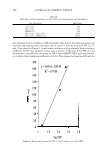
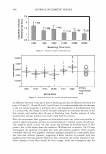
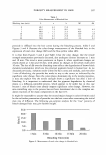
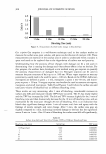
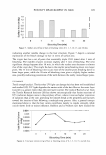
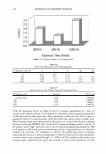
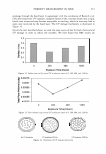
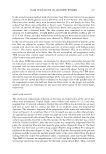
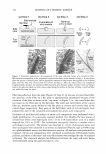
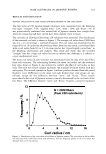
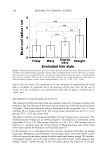
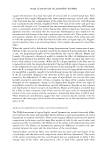
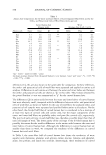
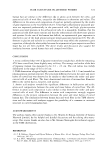
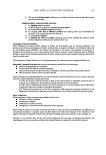
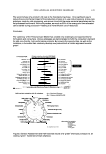
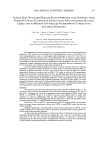
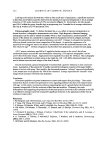
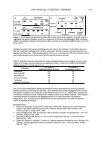
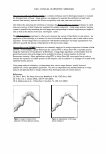
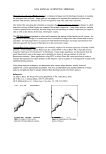
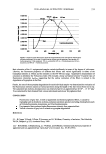
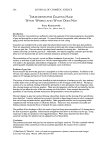
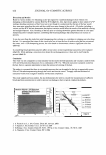
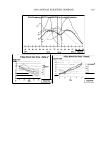
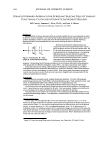
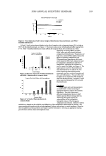
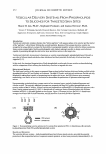
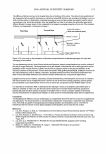
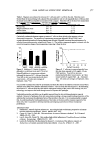
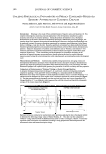
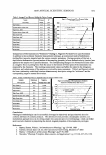
2008 ANNUAL SCIENTIFIC SEMINAR 381 T able I. Averue G 'and Fi 1rmnm tinllJ or anous Ra' fi V ' C reams Sample F'""- 0-rlndna Rada. NiaitCmA 42.8 l"lnfiml, Moitr\R c.rime Atv1A 41.7 NillitCrmn A."-113 JS.I Davtime Moisture Creme AMB 33.7 Bodv Cream AMA 32.9 Ni_.Crmn AMC 33.1 Niilm C'.rima 8 31.9 Ni,hCmC 32 001'9109-82 32.8 001'9109-84 31.8 001'91119-86 30.8 G' IPal 2191 2439 892 876 642 S38 349 806 974 S42 606 3000. I 2500-t--"�,---==-=---:-=-:::::-=---....,..,.--:---�--1 i�2000--------""--------:tuo...-R'···.;.._.?,'y•1S1�-- '8- � i 1500+----------------- 1 ! � 3 1000+------,.----,.------'-...P-'----'--.,,.---t r-= s = !?. 500 -1,-..-,....,.:,,._---"--"-'--._.....:. c...:,t!III!,-. __ �__.� 0 10 20 30 -40 � Flnm-Aallng 50 Comparison of Dermatosensory "Stickiness" Rating vs. Negative Normal Force upon Extension In addition to the oscillatory rheometer measurement technique, an extensional mode of deformation (pulling flow) was also imparted onto the various cosmetic prototypes. During execution of this test, a rapid tension deformation (upward motion of the sampling geometry) of user-defined velocity [um/sec] was applied to the sample over a specified distance. The corresponding change in the Normal force (this reads as a negative force or pulling force from the sensor in the bottom of Peltier plate of the instrument) was measured by the rheometer. The resulting measurement values can further be related to the stringiness, stickiness, and cohesiveness of the sample as perceived by many consumers. Table 2 and Figure 4 exhibit the linear relationship established between dermatosensory descriptive ratings for "stickiness" and the C?rresponding negative normal force values. Table 2. Avenn - Normal Fon:e Valuavs.StickinessRatinpforVariousCosmeticCreams Sample Stickiocss Neptive Description Jbti122 Normal Fortt INI Ni_ditCmneA 31.6 0.1986 l'illlltCmneB 37.6 0.4517 Nidrt a-c:me C 28.6 0.1602 Nil!bt Cream AMB 31.3 0,2449 Daytime Moistw"e Creme AMB 29.S 0.1538 IBodv Cream AMA 28.9 0.1217 NidU Cream AMC 29.0 0.0897 DOT9109-82 30.0 0.1186 DOT9109-34 28.S 0.1281 DOT9109-86 30.0 0.1260 Conclusions Fi&ure 4. Com:latioo of Dmnatosensory Stickinas Attribute to Normll Force After Tmsioo 0.5 .,...._,...,... __________....,...___ i 0. 45 �.,...._ .. ,@ 0.3 +-------..--,-_;.-..,...._.:,..'-------- 6 zo.25 +-----,---------,-----,......-.--........--------_,.......,.... .- ' 0.2 0.15 +-_:_..,....,.:.._:....,,..,,;-'-���--���..,,..,.:.,.._._-- Z I 0.1 -t----'--,...-,---..,;,._..-..,;_ __ ...,.:..�-'-"-'�-----....... 0.05 +----.....,.,--,.;,-.-,....,....,,....,..,.... ______ ____ 0 +-�--...,....-'-'---...,.:..----'----"----- 0 10 20 30 Stic:klnau Rlltlng 40 Rheological methodologies can be successfully leveraged to objectively and quantitatively d cribe aesthetic attributes of cosmetic products. This informative tool provides a m aningful, sensitive, and instrumental approach towards describing cream into consumer-perceived terminology which can further assist cosmetic chemists in pinpointing the desired, targeted properties of developmental prototypes. References I. Barnes, Hutton, Walters, "An Introduction to Rheology," pg 159-169, 1989 2. Carlone, Sensory Spectrum, Inc, Dermatosensory Panel Testing, December 5th 2005 3. Barnes, "A Handbook of Elementary Rheology", pg 27-76, 2000 4. Macosko, "Rheology Principles, Measurements, and Applications", pg 117-126, 237-255, 1994

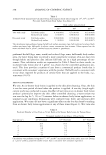
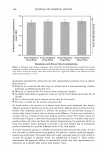
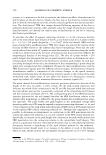
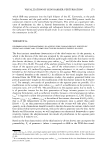
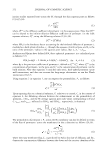
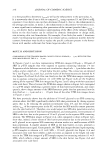
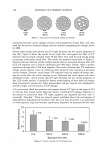
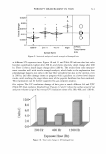
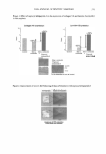
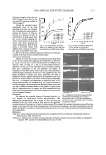
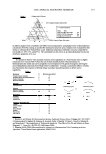
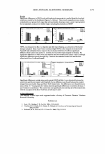
382 Abstract JOURNAL OF COSMETIC SCIENCE C ATIONICEMULSIFIER SYSTEMS FOR SUNSCREENS: COMBINING EFFICACY WITH COST ADVA NTAGE Anna Howe1 and Klaus J enni2, Ph.D. 1 Evonik Consumer Specialties) Evonik Goldschmidt Chemical Corp. 914 East Randolph Road) Hopewell, VA 23860 2 Evonik Consumer Specialties, Evonik Goldschmidt GmbH Goldschmidtstr. 100, D-45357, Essen) Germany klaus.jenni@evonik.com Cationic emulsions have attracted increased interest during the last years due to their unique skin feel, which is more dry and powdery than that of anionic or nonionic emulsions. Since 1999, with the introduction of new cationic emulsions for skin, hand, and baby care in the United States, this market segment has expanded broadly into over 30 new products containing the cationic emulsifier Distearyldimoniwn Chloride in 2007. Cationic moieties have typically been associated with hair care for conditioning. In this application, they impart lubricity, antistatic properties and smoothness to the hair fibres. Due to the eye initation profile of monoalkyl quats it is expected that the concentration limits of these will be fixed in the range of max. 0.5 % (for leave-on products) up to max 3.0 % (for rinse-off products). However, as long chain dialkyl quaternaries are milder on the skin than long chain monoalkyl analogues and as alkylamidoamine quats are also known to be less irritating than their amide and spacer group-free analogues, we concentrate on the evaluation of the latter product types. Formulating with cationic emulsifiers is straightforward and similar to the techniques employed with the traditional non-ionic emulsifiers. Cationic emulsifiers are incompatible with anionic moieties, such as Carbomers or anionic water soluble sunscreens such as Phenylbenzimidazole Sulfonic Acid. These materials should be avoided or their use minimized. Special advantages for the use of cationic emulsifiers tor the preparation of sunscreens are then high water resistance which they impart to a formula without any addition of a polymeric film former, their sand repellence and their long lasting moisturization efficacy. Water resistance is an important factor in sun care formulas, especially those intended to be used at the pool or on the beach. Data from an in-vitro water resistance study conducted according to a protocol that is published by a scientific collaboration between different industrial laboratories and testing institutes in Europe were gathered with sunscreens containing the identical filter combination as well as the identical emulsion base only varying the emulsifier. The study evaluated the water resistance of four emulsifiers: Ceteareth-25, Polyglyceryl-3 Methylglucose Distearate, Distearyldimonium Chloride (all three O/W) and Polyglyceryl-4 Diisostearate/ Polyhydroxystearate/Sebacate (W/O for comparison reasons). The result for the pure non-ionic emulsifier Ceteareth-25 is in this test somewhat higher than expected. Usually the in-vivo results for this emulsifier are below 50% water resistance. For an exact matching with in-vivo results further adaptations of the method seem to be necessary. The result for the lipid emulsifier Polyglyceryl-3 Methylglucose Distearate is in line with the expectations of previous in-vivo testing where the results are normally lower. Values between 50 and 65% have been reported there.
Purchased for the exclusive use of nofirst nolast (unknown)
From: SCC Media Library & Resource Center (library.scconline.org)