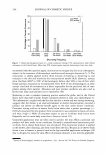
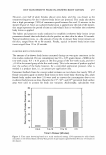
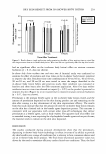
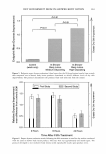
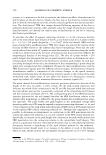
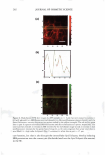
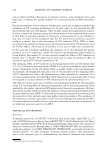
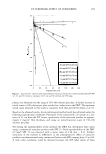
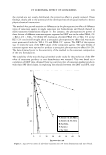
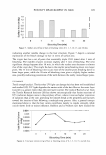
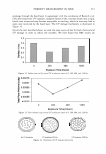
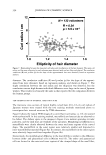
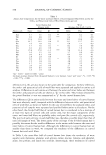
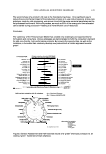
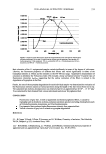
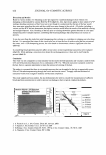
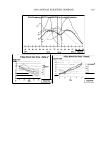
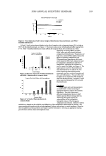
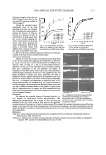
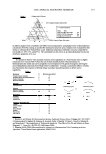
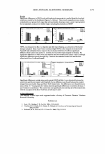
254 CD E 0 u CD E CD 0 CD CD CD 60 50 40 30 20 10 JOURNAL OF COSMETIC SCIENCE More Than Once Daily Once Daily 3-6 Times 1-2 Times Less Than Per Week Per Week Once Weekly Showering Frequency Figure 1. Showering frequency based on a study conducted among 1234 representative adult female consumers in the United States. More than 50% of participants reported showering at least once daily. recommend that their patients apply a moisturizer to mitigate dry skin or as a therapeutic adjunct in the treatment of dermatologic conditions such as atopic dermatitis (5-7). The moisturizer is ideally applied within three minutes of bathing or showering to seal moisture in the skin and maximize the moisturization benefit (8,9). However, surveys show that from 60%d to 70%c of dermatologists believe that 50% or less of their adult female patients moisturize as recommended. Over 83% of the dermatologists in these surveys cited lack of convenience as a factor responsible for the perceived lack of com pliance among their patients. Messiness and poor product aesthetics are also cited as factors that may cause patients not to moisturize (10). Showering is now a common cleansing practice around the globe, and in the United States more than half of adult female consumers shower at least once daily (Figure 1). This information, coupled with the fact that the skin is warm and wet during showering, suggests that the shower is an ideal environment to deliver moisturization, provided a product can deliver an effective benefit agent to the skin under shower conditions. Consumer testing with an in-shower body lotion shows that a greater percentage (J, 0.05) of consumers find this product form convenient to use compared to leave-on lotion, and that a high ( 40%) of consumers expect to use an in-shower body lotion more frequently and on more body areas than a leave-on lotion (11). Controlled application tests are often used to predict the skin effects a personal care product will have under in-use conditions. Recently a nontraditional moisturizer prod uct form, the in-shower body lotion, was introduced. This moisturizer product is applied in the shower, after cleansing, and then rinsed from the skin. Because an in-shower body lotion is not a cleanser, a protocol such as the leg-controlled application technique (12) that is designed to assess the skin effects of personal cleansers is not directly applicable. d Survey of dermatologists, number of respondents = 651, data on file, The Procter & Gamble Company.

DRY SKIN BENEFIT FROM IN-SHOWER BODY LOTION 255 Similarly, because an in-shower-body lotion is rinsed off after application, protocols that are designed for leave-on lotions that are applied outside the shower after the skin is toweled dry are also not directly applicable to this product form. This paper presents work conducted to develop a controlled application protocol for this unique moisturizer form that provides a tool to predict consumers' dry skin improvement experience. EXPERIMENTAL Habits and practices study data were used to understand consumers' showering practices and to establish protocol parameters. Developing and validating the protocol used to test the in-shower body lotion product form required both clinical and consumer testing. SHOWERING PARAMETERS Data related to showering frequencies and times were obtained from the habits and practices studies conducted among representative adult females. Because the in-shower body lotion product was targeted for sale in the United States, the data collected among this population were weighted most heavily in the choice of parameter values, although data for the global population were generally consistent. IN-SHOWER BODY LOTION USE PARAMETERS In-shower body lotion consumption. Two consumption studies were conducted among rep resentative female populations. The first was a two-week study with 81 adult female subjects the second was a five-week study with 1 71 adult female subjects divided into two groups. In both studies subjects were given an in-shower body lotion product to use at home. Label directions were provided. Subjects recorded showering and in-shower body lotion use events in a diary. Bottles in the first study were weighed at study start and end bottles in the second study were weighed at study start and after one, two, and five weeks of product use. The amount of in-shower body lotion consumed per use was calculated from the diary data and product weights. In-shower body lotion application parameters. A consumer shower panel was conducted to establish ranges for the time the in-shower body lotion was applied to the skin, the time the product remained on the skin following application, and the time spent rinsing the product from the skin. Female subjects were brought into a test facility, showered as they normally would, and applied in-shower body lotion according to label directions. The shower stall was equipped with a microphone. Subjects described their actions during the shower, and the times for the various steps were recorded. Separately, a concept-aided in-home use test was conducted among 247 representative adult females who expressed an interest in using an in-shower body lotion product. These subjects were given the in-shower body lotion product, and after two weeks they provided information about their experience. CLINICAL TESTING The goal of this work was to develop a protocol to predict the dry skin improvement potential of a product used during showering, and the leg-controlled application tech nique (12), a method used to predict the dry skin improvement potential of moisturizing body wash products, was used as a framework. Modifications to this protocol were
Purchased for the exclusive use of nofirst nolast (unknown)
From: SCC Media Library & Resource Center (library.scconline.org)