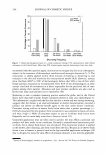
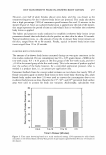
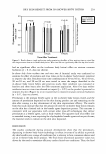
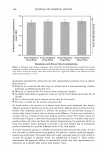
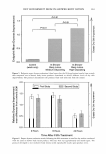
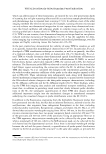
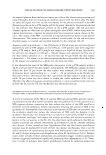
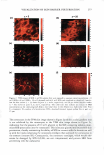
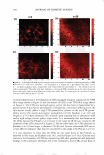
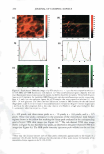
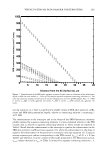
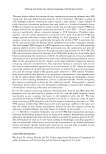
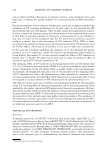
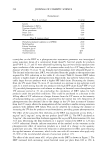
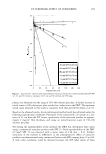
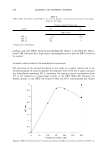
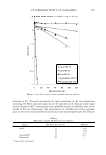
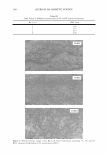
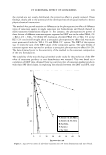
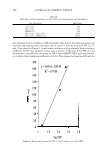
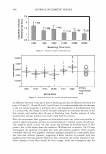
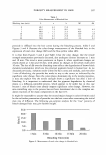
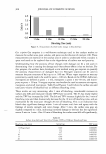
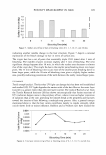
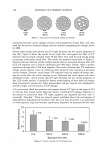
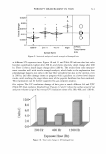
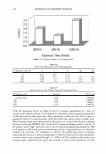
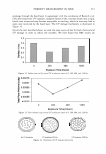
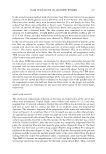
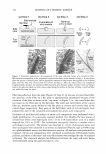
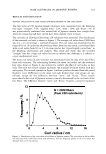
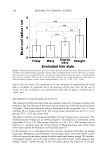
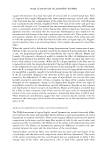
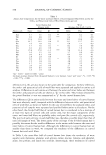
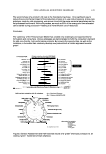
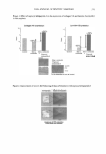
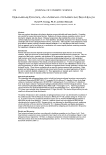
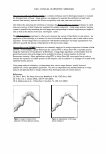
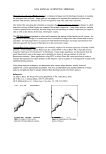
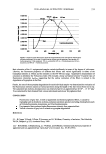
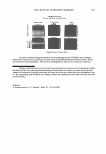
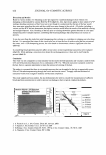
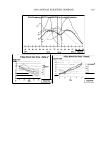
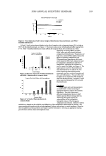
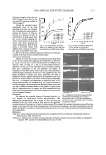
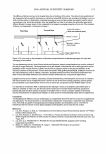
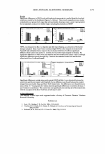
POROSITY MEASUREMENT IN HAIR 313 openings through the fused layer. In agreement , ith the conclusions of Reutsch et al. (20), after long-term UV exposure, complete fusion of the cuticular sheath into a rigid, brittle unit occurs and may become susceptible to cracking, which in turn may lead to pores once restricted by the fused layer. The UV damage mechanism is illustrated in Figure 14. For all the tests described above, we used the same source of hair for both chemical and UV damage in order to reduce the variables. We have found that BET results are 0.5 "' 0.4 0.3 0.2 - 0.1 - 0 0 200 400 1200 Exposure Time (hours) Figure 12. Surface area (m2/g) versus UV irradiation times of 0, 200, 400, and 1200 hr. ii 0.00075 .!!. 0.0007 § 0.00065 0.0006 l, 0.00055 I t- 0 200 400 1200 Exposure Time (Hours) Figure 13. Pore volume (cc/g) versus UV irradiation times of 0, 200, 400, and 1200 hr. No UV Irradiation UV Irradiation 200 Hrs UV Irradiation 1200 Hrs Figure 14. Illustration of UV damage mechanism.

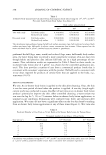
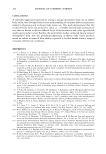
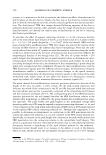
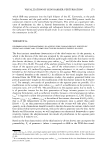
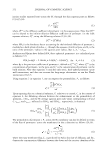
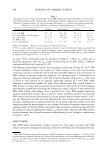
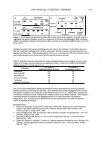
314 JOURNAL OF COSMETIC SCIENCE reproducible if the hair source is the same and the conditions for the damage methods are consistent otherwise, the surface area or pore volume could be very different for different batches of bleached hair samples. We have also found that the different parts of hair show different porosity: hair toward the root has much less porosity than the tip ends, which indicates that hair is more damaged in the tips due to abrasive combing. This finding shows the importance of consistently using the same location of hair when preparing BET samples in order to have valid comparison. CONCLUSIONS Our research has shown that hair damage by chemical and UV oxidation follows dif ferent pathways. These differences in physical changes were further explained by porosity measurements, which also reveal very different patterns for both damage types. Chemical damage (bleaching) nearly triples hair surface area in the first minute of bleaching due to the increase in the total pore volume. This is followed by a sudden drop in SA after 10 min of bleaching, suggesting that smaller pores break down into larger ones. This is in contrast to UV damage, which shows an immediate loss in surface area in the first 200 hr of exposure and a gradual increase as exposure time continues, which is most likely due to the fusion of cuticle cells followed by an increase in pores or cracks. The porosity analysis provides an insight into hair damage from a mechanistic perspective, and can be used as an effective tool for the study of hair repair or damage prevention. ACKNOWLEDGMENTS The authors gratefully acknowledge the contributions of Wayne Carlson for his valuable technical advice, Hua Zheng for her FT-IR analyses, and Cheryl Slabozeski for her sample preparation. REFERENCES (1) Y. Z. Hessefort, B. T. Holland, H. Zheng, and J. J. Sabelko, Gas sorption: A new method to identify hair damage using true porosity measurements, SOFW J. 133, 2-8 (2007). (2) El Valko and G. Barnett, A study of the swelling of hair in mixed aqueous solvents, J. Soc. Cosmet. Chem., 3, 108-117 (1952). (3) A Shansky, The osmotic behavior of hair during the permanent waving process as explained by swelling measurements,]. Soc. CoSJnet. Chern., 14, 427--432 (1963). (4) D. H. Powers and G. J. Barnett, A study of swelling of hair in thioglycolate solutions and its reswelling, J. Soc. Cosmet. Chem., 4, 92-100 (1953). (5) A. N. Syed and H. Ayoub, Correlating porosity and tensile strength of chemically modified hair, Cosmet. Toiletr., 117(11) (2002). (6) C.R. Robbins, Chemical and Physical Behavior of Human Hair, 4th ed. (Springer-Verlag, New York, 2002), pp. 158-161. (7) W. E. Savige and J. A. Maclaren, in The Chemistry of OrganicSulfur Compounds, Vol. 2, N. Kharasch and F. Meyers, Eds. (Pergamon Press, New York, 1966), pp. 367--402. (8) S. B. Ruetsch, Y. Karnath, and H. D. Weigmann, Photodegradation of human hair: An SEM study, J. Cosmet. Sci., 51, 103-125 (2000). (9) A. C. Nogueira, A. K. Nakano, and I. Joekes, Impairment of hair mechanical properties by sun exposure and bleaching treatments,]. Cosmet. Sci., 55, 533-537 (2004). (10) Y. Masukawa, H. Tsujimura, J. Tanamachi, H. Narita, and G. lmokawa, Damage to human hair
Purchased for the exclusive use of nofirst nolast (unknown)
From: SCC Media Library & Resource Center (library.scconline.org)