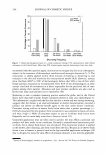
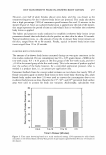
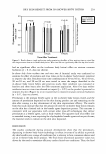
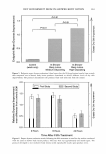
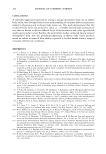
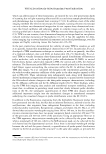
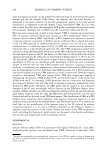
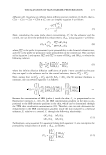
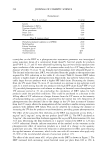
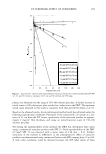
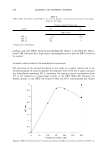
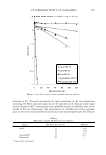
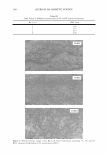
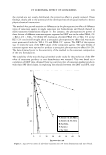
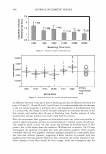
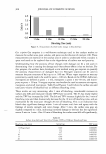
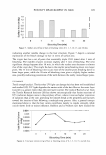
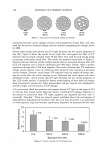
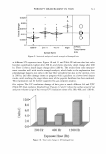
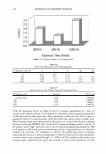
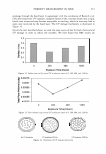
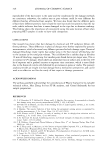
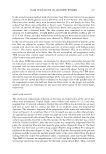
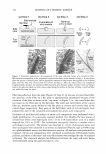
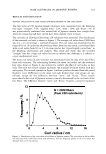
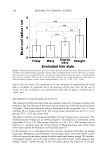
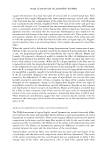
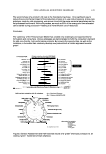
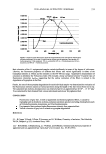
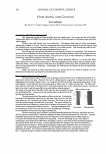
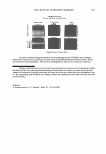
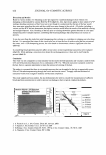
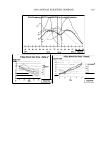
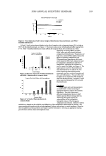
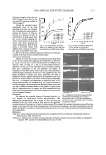
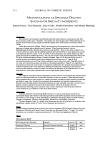
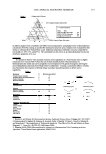
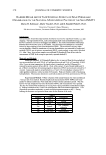
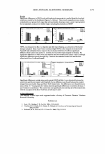
0.0025 .c 0.002 C) 00 0.0015 'cii � 0.001 1- 0.0005 POROSI1Y MEASUREMENT IN HAIR ■ 0 o_._------.------,-------,-------'---------' 1200 Hr 200 Hr 400 Hr Sample Name Virgin All Pairs Tukey-Kramer 0.05 Figure 9. Statistical analysis of tensile strength of damaged hair. 311 at different UV exposure times. Figure 10 and 11 and Table III indicate that hair color becomes significantly lighter after 200 hr, and shows relatively small change after 400 hr. There is then a much larger change after 1200 hr. The results from color measure ment correlate well with tensile strength analysis, which leads to the explanation that photodamage happens not only in the hair fiber periphery but also in the interior, even at 200 hr, and then damage seems to progress with a gradient to a lower level deeper inside, until reaching the stage where most of the peptide backbone has been oxidized. This explanation can be further supported by gas sorption analysis. Gas sorption. The UV irradiation damage of hair gives a much different SA and TPV (Table IV) than oxidative bleached hair. Figures 12 and 13 show the surface area (m2/g) and pore volume (cc/g) of hair versus UV irradiation times of 0, 200, 400, and 1200 hr. 10.0 8.0 � 6.0 4.0 0 2.0 0.0 200Hr 400 Hr 1200 Hr Exposure Hour (Hr) Figure 10. Total color change in UV-damaged hair.

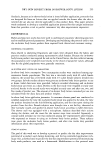
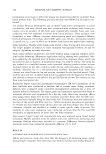
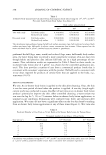
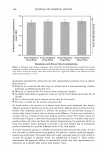
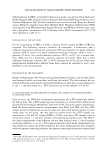
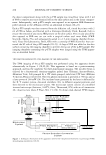
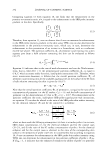
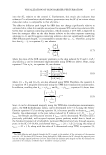
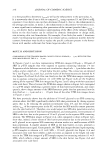
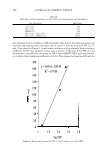
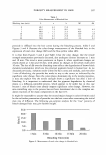
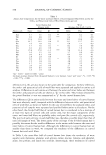
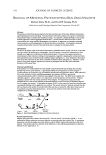
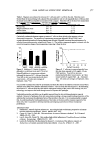
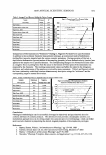
312 3.0 2.5 � 2.0 � 1.5 0. 1.0 0.5 0.0 UV Exposure time (hr) 0 200 400 1200 JOURNAL OF COSMETIC SCIENCE 200Hr 400Hr 1200 Hr Exposure Time (Hour) Figure 11. Lightness change in UV-damaged hair. Table III Hair Color Measurement of UV-Damaged Hair L a b b.E 39.22 6.45 16.73 41.09 6.72 17.87 5.72 42.08 7.14 19.75 3.54 44.85 7.20 21.96 8.61 Table IV Surface Area and Pore Volume Versus UV Irradiation Times UV Exposure (hr) 0 (Virgin hair) 200 400 1200 0.40 0.22 0.30 0.34 b.L 1.87 0.99 2.78 TPV (cc/g) 0.000689 0.000581 0.000651 0.000729 � ith the bleaching shown in Table II, the SA increases significantly at 1 min. In contrast, after the first 200 hr of UV irradiation, the surface area decreases by almost half of that detected for the virgin hair. This proves that within the first 200 hr there is significant fusion of certain portions of the hair fiber that causes a loss in surface area. These findings agree with those found by Reutsch et al. using field emission scanning electron microscopy (FESEM) (20), in which UV irradiation damage leads to "fusion" of the surface cuticle edges. However, this is nor the only thing happening during first 200 hr of exposure. Additional pores are also formed, which is supported by a loss of tensile strength. At continue I UV irradiation to 400 hr, the surface area starts to increase, indicating that more ne,· pores are generated or that the fused layer has been perforated to some extent to let nitrogen through .. At 1200 hr of UV irradiation, the surface area increases again, indicating once again the increase in pores or the generation of more
Purchased for the exclusive use of nofirst nolast (unknown)
From: SCC Media Library & Resource Center (library.scconline.org)