2008 ANNUAL SCIENTIFIC SEMINAR 347 A NEW SKIN WHITEN ER (SODIUM PALMITOYP ROLINE AND NYMPHEA ALBA FLOWER EXT RAC T) CAPABL E OF MODULATI NG MELANOGENISJS-RELATED GENES AND TO PREVENT UV-INDUCED PIGMENTAT ION THROUGH ITS SOOTHING PROPERT IES Carla Perez1, S. Dumont', M. Puginier2, C. Stoltz', H. Geoffroy', C. Garcia', R. Roso', G. Trouve', Y. Duccini2 and B. Brancq' 1Seppic, Inc., 30 Two Bridges Road, Fairfield, NJ 07004, USA 2 Seppic, 127 chemin de la Poudrerie, BP228, 81105 Castres cedex, France 'Seppic, Tour Kupka C-7 bd Franck Kupka, 92039 Paris, La Defense cedex, France Email: sandy. dumont@airliquide.com Skin pigmentation disorders represent a very common problem in both Caucasian and Asian populations. Such anomalies can result either from hypopigmentation, such as in the vitiligo [I], or from hyperpigmentation, such as in photoaged and/or inflammatory skins [2-5]. Thus the pro inflammatory cytokines interleukin-la (IL-la) and endothelin-1 (ET-I), which are mainly produced by keratinocytes, can exert paracrine pro-melanogenic activities on melanocytes. However, despite such evidences of the existing link between inflammation and melanogenesis, there are only a few commercial cosmetic lightening molecules which claim a modulatory action on inflammatory skin [6]. On the contrary, most of them are often badly tolerated [7-9]. A lot of available lightening products are known to reduce tyrosinase activity by acting on the different upstream intracellular pathways [10]. Other agents can exert their lightening effect via additional or differential modes of action. For instance some of them are known to regulate expression or function of receptors such as P AR-2 [ 11 ], which is involved in the melanosomes transfer from melanocytes to keratinocytes [12]. The microphtalmia-associated transcription factor (MITF) also represents an interesting target for such molecules [13]. Thus, a product which would be able to act both directly by decreasing expression of key melanogenesis-related genes and indirectly by preventing inflammation-induced pigmentation would be of great interest. An active molecular association, composed of a Sodium palmitoylproline with a nymphea alba flower extract (SPPNF), is known to have soothing properties. The aim of the study was to determine whether such soothing properties could confer a melanogenesis-modulator activity to SPPNF. METHOD The production of intracellular and extracellular melanin and that ofDOPAchrome (i.e. the tyrosinase activity product) were measured with colorimetric methods (absorbance at 450 nm) on the B16-Fl melanoma cell line and on pigmented reconstructed epidermis (PRE), which were SPPNF or non-SPPNF treated or by reference molecules and cultured either in steady state conditions or under an inflammation state (i.e. after chronically perfomed UV irradiations). Reference molecules included both lightening reference molecules, i.e. kojic acid and arbutin, and a pro-pigmenting molecule, i.e. cx-MSH (melanocyte-stimulating hormone). Productions of IL-la and ET-1 were measured by ELISA (enzyme-linked immunosorbent assay) on normal human keratinocyte cultures with SPPNF or non-SPPNF treated and with and without irradiation. Molecular experiments were performed on normal human melanocytes on SPPNF or non SPPNF treated, both by cDNA arrays and by quantitative-polymerase chain reaction (Q-PCR, to confirm some of the regulations observed. A clinical trial was performed on 33 voluntary type III or IV phototype Asian women, who presented pigmented disorders on the face (average age: 43±2 years old bi-quotidian topical application on the face over 84 days) and lightening efficacy was measured on normal and hyperpigmented skin with Chromameter® and Mexameter® measures as well as with a dermatologist scoring (statistical analyzes performed on the differences between DO and D84).

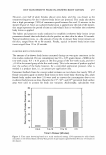
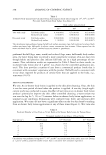
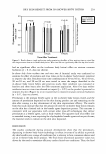
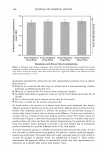
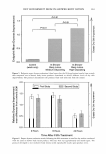
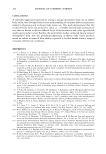
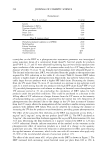
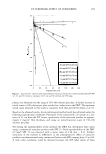
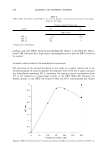
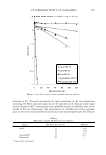
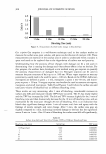
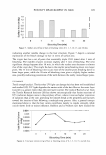
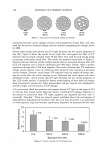
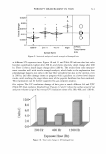
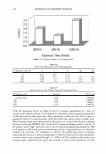
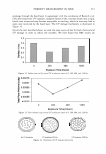
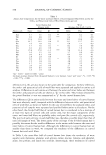
348 JOURNAL OF COSMETIC SCIENCE RESULTS In the B16-Fl melanocyte model, SPPNF tested at 0.001% induced a reduction of both extracellular melanin release and tyrosinase activity (respectively -57% and -54% vs. non treated cells), lightening reference molecules globally showing similar effects (respectively -13% and - 15% for arbutin 0% and -11% for kojic acid both tested at 0.004%), while a-MSH tested at 50 nM induced the opposite effect (+66% and +152%, respectively). In non-irradiated phototype VI PRE, the formulation containing 3 % SPPNF induced a decrease of the melanin productions (- 3 1 % vs. placebo formulation) and a reduction of the Chromameter® parameters a* and b* (respectively - 17% and -10% ), while inducing an increase of the L * parameter ( +5%) the formulation also induced such decreases for most of these parameters in irradiated phototype VI PRE. At the molecular level, variations observed on cDNA arrays showed that SPPNF tested at 0.001 % on normal human melanocytes induced a global depigmentation-associated effect, more particularly by decreasing expression of two genes mainly involved in the regulation of melanogenesis, i.e. tyrosinase and, MITF (microphtalmia-associated transcription factor), and by increasing that of MICI (macrophage inhibitory cytokine 1), these regulations having been confirmed by Q-PCR (respectively -56% -59% and +292% vs. non treated cells). In keratinocytes, SPPNF tested at 0.00025 % induced a significant reduction of ET-1 production (-53% vs. non treated cells) as well as a slight reduction oflL-la production (- 54%) in non-irradiated cells and conferred a photoprotection to the irradiated cells (respectively 121 %, p0.05 and 20% vs. non treated cells). Finally, SPPNF showed the following clinical efficacy (from the 56th day of treatment): i) on normal skin, an increase in ITA0 (+I AU.) as well as a decrease in both b* (-0.33 AU.) and the melanin index (-7) (respectively on 64%, 64% and 67% of volunteers), and ii) on hyperpigmented spots, an increase in ITA0 (+3 AU.) and L* (+0.8 AU.) and a decrease in b* (-0.26 AU.) (respectively on 88%, 82% and 58% of volunteers). CONCLUSION The lightening properties of SPPNF could be demonstrated both in vitro and in vivo. Such an efficacy seems to be correlated on the one hand to its ability to act directly on melanocytes and on the other hand to its soothing effects. Thus, SPPNF can act both on basal and stress-induced melanogenesis. Even if further investigations would be necessary to identify all the biological links that are involved in its different properties, the following correlations are suggested. First, SPPNF ability to modulate keratinocytes IL-Ia and ET-I productions is likely to be partially responsible for its lightening efficacy. Second, BMP (bone morphogenetic proteins) can regulate the expression of the main melanogenesis-related transcription factor, i.e. MITF [14]. Thus, the SPPNF-induced decrease in expression of the BMP family member, MIC 1, is likely to be responsible for the decrease in tyrosinase, MITF and other melanogenesis-related gene expression. In conclusion, SPPNF, which is also easy to formulate, seems to be perfectly appropriate to treat photo-aged skin-associated pigmentation and offers a precious advantage in comparison to the other lighteners, most of which being irritant. REFERENCES [1) Huggins et al., Acta Dermatovenerol Alp Panonica Adriat. 2005 Dec 14(4):137-42, 144-5 [2] Imokawa, Pigment Cell Res. 2004 Apr l 7(2):96-110 [3) Funasaka et al., Br J Dermatol. 1998 Aug I 39(2):216-24 [4) Stulberg et al., Am Fam Physician. 2003 Nov 15 68(10): 1963-8 [5) Lynde et al., Skin Therapy Lett. 2006 Nov 11(9): 1-6 [6] lchihashi et al., JFSCC Congress 2006, Osaka, Japan [7] Maeda and Fukuda, J Pharmacol .Exp Ther. 1996 Feb 276(2):765-9 [8] Serra Baldrich et al., Contact Dermatitis. 1998 Aug 39(2):86-7 [9) Levin and Maibach, Am J Clin Dermatol, 2001 2(4):213- 7 [lOJ Parvez et al., Phytother Res. 2006 Nov 20(1 l):921-34 [11) Paine et al., J Invest Dermatol. 2001 Apr 116(4):587- 95 [12] Passeron et al. : FASEB J. 2004 Jun l8(9):989-91 [13) Choi et al., Pigment Cell Res. 2005 Dec l8(6):439-46 [14] Liu et al., J Biol Chem. 2006 Jun 23 281(25): 17156-63.
Purchased for the exclusive use of nofirst nolast (unknown)
From: SCC Media Library & Resource Center (library.scconline.org)