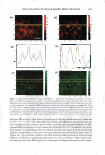
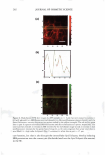
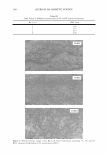
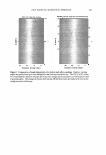
2008 ANNUAL SCIENTIFIC SEMINAR 349 COMPLEX EFFECT PIGMENTS: INNOVATIVE SOLUTIONS FOR ETHNIC COLOR COSMETICS Leila S. Song, Ph.D., Gabriel E. Uzunian, Betty F. Aucar and James B. Carroll Jr., Ph.D BASF Corporation INTRODUCTION Formulating color cosmetic products for ethnic groups is a challenging and interesting scientific pursuit. Skin with dark complexion, from a cosmetic formulator's perspective, can be considered as Skin Types IV-VI according to the Fitzpatrick Skin Type classification developed in 1975. The Fitzpatrick Skin Type classification ranges from Type I for light skin to Type VI for dark colored skin based on a person's complexion and response to sun exposure. The cosmetic formulators' challenges for make-up applications for Types IV-VI skin is the development of hyper pigmentation or hypo-pigmentation (1). Additionally, dark skin types can often develop a gray ashy appearance when the skin is dry. Formulations that leave trace residue are not especially acceptable for ethnic groups because such residue can often result in distinct imperfections or dullness on darker skin tones. Effect pigments are relatively transparent, thus allowing the skin tone on which they are applied to show through. It has been demonstrated in our study that colors generated by effect pigments are clearly dependent on the background (2). The interference color effect on ethnic skin is enhanced by the reflection color of the effect pigment due to the dark background. The transmitted light through transparent effect pigments modifies the skin tones. Incorporating effect pigments in cosmetic and personal care fonnulations can enhance or modify ethnic skin tones and can provide contrasting effects. METHODOLOGY The method of measurement and cosmetic formulations for color and appearance of ethnic groups allowing for the interactions among color cosmetic formulations and ethnic skin tones are described below: Method of measurement An instrumental goniospectrophotometric method was employed to measure the reflected light for color and gloss. Experimental data are expressed in L*a*b* color space for D-65 illuminant. Goniospectroscopic measurements of the samples at an aspecular angle of20 ° were used. The measurements at this aspecular angle agree with visual observation. An UV/Vis spectrophotometric method was also used to measure the transmitted light for translucency and clarity of the formulations. Cosmetic formulations Color cosmetic fonnulations were prepared and films of the formulations were made onto skin tone cards and volunteers' skin for color measurements. The fonnulations contain effect pigments with different types of interference colors: red (Red EP), yellow (Gold EP), blue (Blue EP) and green (Green EP). Colorant of Red 7 Lake was also used for study of skin modification. DISCUSSION Color can be fonned in different ways. In dealing with light, colors are formed by the additive mixing of the primary colors. Interference pigments mix additively because the visible color is the reflected portion of light. However, absorption pigments mix subtractively because the visible color is the non-absorbed portion of light (3). Interference pigments reflect light of one color and

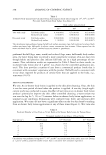
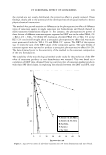
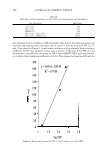
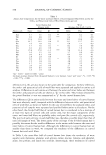
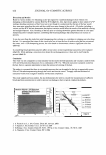
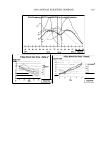
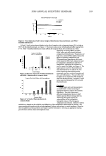
350 JOURNAL OF COSMETIC SCIENCE transmit the complementary color. If viewed on a black background, the complementary color is absorbed by the black background and only the reflection color is seen. On a white background, however, the reflection color is seen at the specular angle and the complementary color at the aspecular angles. As shown in the table below, for a volunteer with dark complexion who appears with ashy and dull skin tone, effect pigments increase the L * values significantly, but absorption colorants (Red 7) do not. Skin Red 7 RedEP Gold EP Blue EP Green EP Tone /Skin /Skin /Skin /Skin /Skin L* 39.7 38.4 89.5 106.2 84.9 96.1 The changes in the L * values depend on the shade of the skin. Formulations containing effect pigments brighten dark skin tones. Thus, ethnic color cosmetics containing effect pigments can enhance the appearance of darker skin tones by optically neutralizing dullness and ashiness. As shown in the table below, red interference effect pigments neutralize the excess red color and bring back the skin's natural look. This is contrary to a common belief that red pigments intensify reddish skin. The counterintuitive result is due to the complementary green color of red effect pigments interacting subtractively with the Red 7 absorption color simulating imperfect spots on the skin. Skin Tone Red Skin RedEP Gold EP Blue EP Green EP (Red 7/Skin) /Red Skin /Red Skin /Red Skin /Red Skin a* 14.l 17.3 14.8 13.7 18.5 20.2 b* 31.3 30.6 30.0 21.6 33.4 28.8 Also as shown in the table above, the L *a*b* color measurements for an ethnic volunteer with reddish brown skin tone are a*=14. l and b*=31.3. Adding Red 7 increases the a* value to 17.3. This simulates a skin imperfection. Using the formulation containing red or gold effect pigments masks the skin imperfection created by the reddish spot. However, gold effect pigments may not be suitable for correcting the problem in this case, because the complementary blue color results in a grey yellow skin color. Although both blue and green effect pigments do not change the b* value, they do not work in the same manner as red effect pigments and do not impart a natural look to problem skin. By choosing the right type and color of interference effect pigments, make up cosmetics can be developed that target ethnic skin tones and improve their appearance in a natural, non-optically occlusive manner. CONCLUSIONS The color generated by effect pigment is highly dependent on the viewing angle and the skin tone on which it is applied. Cosmetics formulated with effect pigments can be designed to produce a desired impact on skin. Color cosmetics design using effect pigments can create a desirable appearance for a variety of ethnic groups. REFERENCES l. T.B. Fitzpatrick, "Biology ofMelanocytes in Dermatology", New York, John Wiley & Sons (1999). 2. G. E. Uzunian and O.V. Dueva, "The Impact of Skin Tone on the Color Generated by Effect Pigments", Society of Cosmetic Chemists Annual Scientific Seminar, New Orleans, LA (2001). 3. L. Armanini, "Basic Optics and Pearlescent Pigments", Paint and Coatings Industry, 5 (8) (1989).
Purchased for the exclusive use of nofirst nolast (unknown)
From: SCC Media Library & Resource Center (library.scconline.org)