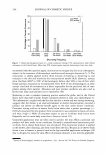
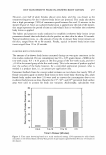
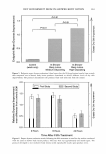
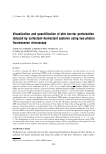
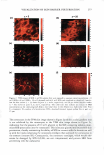
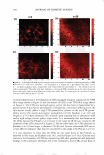
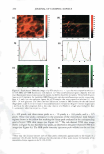
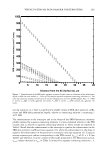
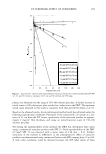
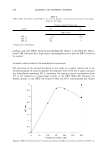
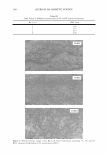
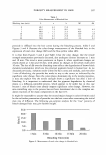
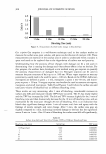
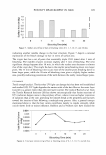
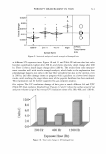
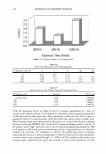
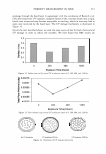
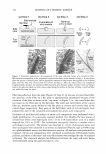
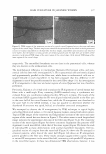
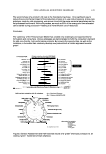
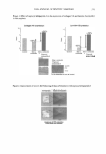
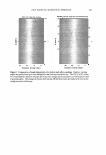
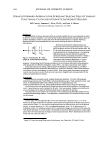
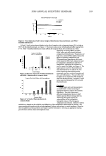
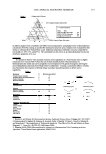
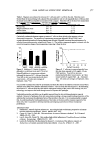
Background 2008 ANNUAL SCIENTIFIC SEMINAR DRAWING THE LINE ON WRINKLES BY SUPPORTING THE DERMAL-EPIDERMAL JUNCTION (DEJ) Hugues Beaulieu and Diane Bilodeau, Ph.D. Atrium Innovations Inc., Quebec City, Canada The dermal-epidermal junction (DEJ) is a dynamic structure that maintains skin cohesion and supports skin metabolic needs 1• With aging, structural protein expression is reduced at the DEJ which weakens and flattens, resulting in a slowing of cellular turnover and regeneration that culminates in wrinkle formation. Our objective was to develop a cosmetic active that would work at the DEJ to help reduce wrinkle formation. 351 Starting with the known sequence of a growth factor involved in wound healing, a bank of peptides was produced by solid phase organic synthesis. To optimize skin penetration, peptides were coupled to various lipids. Peptide conjugates were then screened, in vitro, for their ability to stimulate the production of structural proteins by fibroblasts at the DEJ. The selected peptide, caprooyl tetrapeptide- 3, was clinically tested in a serum formulation for fine lines & wrinkle reduction. Effects of Caprooyl Tetrapeptide-3 on structural skin proteins In vitro studies: Confluent normal human dermal fibroblasts (NHDF) were cultured for 48 hours in the presence and absence of 10-1M (0.03%) or transforming-growth factor (TGF-b). The latter, which is a general stimulator of the synthesis of extracellular matrix (ECM) proteins, was used as a positive reference2• At the end of the incubation period, laminin and fibronectin content were quantified in the supernatant using a highly sensitive and specific enzyme immunoassay (EIA) kit. In the presence of caprooyl tetrapeptide-3, NHDF cells increased their expression of laminin by 26% and that of fibronectin by 60%. In the same conditions, the stimulating potential of TGF-b was of 10% for laminin and 64% for fibronectin. Ex vivo model of skin aging: An additional bench study was carried out using human skin explants exposed to corticoids as an accelerated ex vivo model of skin aging. Topical corticoids are infamous for inducing skin atrophy and flattening of the DEJ, at least partly through an effect on collagen turnover, mimicking in that way what is seen with aging3 • Four human skin specimens were obtained, from different patients undergoing plastic surgery, and maintained in culture. On day 0, a corticoid cream betamethasone (0.05%) was applied or not (control) at the surface of skin explants. On the same day, caprooyl tetrapeptide-3 (0.03%) was added to the culture media of skin explants. On day 1, caprooyl tetrapeptide-3 (0.03%) treatment was repeated. On day 3, all skin explants were frozen. The presence and localization of collagen VII and laminin-5 were assessed using indirect immunofluorescence. Visual scoring was performed by two dermatologists. Both collagen VII and laminin-5 expressions were localized at the DEJ. Results revealed decreases of 16% and 45% respectively in collagen VII and laminin-5 staining in skin explants stressed with corticoids, compared to control level. Treatment with caprooyl tetrapeptide-3 in the presence of corticoids resulted in increases of 34% and 49% respectively in collagen VII and laminin-5 staining, compared to what was seen with corticoid treatment alone (Figure 1). Interestingly, the flattening observed at the DEJ with corticoid treatment was prevented with the application of caprooyl tetrapeptide-3. Clinical Antiaging Properties of Caprooyl Tetrapeptide-3 Antiwrinkle efficacy study: A clinical study was conducted on 27 women aged 40 to 65, with healthy skin. Volunteers applied a placebo serum on the crow's feet of one randomized temple area and the same formulation containing 2.5% caprooyl tetrapeptide-3 on the crow's feet ofthe,other temple. Applications were repeated twice daily. The micro relief of the eye area was assessed using special processing software from scanning by interference fringe profilometry of silicone replicas taken at day 0, 28, and 56.

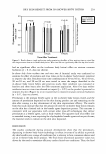
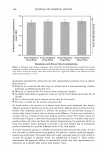
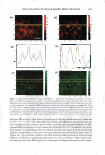
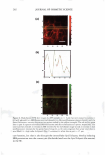
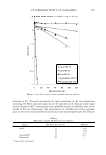
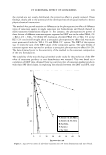
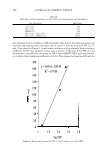
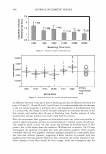
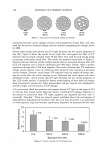
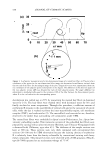
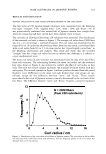
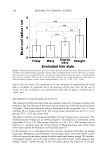
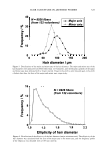
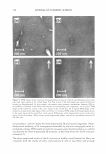
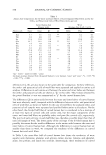
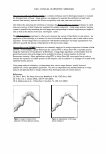
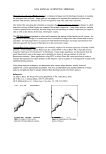
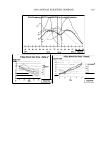
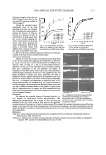
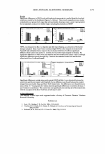
352 JOURNAL OF COSMETIC SCIENCE Looking at the replicas showed that, within as little as 28 days of application, a significant reduction in fine lines and wrinkles could be observed in the presence of caprooyl tetrapeptide-3, for an average reduction of 16% and a maximum of 29% over placebo (Figure 2). Interestingly, for older people aged 50-65 within the group, benefits kept on progressing over 2 months for an average reduction in fine line & wrinkles of27% (maximum 35%). Ultrasonographic study: To further docwnent the in-vivo effect of caprooyl tetrapeptide-3 on dermal structures, echographic measurements were taken. High-frequency ultrasound imaginf ( echography) can be used to identify the dermis which is thus visualized as a speckled pattern . The echoes of the dermis are considered to originate from the boundaries between collagen and elastin fibers, the surrounding water-rich ground substance, and cells 5 • Changes in echogenicity may thus reflect an altered connective tissue composition of the dermis. In particular, appearance of a superficial low-echofenic band in the dermis, immediately below the epidermal entrance echo, has been related to age6' • Dermal echogenicity has therefore been proposed as a marker for skin aging. All 27 women volunteers aged 40 to 65 applied a placebo serum on the crow's feet of one randomized temple area and the same formulation containing 2.5% caprooyl tetrapeptide-3 on the crow's feet of the other temple. Applications were repeated twice daily for 168 days. Skin echography scanning was performed on temple areas at day O and day 168. A 20-MHz ultrasound scanner was used to obtain cross-sectional images of the skin (B mode). Results showed that caprooyl tetrapeptide-3 treatment had a positive influence on skin connective tissue. Application of the peptide for 6 months restored the echogenic response of the upper dermis known to be lost with aging. Most notably, the ultrasound parameter "entropy" improved significantly in the treated area versus placebo for 78% of the volunteers. Entropy represents the "disorder" of an image which increases with better skin hydration. Conclusion Biomimetic peptides are potent instruments to restore and support skin physiology. They mimic natural skin factors and have the potential to revive signaling pathways that have lost responsiveness with age. In this report, we present evidences supporting the use of a growth-factor derived peptide (caprooyl tetrapeptide-3) for the reduction of fine lines and wrinkles. Ultimately, the study demonstrates that supporting the production of structural proteins involved in skin cohesion at the DEJ is an effective strategy to provide a long term significant reduction in the appearance of fine lines & wrinkles in mature skin. References 1- RE Burgeson and AM Christiano, Curr Opin Cell Biol 9(5), 651-8, (1997) 2- Y Jiang, DW Cheng, ED Crook, and LP Singh, Mo/ Cell Biochem 278(1-2), 165-75, (2005) 3- S Schoepe, H Schacke, E May, and K Asadullah, Exp Dermato/ 15(6,) 406-20, (2006) 4- SM Milner, OM Memar, G Gherardini , JC Bennett, and LG Phillips, Dermato/ Surg 23(1), 43-5, (1997) 5- S Richard, B Querleux, J Bittoun, 0 Jolivet, I Idy-Peretti, 0 de Lacharriere, and JL Leveque, J Invest Dermato/ 100(5), 705-9, (/993) 6- K Tsukahara, Y Takema, S Moriwaki,T Fujimura, T Kitahara, and G Imokawa, Dermatology 200(4), 303-7, (2000) 7- JM Waller and HI Maibach, Skin Res Technol 11(4), 221-35, (2005)
Purchased for the exclusive use of nofirst nolast (unknown)
From: SCC Media Library & Resource Center (library.scconline.org)