426 JOURNAL OF COSMETIC SCIENCE
A degrading surface will lead to increased friction between individual fibers, with
subsequent negative effects on hair manageability. Hair may become more difficult to
groom, with snags, and tangles becoming more frequent. Furthermore, these outcomes will
lead to still higher surface abrasion which, in turn, exacerbates further surface degradation.
A self-perpetuating, cascading cycle is set up: a rougher surface leads to more friction, and
more friction leads to a rougher surface. Indeed, it is often the case that already damaged
hair is considerably more susceptible to further damage.
Despite the toughness of this cuticle structure, it is widely believed that it has no meaningful
contribution to hair’s tensile strength. This, in part, relates to the nature of the cuticle
structure itself, but also its relatively minor presence from a cross-sectional perspective.
Caucasian hair is frequently listed as having an average diameter of ≈70 µm. The 5-6
cuticle layers represent an outer rim of ≈3 µm and a quick calculation suggests only a 15%
contribution to the overall fiber cross-sectional area. Instead, hair’s impressive extensional
mechanical properties are a consequence of the inner cortex structure. Although, as shown
later in this article, the cuticle will still have contribution to mechanical properties in the
bending mode.
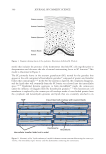
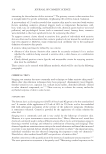
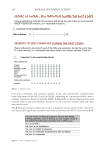
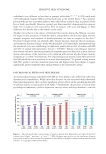
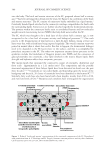
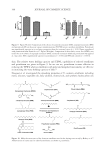
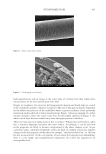
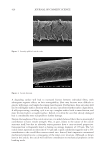
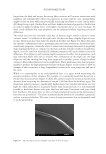
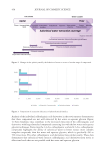
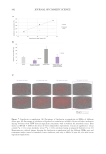
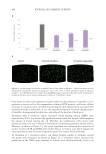
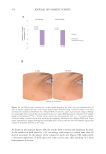
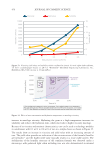
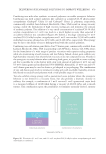
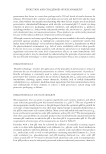
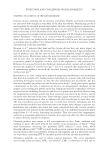
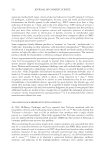
Figure 3. Severely uplifted cuticle scales.
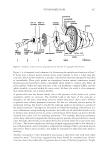
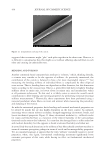
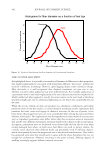
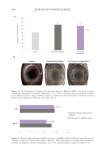
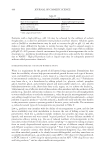
Figure 4. Cuticle abrasion.
A degrading surface will lead to increased friction between individual fibers, with
subsequent negative effects on hair manageability. Hair may become more difficult to
groom, with snags, and tangles becoming more frequent. Furthermore, these outcomes will
lead to still higher surface abrasion which, in turn, exacerbates further surface degradation.
A self-perpetuating, cascading cycle is set up: a rougher surface leads to more friction, and
more friction leads to a rougher surface. Indeed, it is often the case that already damaged
hair is considerably more susceptible to further damage.
Despite the toughness of this cuticle structure, it is widely believed that it has no meaningful
contribution to hair’s tensile strength. This, in part, relates to the nature of the cuticle
structure itself, but also its relatively minor presence from a cross-sectional perspective.
Caucasian hair is frequently listed as having an average diameter of ≈70 µm. The 5-6
cuticle layers represent an outer rim of ≈3 µm and a quick calculation suggests only a 15%
contribution to the overall fiber cross-sectional area. Instead, hair’s impressive extensional
mechanical properties are a consequence of the inner cortex structure. Although, as shown
later in this article, the cuticle will still have contribution to mechanical properties in the
bending mode.
Figure 3. Severely uplifted cuticle scales.
Figure 4. Cuticle abrasion.