428 JOURNAL OF COSMETIC SCIENCE
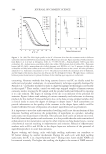
handling wet and dry fibers is enough to reach this conclusion. Wet hair is decidedly
more pliable than dry hair and can be snapped under lesser forces (but higher extensions).
Similarly, wet hair feels decidedly rougher. This last effect seemingly is the consequence of
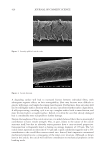
hair fibers swelling, during which the cuticle scales uplift slightly under the radial stress.
Healthy hair swells by about 10% to 12% in diameter however, as the inner structure
becomes compromised, this value can increase further.
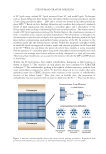
Water is not able to penetrate the α-helical keratin protein that constitutes the microfibrils,
but incursion readily occurs into the amorphous matrix material. In doing so, water solvates
electrostatic bonding that occurs between various polar functional groups and which contribute
secondary structuring within the proteins. In short, hair’s dry state mechanical properties are
supported by both the crystalline and amorphous structural regions within the cortex but,
in the wet state, the amorphous contribution is lost, and the mechanics are supported entirely
by the crystalline region. This situation represents the crux of hair’s differing properties in
response to the presence of water and is termed Feughelman’s two-phase model.13
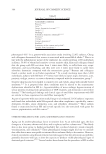
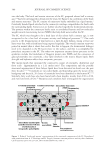
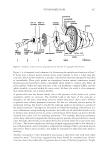
It is frequently suggested that hair consists of around 90% protein and 10% lipid with most
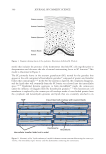
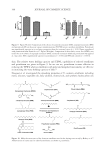
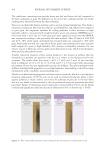
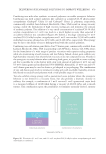
of the lipid being contained within the CMC (see Figure 5). The structure and composition
of this region appears relatively well understood 14 although, its functionality is somewhat
of a mystery. Most fundamentally, it might be thought of as simply the medium that holds
together the cortical cells. However, it plays no role in the mechanical models that are used
to describe hair. It is often noted that the CMC is the only continuous structure within a
hair fiber, extending to between the individual cuticle scales. Accordingly, the importance
of penetrability is sometimes supposed. It is widely thought that this structure will also be
compromised by various insults (i.e., chemicals, UV, etc.),15 which may subsequently lead
to components leaching from the hair. However, evidence in scientific literature appears
scant. Yet, without knowledge pertaining to its functionality, any consequences to the loss
of these materials is unknown.
MEASURING CHANGES IN HAIR PROPERTIES
The highlighted changes in hair properties have become established through the ability
to perform technical quantification. There are no “standard” methods in the hair-care
world however, a number of approaches have become widely used as a result of their
obvious applicability (although it is likely that they are performed somewhat differently
in different laboratories). Perhaps the biggest pitfall in performing any of these tests is the
aforementioned immense variability of the substrate. This necessitates the need to often
test quite high numbers of replicates to allow for appropriate statistical rigor which adds to
testing time and costs. During many years of reviewing articles on hair science for various
publications, the testing of an insufficient number of replicate samples is likely the most
common, reoccurring cause for rejection.
FRICTIONAL MEASUREMENT ON HAIR
Many tests for measuring hair friction can be found in scientific literature which utilize
both single fibers and tress arrays and involve the substrate rubbing against a variety of
surfaces. With this said, the best tests for our industry are those with consumer relevance,
and to that end, instrumental combing experiments are overwhelmingly utilized.16,17 This
handling wet and dry fibers is enough to reach this conclusion. Wet hair is decidedly
more pliable than dry hair and can be snapped under lesser forces (but higher extensions).
Similarly, wet hair feels decidedly rougher. This last effect seemingly is the consequence of
hair fibers swelling, during which the cuticle scales uplift slightly under the radial stress.
Healthy hair swells by about 10% to 12% in diameter however, as the inner structure
becomes compromised, this value can increase further.
Water is not able to penetrate the α-helical keratin protein that constitutes the microfibrils,
but incursion readily occurs into the amorphous matrix material. In doing so, water solvates
electrostatic bonding that occurs between various polar functional groups and which contribute
secondary structuring within the proteins. In short, hair’s dry state mechanical properties are
supported by both the crystalline and amorphous structural regions within the cortex but,
in the wet state, the amorphous contribution is lost, and the mechanics are supported entirely
by the crystalline region. This situation represents the crux of hair’s differing properties in
response to the presence of water and is termed Feughelman’s two-phase model.13
It is frequently suggested that hair consists of around 90% protein and 10% lipid with most
of the lipid being contained within the CMC (see Figure 5). The structure and composition
of this region appears relatively well understood 14 although, its functionality is somewhat
of a mystery. Most fundamentally, it might be thought of as simply the medium that holds
together the cortical cells. However, it plays no role in the mechanical models that are used
to describe hair. It is often noted that the CMC is the only continuous structure within a
hair fiber, extending to between the individual cuticle scales. Accordingly, the importance
of penetrability is sometimes supposed. It is widely thought that this structure will also be
compromised by various insults (i.e., chemicals, UV, etc.),15 which may subsequently lead
to components leaching from the hair. However, evidence in scientific literature appears
scant. Yet, without knowledge pertaining to its functionality, any consequences to the loss
of these materials is unknown.
MEASURING CHANGES IN HAIR PROPERTIES
The highlighted changes in hair properties have become established through the ability
to perform technical quantification. There are no “standard” methods in the hair-care
world however, a number of approaches have become widely used as a result of their
obvious applicability (although it is likely that they are performed somewhat differently
in different laboratories). Perhaps the biggest pitfall in performing any of these tests is the
aforementioned immense variability of the substrate. This necessitates the need to often
test quite high numbers of replicates to allow for appropriate statistical rigor which adds to
testing time and costs. During many years of reviewing articles on hair science for various
publications, the testing of an insufficient number of replicate samples is likely the most
common, reoccurring cause for rejection.
FRICTIONAL MEASUREMENT ON HAIR
Many tests for measuring hair friction can be found in scientific literature which utilize
both single fibers and tress arrays and involve the substrate rubbing against a variety of
surfaces. With this said, the best tests for our industry are those with consumer relevance,
and to that end, instrumental combing experiments are overwhelmingly utilized.16,17 This