438 JOURNAL OF COSMETIC SCIENCE
author to previously propose a definition that frizz is “an inability to attain a high degree
of hair alignment or some partial loss of this state after an initial degree of success.”37
This definition encompasses the innate nature of highly curly textured hair, as well as the
static flyaway that that can be encountered under low humidity winter conditions and/or
during heat styling. It similarly covers the loss of heat-straightened styles, especially in
high humidity conditions.
The properties of textured hair will be covered later in the article, but here the current
focus is directed to straighter hair issues. As per the previous discourse on water and hair,
temporary styles can be attained via heat styling tools that drive water from the hair
and set up additional electrostatic bonding within fibers. However, upon completion of
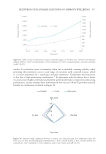
this process, the hair will immediately begin to readsorb moisture from the surrounding
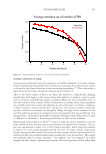
atmosphere to a level that is dictated by the hair-water adsorption isotherm (see Figure 14).
The new electrostatic bonds are solvated, and the outcome is a progressive reversion of the
induced style to its initial state. The loss of a previously crafted sleek, straight styles to a
curlier (misaligned) state is frequently termed “frizz.”
Under low moisture conditions, friction between hair and a brush/comb/styling appliance
can induce static charge buildup on the surface of hair fibers which causes them to repel
their neighbors. The result is a flyaway appearance, which we technically describe as low
humidity frizz. This occurrence can be commonplace when the relative humidity is low
or when employing heat styling to remove water from hair. Traditional hair conditioners
can sizably mediate this negative, presumably by helping lower frictional forces, increase
surface conductivity, and adjust hair’s position in the triboelectric series.37
Perhaps the most perplexing consumer expressions are the related properties of “volume”
and “body.”38 To scientists, volume has a very straightforward definition involving the 3D
space that an object takes up. However, while straight, limp hair may be thought of lacking
volume, extremely curly hair might have too much volume to the point that it’s described
as “frizzy.” So, to some consumers, “improving volume” might involve increasing its spacial
footprint (so-called volume up), while to others, the reverse might be true (volume down).
In short, once again, technical language does not straightforwardly equate to consumer
language, and measurement of this property is not as simple as an image analysis approach
to yield a pixel count.
Certain fundamental hair parameters have repeatedly been identified as being associated
with hair volume and body.39 These attributes are thought of as difficult to attain when
fibers are relatively thin, have lesser stiffness, and fiber density on the scalp is lower. Some
fiber curvature is thought necessary, as is a degree of interfiber friction. Yet, from a cosmetic
perspective, we have little control over most of these. A moment of clarity for this author was
attained when watching a consumer study where women were asked to create a high-volume
style. Later the same panelists were asked to re-wash their hair and repeat the process but,
this time, without using their style creation products (i.e., mousse and/or gel). Without these
products, the panelists struggled to control and manipulate the hair during blow drying and
styling, and the end result was never close to that of the earlier attempt. This observation
illustrated that these properties are not necessarily innate to the hair, but instead relate to
the ease and ability with which these desired states can be created. Unquestionably, this
occurrence can have a dependence on the native properties of the hair where it may be easier
in some cases than others. At the same time, skilled hairdressers can create volume and
body in even the limpest hair due to more advanced skills. Style creation products afford
author to previously propose a definition that frizz is “an inability to attain a high degree
of hair alignment or some partial loss of this state after an initial degree of success.”37
This definition encompasses the innate nature of highly curly textured hair, as well as the
static flyaway that that can be encountered under low humidity winter conditions and/or
during heat styling. It similarly covers the loss of heat-straightened styles, especially in
high humidity conditions.
The properties of textured hair will be covered later in the article, but here the current
focus is directed to straighter hair issues. As per the previous discourse on water and hair,
temporary styles can be attained via heat styling tools that drive water from the hair
and set up additional electrostatic bonding within fibers. However, upon completion of
this process, the hair will immediately begin to readsorb moisture from the surrounding
atmosphere to a level that is dictated by the hair-water adsorption isotherm (see Figure 14).
The new electrostatic bonds are solvated, and the outcome is a progressive reversion of the
induced style to its initial state. The loss of a previously crafted sleek, straight styles to a
curlier (misaligned) state is frequently termed “frizz.”
Under low moisture conditions, friction between hair and a brush/comb/styling appliance
can induce static charge buildup on the surface of hair fibers which causes them to repel
their neighbors. The result is a flyaway appearance, which we technically describe as low
humidity frizz. This occurrence can be commonplace when the relative humidity is low
or when employing heat styling to remove water from hair. Traditional hair conditioners
can sizably mediate this negative, presumably by helping lower frictional forces, increase
surface conductivity, and adjust hair’s position in the triboelectric series.37
Perhaps the most perplexing consumer expressions are the related properties of “volume”
and “body.”38 To scientists, volume has a very straightforward definition involving the 3D
space that an object takes up. However, while straight, limp hair may be thought of lacking
volume, extremely curly hair might have too much volume to the point that it’s described
as “frizzy.” So, to some consumers, “improving volume” might involve increasing its spacial
footprint (so-called volume up), while to others, the reverse might be true (volume down).
In short, once again, technical language does not straightforwardly equate to consumer
language, and measurement of this property is not as simple as an image analysis approach
to yield a pixel count.
Certain fundamental hair parameters have repeatedly been identified as being associated
with hair volume and body.39 These attributes are thought of as difficult to attain when
fibers are relatively thin, have lesser stiffness, and fiber density on the scalp is lower. Some
fiber curvature is thought necessary, as is a degree of interfiber friction. Yet, from a cosmetic
perspective, we have little control over most of these. A moment of clarity for this author was
attained when watching a consumer study where women were asked to create a high-volume
style. Later the same panelists were asked to re-wash their hair and repeat the process but,
this time, without using their style creation products (i.e., mousse and/or gel). Without these
products, the panelists struggled to control and manipulate the hair during blow drying and
styling, and the end result was never close to that of the earlier attempt. This observation
illustrated that these properties are not necessarily innate to the hair, but instead relate to
the ease and ability with which these desired states can be created. Unquestionably, this
occurrence can have a dependence on the native properties of the hair where it may be easier
in some cases than others. At the same time, skilled hairdressers can create volume and
body in even the limpest hair due to more advanced skills. Style creation products afford