442 JOURNAL OF COSMETIC SCIENCE
THE COUNTER ARGUMENT
As highlighted above, it is possible to rationalize all manner of differences in hair properties,
that might traditionally be associated with being from different “hair types” without the
need for a difference in makeup. However, upon digging deeper, some curiosities emerge.
Most obviously, it is well recognized that chemical treatments can give rise to very
different outcomes when applied to hair from different heads. For example, application of
a permanent wave to one head might produce the exact desired outcome but might also be
wholly ineffectual when applied in exactly the same manner to the next head a bleaching
treatment might give rise to substantial lightening on one head, but considerably less on
the next.
While the activity of daily-use hair-care products (e.g., shampoos, conditioners, and styling
products) relates to the hair surface, so-called chemical treatments involve ingredients that
penetrate the inner cortex and engage in chemical reactions. In the case of perms, it has
been shown that progression rates can vary considerably when testing hair procured from
different individuals.9 Two explanations may be hypothesized: either chemical reaction rates
vary, or ingredient permeation rates differ. Given that this occurrence arises in treatments
that involve very different chemistries, attention would seem to fixate on the second option.
In support, penetration rates are facilitated at an elevated pH and can also be seen when
testing damaged hair where, in both cases, hair fibers can swell to greater extents. So,
a theory arises that hair from different heads can potentially swell to different degrees,
which subsequently dictates the progression rate of the desired transformation. This author
has generated some data that would seem to agree with the above hypothesis but not yet
enough for confirmation. However, returning to the point at hand, differing degrees of
swelling seemingly suggests different internal structures.
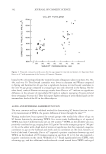
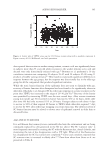
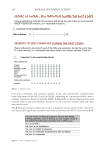
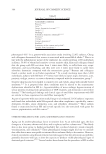
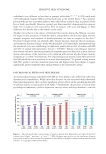
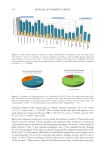
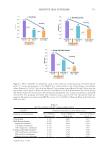
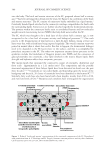
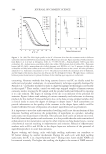
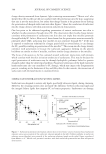
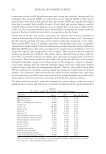
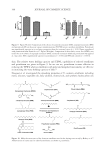
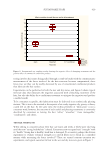
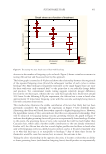
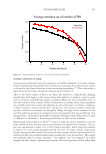
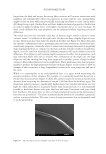
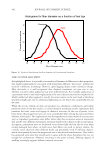
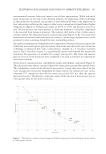
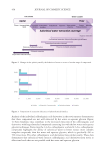
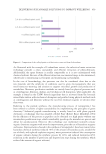
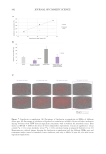
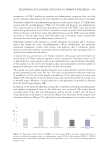
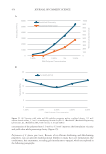
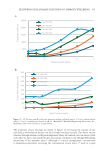
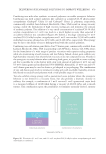
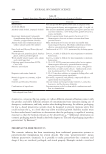
Figure 16. Statistical distributions for fiber diameters in Caucasian and Asian hair.
THE COUNTER ARGUMENT
As highlighted above, it is possible to rationalize all manner of differences in hair properties,
that might traditionally be associated with being from different “hair types” without the
need for a difference in makeup. However, upon digging deeper, some curiosities emerge.
Most obviously, it is well recognized that chemical treatments can give rise to very
different outcomes when applied to hair from different heads. For example, application of
a permanent wave to one head might produce the exact desired outcome but might also be
wholly ineffectual when applied in exactly the same manner to the next head a bleaching
treatment might give rise to substantial lightening on one head, but considerably less on
the next.
While the activity of daily-use hair-care products (e.g., shampoos, conditioners, and styling
products) relates to the hair surface, so-called chemical treatments involve ingredients that
penetrate the inner cortex and engage in chemical reactions. In the case of perms, it has
been shown that progression rates can vary considerably when testing hair procured from
different individuals.9 Two explanations may be hypothesized: either chemical reaction rates
vary, or ingredient permeation rates differ. Given that this occurrence arises in treatments
that involve very different chemistries, attention would seem to fixate on the second option.
In support, penetration rates are facilitated at an elevated pH and can also be seen when
testing damaged hair where, in both cases, hair fibers can swell to greater extents. So,
a theory arises that hair from different heads can potentially swell to different degrees,
which subsequently dictates the progression rate of the desired transformation. This author
has generated some data that would seem to agree with the above hypothesis but not yet
enough for confirmation. However, returning to the point at hand, differing degrees of
swelling seemingly suggests different internal structures.
Figure 16. Statistical distributions for fiber diameters in Caucasian and Asian hair.