478 JOURNAL OF COSMETIC SCIENCE
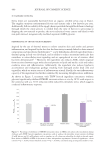
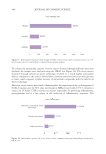
The conditioner containing tara provides better wet feel and better dry feel compared to
the base conditioner or guar. No difference in the ease of wet combing and the ease of dry
combing were observed between the three formulas.
Tara is an excellent film former and thus can be used in styling formulations. Tara forms a
continuous translucent film with no tackiness, good flexibility, and adhesiveness compared
to guar gum. An important attribute for styling polymers is their resistance to high
humidity, which is measured with a high humidity spiral curl retention (HHSCR) test.29
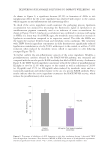
Gels made with 1 wt% tara or 1 wt% guar gum were applied to tresses and the HHSCR
was measured according to the previously described method. After 24 hours at 90% RH
and 25°C, 58% of the spiral curl length was retained with tara compared to 49% with
guar, which indicates that tara can provide better spiral curl retention and a more resistant
hold compared to guar at high humidity. The increase in humidity resistance for tara
relative to guar is likely due to lower galactosyl substitution in tara, which is less disruptive
when packing the polymer chains.
Another important property of hair styling products is the amount of stiffness that the
formulation or polymer can provide to the hair as it relates to the feel perceived by the
consumer. The results show that using 1 wt%, 1.5 wt% and 2 wt% of tara mucilage
leads to stiffnesses of 3.0 ± 0.3 N, 3.1 ± 0.6 N, and 3.7 ± 0.5 N, respectively. Increasing
the amount of tara does not significantly increase the stiffness. Tara gives medium-to-low
stiffness with high hold properties even at high humidity, thus making it ideal for styling
formulations with a touchable, natural-looking style.
Thanks to its film-forming properties and characteristics (nontacky film due to its high glass
transition temperature of 220°C), tara can be used in styling formulations where a claim
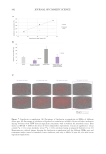
against pollution is made. Indeed, tara limits the adhesion of particles to the hair fibers
and acts as a shield as demonstrated in the test performed using the previously described
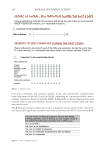
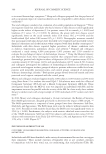
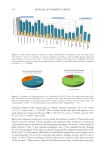
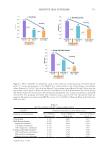
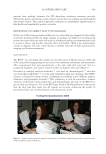
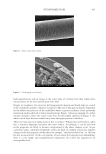
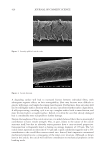
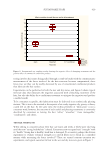
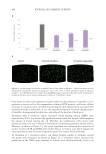
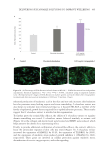
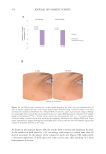
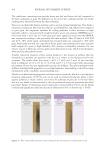
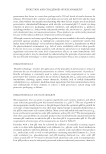
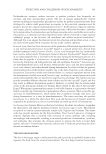
procedure. Figure 27 shows hair tresses untreated or treated with 0.5 wt% tara for which
a statistically significant reduction of particle adhesion by 50% is observed (p 0.001).
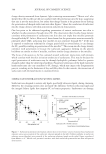
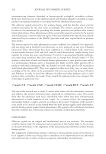
Figure 27. Hair tresses before and after contact with particles, untreated (a) or treated with tara (b).
The conditioner containing tara provides better wet feel and better dry feel compared to
the base conditioner or guar. No difference in the ease of wet combing and the ease of dry
combing were observed between the three formulas.
Tara is an excellent film former and thus can be used in styling formulations. Tara forms a
continuous translucent film with no tackiness, good flexibility, and adhesiveness compared
to guar gum. An important attribute for styling polymers is their resistance to high
humidity, which is measured with a high humidity spiral curl retention (HHSCR) test.29
Gels made with 1 wt% tara or 1 wt% guar gum were applied to tresses and the HHSCR
was measured according to the previously described method. After 24 hours at 90% RH
and 25°C, 58% of the spiral curl length was retained with tara compared to 49% with
guar, which indicates that tara can provide better spiral curl retention and a more resistant
hold compared to guar at high humidity. The increase in humidity resistance for tara
relative to guar is likely due to lower galactosyl substitution in tara, which is less disruptive
when packing the polymer chains.
Another important property of hair styling products is the amount of stiffness that the
formulation or polymer can provide to the hair as it relates to the feel perceived by the
consumer. The results show that using 1 wt%, 1.5 wt% and 2 wt% of tara mucilage
leads to stiffnesses of 3.0 ± 0.3 N, 3.1 ± 0.6 N, and 3.7 ± 0.5 N, respectively. Increasing
the amount of tara does not significantly increase the stiffness. Tara gives medium-to-low
stiffness with high hold properties even at high humidity, thus making it ideal for styling
formulations with a touchable, natural-looking style.
Thanks to its film-forming properties and characteristics (nontacky film due to its high glass
transition temperature of 220°C), tara can be used in styling formulations where a claim
against pollution is made. Indeed, tara limits the adhesion of particles to the hair fibers
and acts as a shield as demonstrated in the test performed using the previously described
procedure. Figure 27 shows hair tresses untreated or treated with 0.5 wt% tara for which
a statistically significant reduction of particle adhesion by 50% is observed (p 0.001).
Figure 27. Hair tresses before and after contact with particles, untreated (a) or treated with tara (b).