381 The Human Stratum Corneum
of SC lipids using isolated SC, lipids extracted from SC, and model lipids. Techniques
such as X-ray diffraction have shown that the lipids exhibit one long periodicity around
13 nm (Long periodicity phase – LPP) and a second one around 6 nm (short periodicity
phase SPP).4,17 Based on these findings, Bouwstra and coworkers have proposed a sandwich
model of lipid organization that includes a crystalline phase and a fluid phase in the
bilayer lipids with stacking of alternating fluid and crystalline phases. The domain mosaic
model of SC lipid organization proposed by Forslind depicts the simultaneous presence of
both a crystalline and a liquid crystalline lipid phase.16 The fluid phase is thought to be
discontinuous in the direction of depth this organization allows flexibility within the lipid
layer without compromising permeability barrier properties of the SC. In contrast to the
sandwich model and the domain mosaic models, Norlen has proposed a gel-phase model
in which SC lipids are suggested to form a single and coherent gel-phase in the lower half
of the SC.18 While one can debate the merits of each of these models, it seems reasonable
that the presence of a crystalline phase along with a fluid phase seems reasonable since such
a structure can manage stress better without cracking compared to a rigid gel structure.
These two-phase models also can account for the presence of both the LPP and SPP phases
in the bilayer.
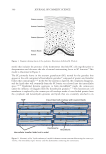
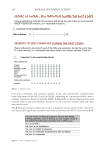
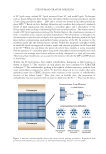
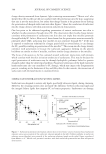
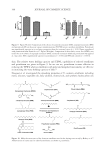
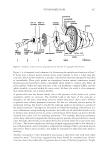
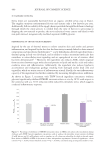
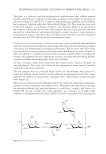
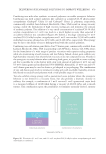
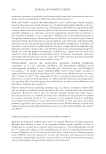
Within the SC lipid phases, they exhibit orthorhombic, hexagonal, or fluid packing as
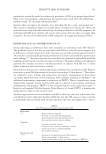
shown in Figure 2.4 The existence of such phases has been confirmed by ATR/FTIR
techniques.9,12 The orthorhombic packing is the tightest of these structures, with the least
water permeability compared to others.4 It has been shown in in-vivo studies that trans
epidermal water loss (TEWL) decreases with increases in the fraction of orthorhombic
fraction of the bilayer lipids.12 Note that even in healthy skin, the proportion of
orthorhombic fraction increases with increase in depth into the SC.21–23 This may be due to
Figure 2. Stratum corneum lamellar phases and various lateral packing possibilities. Reproduced with
permission from Bouwstra, J., and Gooris, G. The Open Dermatology Journal. 4, 10–13 (2010).4
of SC lipids using isolated SC, lipids extracted from SC, and model lipids. Techniques
such as X-ray diffraction have shown that the lipids exhibit one long periodicity around
13 nm (Long periodicity phase – LPP) and a second one around 6 nm (short periodicity
phase SPP).4,17 Based on these findings, Bouwstra and coworkers have proposed a sandwich
model of lipid organization that includes a crystalline phase and a fluid phase in the
bilayer lipids with stacking of alternating fluid and crystalline phases. The domain mosaic
model of SC lipid organization proposed by Forslind depicts the simultaneous presence of
both a crystalline and a liquid crystalline lipid phase.16 The fluid phase is thought to be
discontinuous in the direction of depth this organization allows flexibility within the lipid
layer without compromising permeability barrier properties of the SC. In contrast to the
sandwich model and the domain mosaic models, Norlen has proposed a gel-phase model
in which SC lipids are suggested to form a single and coherent gel-phase in the lower half
of the SC.18 While one can debate the merits of each of these models, it seems reasonable
that the presence of a crystalline phase along with a fluid phase seems reasonable since such
a structure can manage stress better without cracking compared to a rigid gel structure.
These two-phase models also can account for the presence of both the LPP and SPP phases
in the bilayer.
Within the SC lipid phases, they exhibit orthorhombic, hexagonal, or fluid packing as
shown in Figure 2.4 The existence of such phases has been confirmed by ATR/FTIR
techniques.9,12 The orthorhombic packing is the tightest of these structures, with the least
water permeability compared to others.4 It has been shown in in-vivo studies that trans
epidermal water loss (TEWL) decreases with increases in the fraction of orthorhombic
fraction of the bilayer lipids.12 Note that even in healthy skin, the proportion of
orthorhombic fraction increases with increase in depth into the SC.21–23 This may be due to
Figure 2. Stratum corneum lamellar phases and various lateral packing possibilities. Reproduced with
permission from Bouwstra, J., and Gooris, G. The Open Dermatology Journal. 4, 10–13 (2010).4