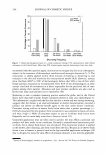
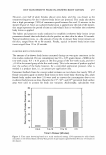
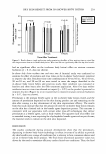
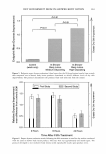
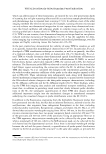
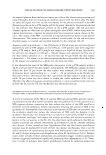
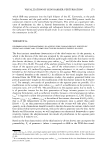
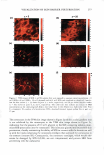
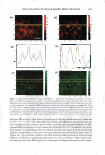
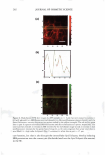
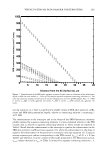
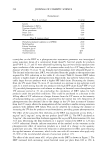
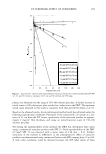
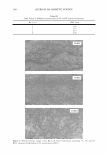
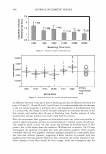
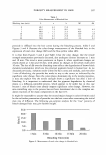
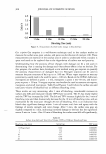
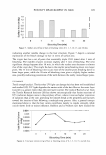
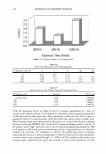
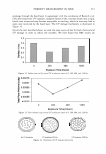
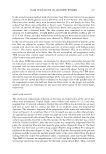
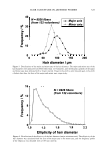
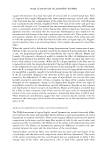
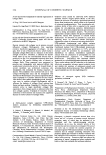
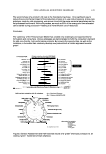
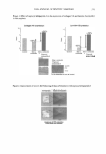
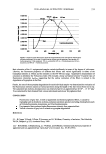
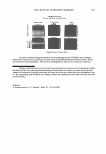
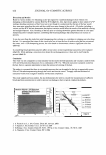
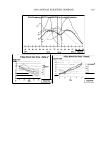
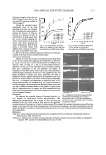
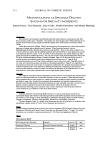
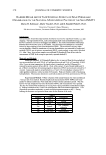
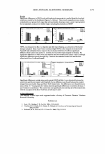
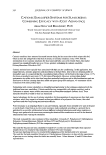
2008 ANNUAL SCIENTIFIC SEMINAR � Significant differences in NMF levels and biophysical measurements resulted from the localized conditions created by the treatments (Figures 1-4 below). These results support previous studies conducted by our group which argue that semi-permeable dressings create a water vapor gradient t is maximally conducive to barrier repair, including the production ofNMF. Figure 1 Transepiclermal W.al Lou (TEW\.) Dly3 Day5 DConlnll ■Sinn -� l!lGar.T• Figure 2: Moisture Accumul■tlon Test I A Tl 30 25 20 a 15 □a:ntd as.., ............. TEWL was measured on Day 1 at baseline and after tape-stripping, as a measure of the barrier damage sustained. Days 3 and 5 show continued high TEWL in the stripped site treated with Vigilon® and substantial barrier repair in the site treated with Gore-Tex® (no significant difference from control site at Day 5). Control site was neither tape-stripped nor treated. No significant differences in MAT were seen between the three treated sites at days 3 and 5, although significant differences persist through Day 5 between the untreated control site and the sites treated with Gore-Tex® and Saran®. Day5 □Conrol · ■IAgikrl Significant differences in total amino acid content (NMF) at Strip 1 were observed between the control site and the site treated with Vigilon®, but no difference was found between the control, stripped but unoccluded, Saran and Gore-Tex® treated sites. No differences were found between sites at Strip 10. Visual grades for redness showed significant differences in erythema for days 3 and 5 relative to enrollment. The control site was significantly less red than all of the treated sites with the exception of the Gore-Tex® site at both days 3 and 5. Acknowledgements This material is based upon work supported under a Society of Cosmetic Chemists' Graduate Research Fellowship. Reference List 1. Scott, I. R. Harding, C.R. Dev.Biol. 1986, 115(1), 84-92. 2. Visscher, M. O. Hoath, S. B. Conroy, E. Wickett, R. R. Archives of Dermatological Research 2001, 491-499. 3. Robinson, M. H. Wickett, R.R. J Cosmet &i. 2004, 55(2), 211-212. 379

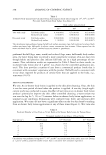
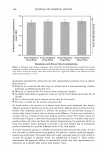
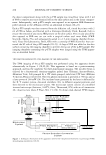
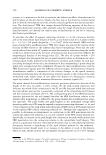
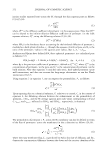
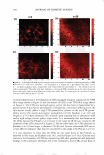
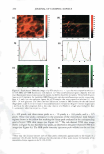
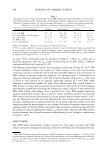
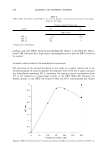
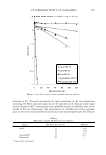
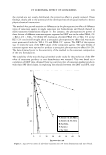
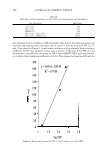
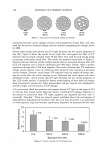
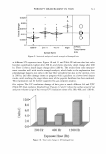
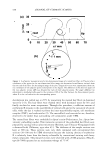
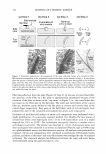
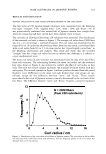
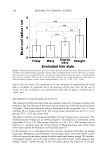
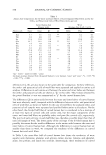
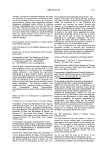
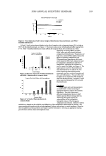
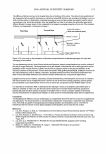
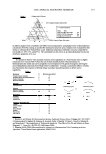
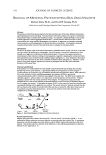
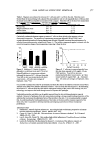
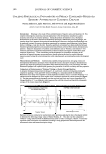
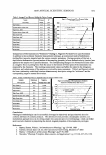
380 JOURNAL OF COSMETIC SCIENCE UTILIZING RHEOLOGICAL PARAMETERS TO PREDICT CONSUMER-PERCEIVED SENSORY ATTRIBUTES OF COSMETIC CREAMS Penny Anderson, Julie Harrison, Deb O'Toole and Angie Hendrickson Artistry Center for Skin Health Research, Amway Corporation, Ada, MI Introduction: Rheology is the study of flow and defmmation of liquid to semi-solid materials [l]. This complex technology has numerous practical applications to the development, manufacture, quality assurance and end-use of consumer products. During the product development cycle, rheological measurements can be used to characterize formulation prototypes, differentiate processing changes, and simulate shear flows imparted during material transformations. Moreover, rheological methodologies can be employed to mimic the sensory perception experienced by consumers upon dispensing a lotion from a bottle, or rubbing a cream into the skin. Recently, significant correlations have been established between rheometer-generated properties and consumer-perceived attributes collected from trained, dermatosensory panelists. Subjective descriptions of cosmetic cream attributes such as "firmness, and stickiness" were related to quantitative instrumental measurements of elastic modulus and negative normal force (upon extension) respectively. These correlations provide the potential to aid product developers in the prediction of targeted consumer sensory attributes, thereby reducing the need to conduct elaborate, expensive panel testing (for selected properties) while simultaneously accelerating the product development cycle. Measurements and Methods: Commercially available prestige-positioned, anti-aging creams and developmental formulation prototypes were evaluated for sensory descriptive ratings by dermatosensory panelists [2]. Replicate prototypes and products were characterized utilizing a TA Instruments AR-I000 Rheometer equipped with a parallel plate geometry for generation of various oscillatory and flow properties. Comparison ofDermatosensory "Firmness" Rating vs. Elastic (Storage) Modulus A dynamic rheological measurement technique [3, 4] was devised, which involved gently probing the samples by applying a "back and forth" motion (wobbling) in a sinusoidal pattern of deformation. Rheometer stress ramps were imparted via small amplitude oscillatory stress at a constant frequency = 0.5 radians/second to determine the linear regime of the viscoelastic spectrum for various prototypes [Figure 1]. The data generated from the rheometer was then resolved into elastic and viscous components (G'= Storage Modulus, G"- Loss Modulus) which represent the solid-like (stored) and liquid-like (dissipated) energies of the creams respectively [Figure 2]. Fig 11 re I: Illustration of!ypic_al!�()_111eter (}s�!!lation _l\l e � o� Figure 2: Resolution of Viscoelastic Moduli for Cream 800 :" I 300 I -200 C -700 ·1200 Graphical Interpretation of Applied Stress C!lan� -c.t,opol Copoljm,rsystem In an Oaclllatlon Stress Ramp d. 11Xll t-------�-�-'-+-o ..... ..... Frequency• 111111 (wt) . · ·······..:-.. 10 o.lll■-onln■tp1]1tw•D.&t1dl11C 100 Replicate testing was conducted on each product and/or prototype applying the above rheological method to determine the following average values of Elastic Modulus, G'. This data was then compared to "firmness" ratings achieved from the Dermatosensory panel in Table I and Figure 3 below. A statistically significant linear correlation was established revealing a strong proportional relationship between the instrumental values and human descriptive ratings.
Purchased for the exclusive use of nofirst nolast (unknown)
From: SCC Media Library & Resource Center (library.scconline.org)