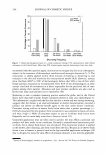
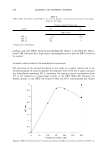
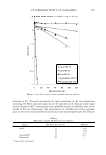
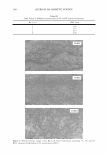
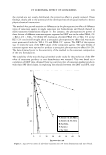
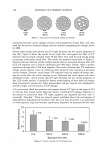
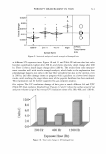
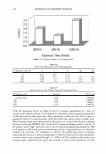
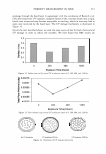
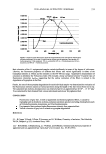
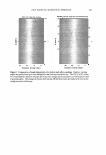
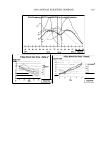
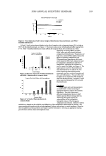
336 JOURNAL OF COSMETIC SCIENCE Kinetics of moisturizing and firming effects of cosmetic fonnulations E. Xhauflaire-Uhoda, K. Fontaine and G.E. Pie'rard Department of Dermatopathology, University Hospital of Lie'ge, Lie'ge, Belgium Correspondence: Gerald E Pierard, Department of Dermatopathology, CHU Sart Tilman, B-4000 Lie'ge, Belgium. Tel.: +3243662408 fax: +3243662976 e-mail: gerald.pierard@ulg.ac.be The assessment of cosmetic efficacy is rarely perfonned in studies comparing different concentrations of active compounds. The aim of the present study was to determine the skin hydrating and the skin finning dose-response effects of cosmetic formulations enriched in compounds derived from algae and fish collagen. A series of factors were studied including the type of fonnulation ( cream or serum), the concentration in active ingredients, the effect of repetitive applications, as well as any residual effect of the formulations after stopping their applications. The serum enriched in marine compounds showed a better moisturizing effect in short term. The cream appeared more active later, particularly following repeat applications. A sustained tensor (finning) effect was observed during treatment with both the lotion and the cream. However, no remnant firming effect was perceived after stopping treatment.

J. Cosmet. Sci., 59, 337-338 Quly/August 2008) Abstracts SOFW Journal Wydanie Polskie, including Journal of the Polish Society of Cosmetic Chemists, "Wiadomosci PTK" Vol. 1, No. 1, 2008* European principles of natural and organic cosmetics certification Maciej Siekierski Provitlll Polska Sp. z o.o. The trend towards ecological food and products increases gradually and enters the different spheres of our lives. The same trend is observed for care products. The growing need for natural and organic cosmetics in the last years follows by the growth of interest in this market on the side of such cosmetic products manufacturers, which haven't dealt with them up to now. Till now, ecological products were considered as niche products. The dynamic increase in the interest by consumers may change this view, however. The conscious consumer is interested in certified product only. The progressing process of standards harmonization will lead to the increase in consciousness and in the next stage to the increase in such products sells. The production of organic and natural cosmetics may become a good alternative for many smaller manufacturers. Looking at the interest in this subject by big and well-recognized brands, it could be expected that such products will appear on the mass market in the nearest future. Skin activity of lulein Pierfrancesco Morganti I D. Sousa Martins 2 G. Morganti 3 1 Professor of Applied Cosmetic Dermatology II University of Naples Visiting Professor of China Medical University Shenyang R&D Director Mavi Sud s.r.l. Aprilia (LT) Itaty2 Kemin Health Central & South America 3 Technical Director Mavi Sud s.r.l. Aprilia (LT) Italy The xanthophylls, lutein and carotenoids/zeaxanthin, belong to the family of carotenoids. Two are, in fact, the commonly accepted classes of these natural compounds (a) carotenes, composed of only carbon and hydrogen and (b) xanthophylls, composed of carbon, hydrogen and oxygen. All the carotenoids have the identical backbone structure and their chemical and biochemical activities are related to their unique structure extended system of conjugated double bonds. Xanthophylls are fat-soluble pigments found profusely in dark green vegetables such as spinach, cabbage, broccoli, as well as in colourful vegetables and fruits such as com, oranges, peaches, mangoes and tangerines, and in egg yolk. Target group teenagers - cosmetic trends for the »Internet generation« Vera Maienschein IMPAG Import GmbH Current market studies show that today's teenagers have considerable financial means at their disposal. From very early on, they decide for themselves what they want to spend their money on. But it is not only their spending power that makes this target group interesting. Surveys reveal that the most important phase for brand imprinting already starts at adolescence and we all know it is easier to gain a new consumer than it is to »re-educate« a faithful consumer of the competition. Along-.ide fashion and mobile telephones, cosmetics is one of the »high interest« segments for teens and young adults. Beauty can be considered a hobby. On average, girls spend 35 minutes a day on grooming and styling, and use 14.1 cosmetic products. If you ask what the most important product group is, then the first answer will be face care. After that comes face cleansing, make-up (among girls only), deodorants, hairstyling, hair care and finally body care. If you want to select the right active ingredients for a successful product, you must be familiar with the typical skin problems that arise at this age and also -just as importantly - the special needs of this heterogeneous target group. Only then will you succeed in winning young adults over and securing a long-term trust in your product. * These abstracts appear as they were originally published. They have not been edited by the journal of Cosmetic Science. 337
Purchased for the exclusive use of nofirst nolast (unknown)
From: SCC Media Library & Resource Center (library.scconline.org)